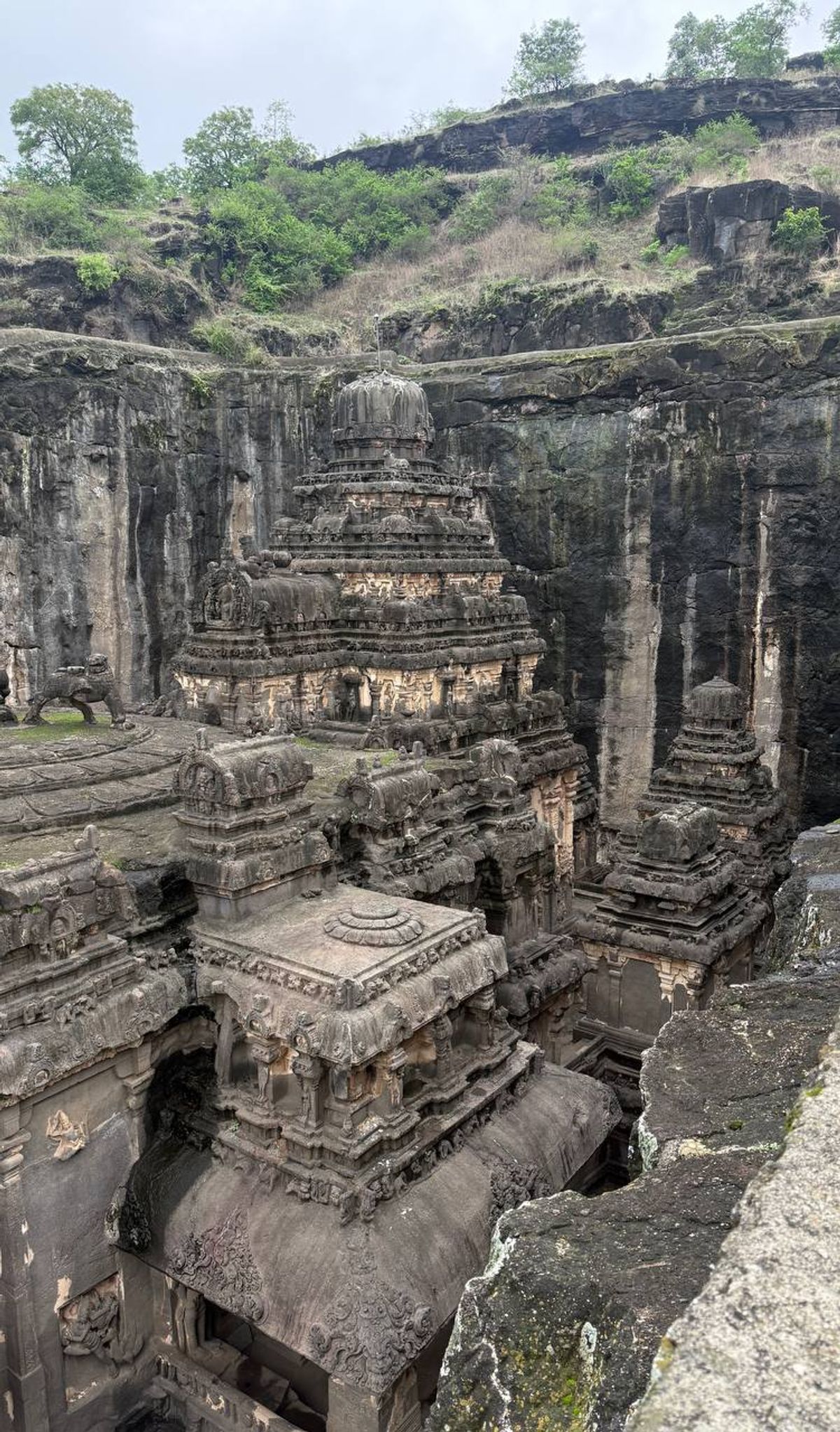
Last week, I visited a place that I believe deserves to be called the eighth wonder of the world. Ellora is a massive complex of cave temples carved into solid rock, spanning almost 3 kilometers in length. The Ellora caves are considered one of the greatest achievements of world architecture. Here, you start to wonder: how on earth were people able to create something like this over a thousand years ago? The ancient architects had no cranes, no concrete, no electricity, and no laser measurements.
Art from Stone: The Ellora Complex
Ellora is located in the Indian state of Maharashtra, about 30 kilometers from the city of Sambhajinagar (formerly Aurangabad). There were once over 100 rock-cut structures here (100–114 sites are often mentioned in the broader complex). Today, the 34 main caves are open to the public, and it is these that comprise the UNESCO World Heritage site. Most amazingly, they belong to three different religions at once: Buddhism, Hinduism, and Jainism.
The caves are arranged in groups, and you can literally walk a path through several centuries of history, seeing how the art and architecture of different traditions evolved. They served various purposes — both residential and spiritual. For example, the Buddhist caves contain numerous meditation cells.
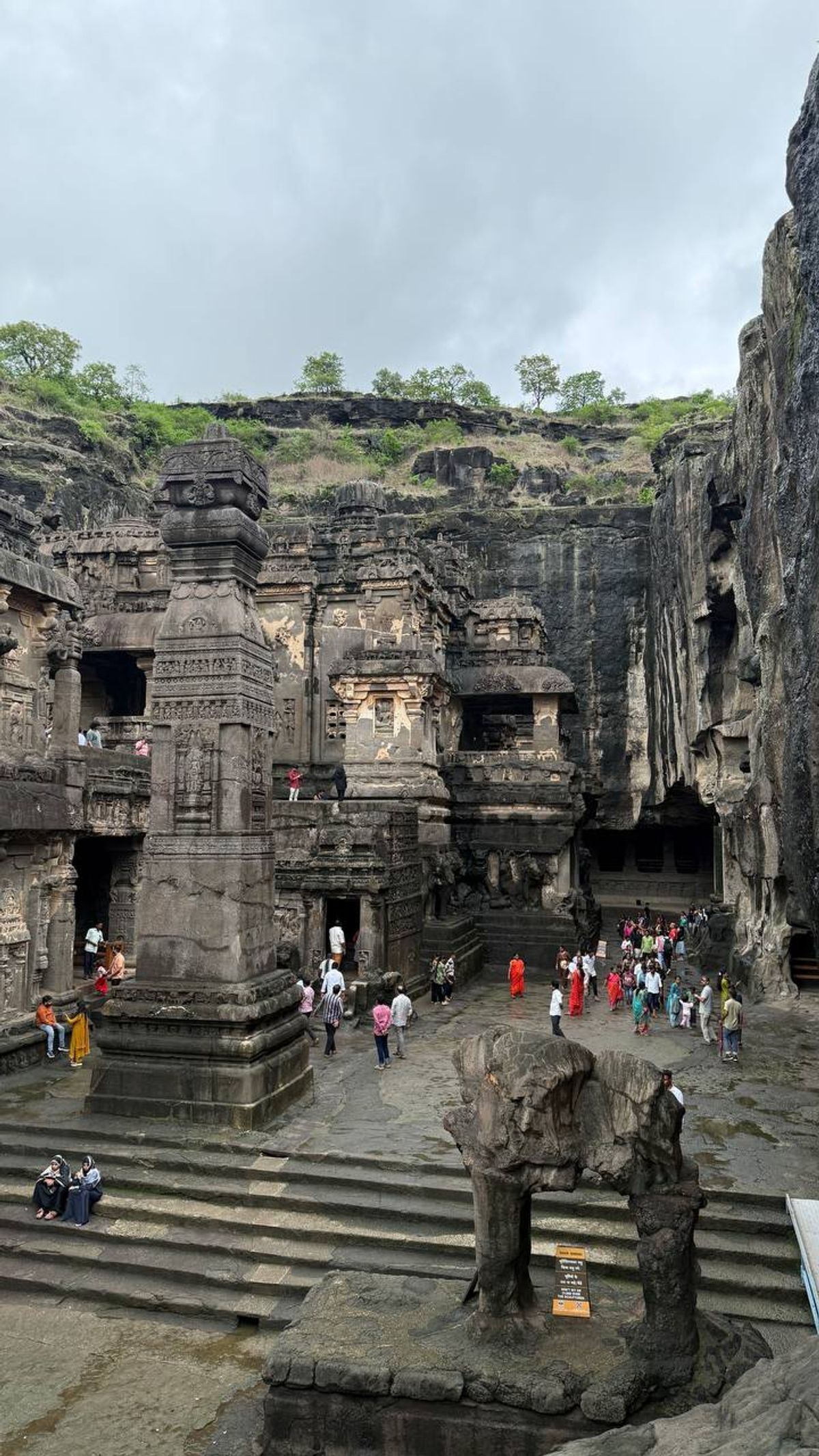
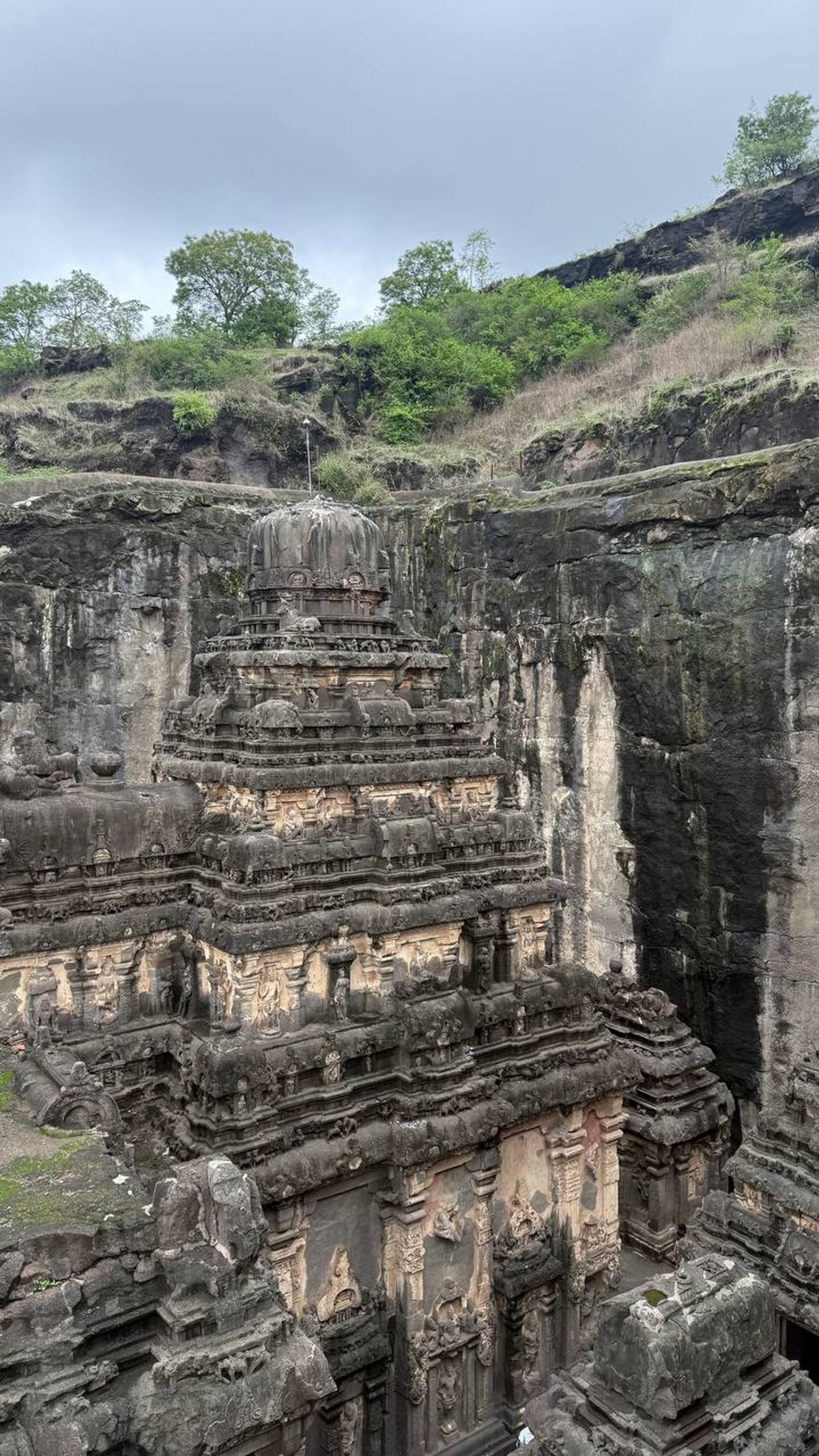
But the main miracle is Kailasanatha. This is a temple carved entirely out of a single, solid rock. First, hundreds of thousands of tons of basalt were removed from the top down; then the roofs, columns, interiors, stairs, and bridges were carved out. Only after this did the craftsmen begin to intricately carve thousands of minute sculptures. If the ancient masters had made a mistake of even a single meter at the very beginning, it would have been impossible to fix. It’s like starting to carve Michelangelo's David out of stone, only the size of a multi-story building.
And it's not just the scale that is striking, but the level of detail. Almost every wall of the stone temple is covered in carvings. These are entire chapters from the Ramayana, the Mahabharata, the Puranas, and tales of Shiva. You can literally read ancient epics in stone. Imagine how much patience and time it took to manually carve thousands of figures, facial expressions, jewelry, animals, and entire scenes out of rock.
Incredible Acoustics Forged from Stone
There is one phenomenon at Ellora that cannot be captured in photographs, because it can only be heard. When we stepped inside one of the Buddhist caves, at first there was absolute silence and the coldness of the stone. But when the guide asked us to stand in a specific spot and began chanting mantras, I felt the space come alive.
At that moment, something amazing happened: it seemed as if the cave itself started to sing! We leaned against the columns, which were conducting the physical vibrations of the sound. The guide’s voice reflected off the stone walls, returning from all directions, and it was impossible to tell where the source of the sound was coming from. It felt as though the space around you was becoming part of this resonance.
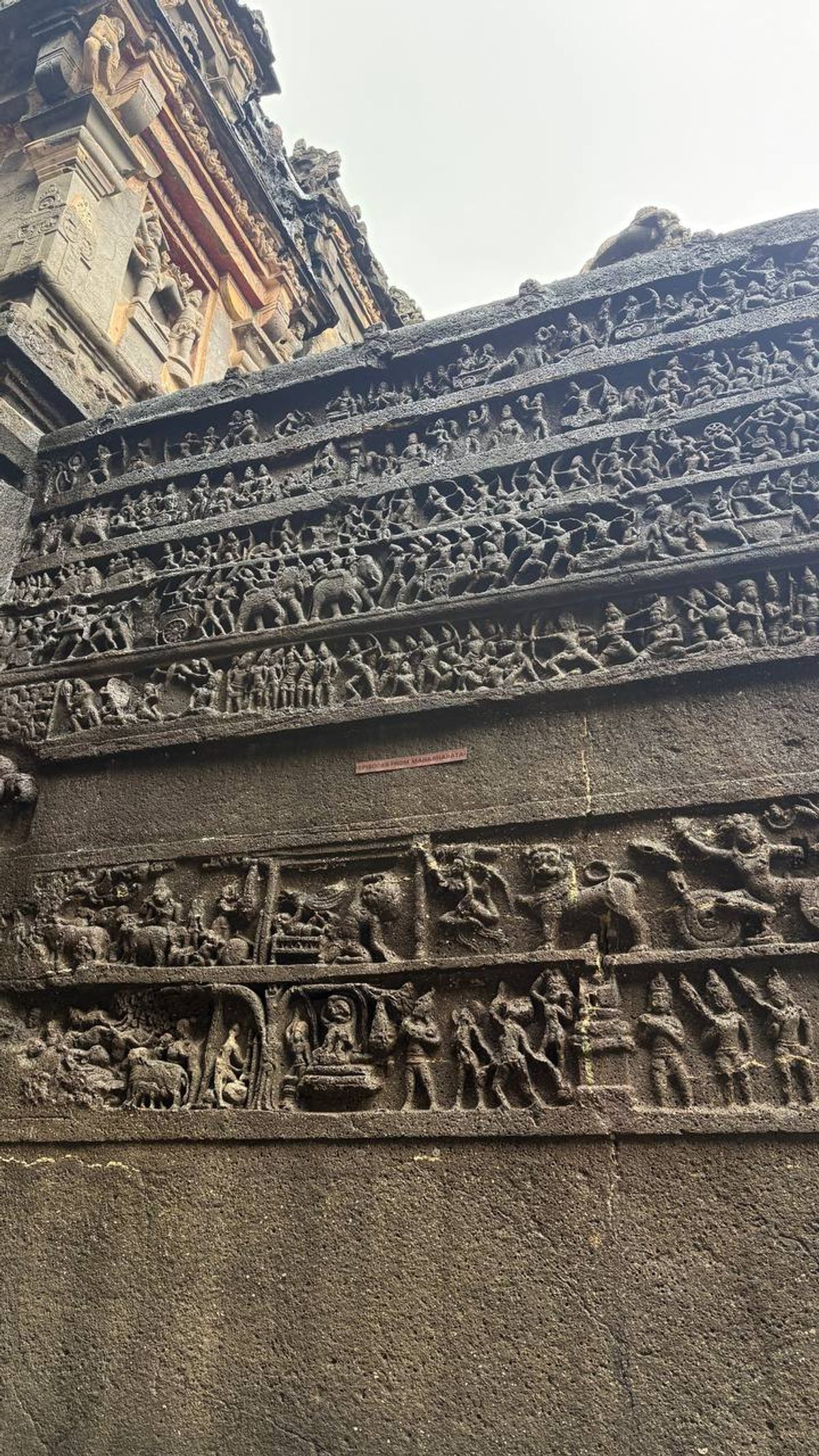
Over a thousand years ago, people understood how the shape of a space could affect sound. In ancient times, these caves were created not only as places for prayer and meditation, but also as spaces for special rituals where sound was an integral part of the experience. Every detail mattered: the height of the ceilings, the shape of the walls, the placement of the columns, and even the positions of the people inside the room.
If I felt such an effect in the presence of a simple guide, one can only imagine what it was like when experienced priests chanted simultaneously, positioned in pre-planned spots with the temple’s doors and windows closed. In those moments, the space turned into a giant musical instrument.
The Destruction of Ellora Through the Centuries
But the story of Ellora is not just a tale of incredible human craftsmanship. As you walk through these temples, it is impossible to ignore the scars of the past: some sculptures are damaged, figures are missing their faces, and certain details have been lost forever. Over the centuries, the complex was devastated by various factors. It wasn't just time, rain, and wind that took their toll.
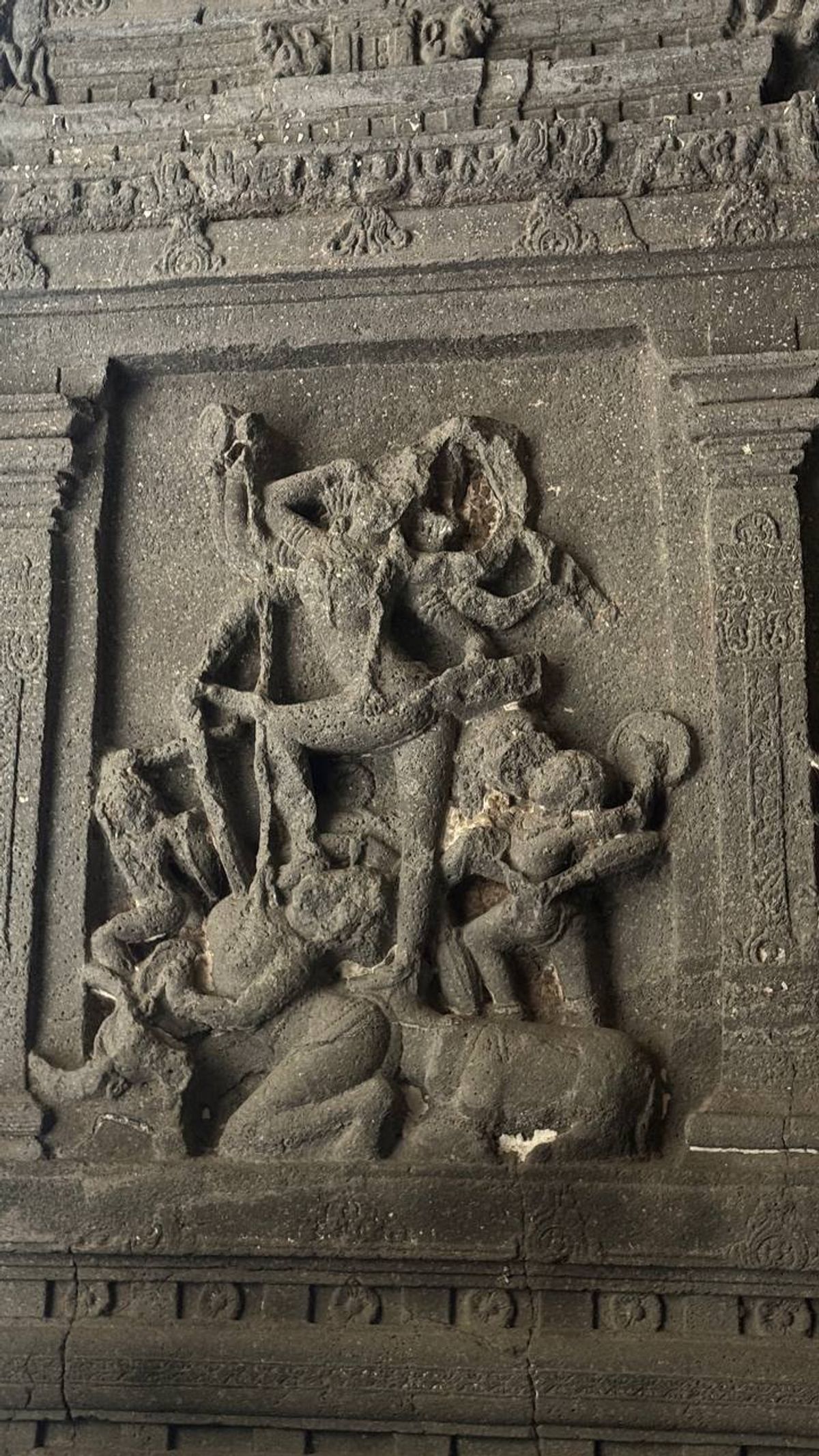
The primary destroyers were Muslim armies and rulers of Islamic sultanates who controlled the Deccan Plateau in the 15th–17th centuries. The warriors destroyed Hindu and Buddhist shrines because depictions of deities and saints were considered unacceptable. The basalt is so tough that many of the sites were not completely wiped out. However, many of the Murti (deity idols) had their heads knocked off, making it impossible to use these temples for worship any longer.
Yet even in this condition, Ellora remains a place that is impossible to forget. Perhaps that is exactly what makes it so special. It displays two sides of human nature at once: on one hand, the incredible ability to create, and on the other, the capacity to destroy what previous generations have built.
But despite everything, Ellora lives on; the stone still guards its history, the sculptures still recount ancient epics. And the echo still returns the voices of people who were here long before us. That is probably why Ellora cannot merely be seen; it must be felt.