If you've watched any modern Indian film in the last decade, you've heard him.
That voice behind the love songs. The breakup anthems. The wedding playlist that gets entire crowds singing in unison.
His name is Arijit Singh. According to Spotify, he's been India's most-streamed artist for seven years running (2019–2025). Not "most-streamed Indian artist worldwide" — most-streamed artist in India, full stop.
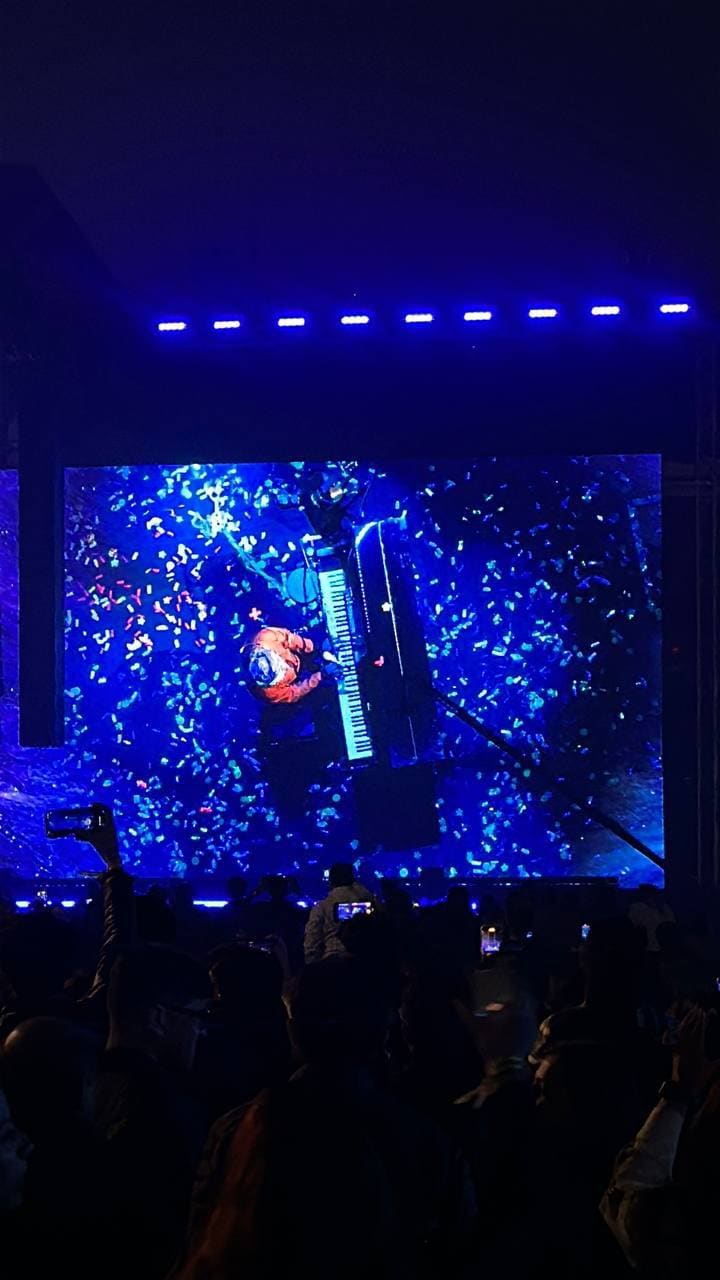
I recently caught him live in Delhi. It's one of those concerts that resets how you think about live music.
What Makes Him Different
In Bollywood, actors don't sing their own songs. They never have.
The system — called playback singing — began in 1935 and became the industry standard by the 1940s. A specialist vocalist records the song in a studio; the actor lip-syncs on camera. That's how every Hindi film works.
The result was a parallel star system. Playback singers became as famous as the actors. Lata Mangeshkar (the "Nightingale of India") recorded more than 30,000 songs across her career. Mohammed Rafi defined the male voice of classic Bollywood. Kishore Kumar. Asha Bhosle. These weren't background musicians — they were legends whose voices defined whole decades of Indian cinema.
Arijit Singh is their heir. But what he's done is something new.
The Accidental Revolution
Singh was born in 1987 in Murshidabad, West Bengal. His grandmother was a classical singer. His uncle played tabla. By the age of three, he was already training in Indian classical music.
His path to stardom wasn't direct. He appeared on a reality TV singing competition in 2005, finished sixth, and dropped out of public view. For years he worked behind the scenes — programming music, producing tracks, singing backing vocals that nobody noticed.
His breakthrough came in 2013 with "Tum Hi Ho" from the film Aashiqui 2.
It wasn't just a hit. It was a phenomenon. The song spent eight weeks at number one in India. It swept every major award. And it announced a new era of Bollywood music — more intimate, more emotionally direct, less ornate than the classical-leaning compositions of earlier decades.
What Singh brought sounds simple but isn't: vulnerability. His voice cracks in the right places. It swells when it should swell. It carries the specific texture of longing in a way that feels confessional rather than performed.
Since then he has dominated Indian music so thoroughly that the numbers almost tell the story on their own. By some estimates, his voice features on more than 50% of major Bollywood soundtracks in recent years. He has won two National Film Awards, eight Filmfare Awards, and in 2025 was awarded the Padma Shri, one of India's highest civilian honors.
And then — in January 2026, at 38 years old and at the absolute peak of his career — he announced his retirement from playback singing.
He'll continue independent music and live performances. But no more film soundtracks. The era ended as suddenly as it began.
The Delhi Concert
I caught one of his final major tour dates before the announcement — Delhi, early 2025, at a massive outdoor venue not far from the lanes around New Delhi station.
The logistics alone were staggering. Tens of thousands of people. An open-air stage complex. A ramp extending into the crowd so fans in every section could see.
But what struck me wasn't the scale. It was the variety.
Four Hours Without Repetition
Singh performed for nearly four hours. No intermission. No significant breaks.
Each song was essentially its own production number:
The orchestra. Not backing tracks — live musicians. Dozens of them. Strings. Percussion. Traditional Indian instruments: tabla, bansuri flute, mandolin. The sound was genuinely multi-layered, as close to studio quality as live performance gets.
The arrangements. Singh doesn't just perform his hits; he reimagines them. Songs shifted between acoustic intimacy and full orchestral power, sometimes within the same track. A romantic ballad would build into something approaching rock. A dance number would strip down to just voice and guitar.
The genres. This is what surprised me most. Over four hours, he moved through:
- Lyric ballads
- Rock-influenced arrangements
- Singer-songwriter acoustic sets
- Dance music that had the crowd jumping
- Indian classical and semi-classical compositions
And it all felt coherent. The same voice, the same emotional directness, applied to wildly different musical traditions.
His own playing. Singh isn't just a vocalist. During the show, he played acoustic guitar, electric guitar, and piano at different points. The man can actually perform.
The duets. Female vocalists joined him for several songs, recreating the famous Bollywood duet format that's been central to Indian film music for decades.
The dancers. Full choreographed sequences. Elaborate costume changes. Production values that would feel at home in any major global tour.
And at the end — the moment that stuck with me — he brought out the Indian flag. A simple gesture, but one that felt earned after four hours of demonstrating what Indian music can do.
The Crowd Knows Every Word
What struck me during the concert wasn't just Singh's performance — it was the audience response.
Tens of thousands of people, singing every lyric. Not just the choruses — the verses, the bridges, the subtle moments. Songs that are, technically, written for movie scenes became communal property in a way that Western pop music rarely achieves.
This is the particular magic of Bollywood music. A song debuts in a film. It plays in shops, at weddings, in auto-rickshaws, on radio stations. Within weeks, the entire country knows it. The line between "film soundtrack" and "cultural soundtrack" dissolves completely.
Singh's songs have achieved this at unprecedented scale. "Channa Mereya" — a song about unrequited love from a 2016 film — has become the default background music for a certain kind of Indian emotional experience. Play it at a wedding sangeet and half the room will tear up, whether they've seen the movie or not.
At the Delhi concert, the crowd didn't just sing along — they performed. They knew the swells, the pauses, the emotional architecture of each song. Singh could step back from the microphone during key moments and let the audience carry the melody.
This is what happens when a single voice dominates a nation's musical output for a decade.
The Tradition Behind the Voice
To understand Singh's significance, you need to understand playback singing's peculiar place in Indian culture.
In the West, we're used to singer-songwriters who perform their own material. The voice and the face are unified. But Bollywood separated these from the beginning.
The system emerged largely from practicality — early film technology made live singing on set nearly impossible because of equipment noise. But it soon hardened into a deliberate creative choice. Actors could be cast for looks and dramatic skill; singers for vocal quality. Each specialist did what they did best.
This created a phenomenon: faces that became associated with voices they never actually produced. For decades, if you saw a romantic hero in a Hindi film, you heard Mohammed Rafi. If you saw a demure heroine, you heard Lata Mangeshkar. The pairings became so natural that audiences stopped thinking about the separation.
What this meant for singers was enormous stardom without physical recognition. Lata Mangeshkar was one of the most famous women in India for most of the 20th century — but she could walk down many streets unnoticed. Her voice was everywhere; her face, rarely seen.
Singh operates in a different media environment. He performs live. He releases independent music. His face is known. But he's still, fundamentally, a playback singer — a voice that exists to give sound to someone else's image.
His retirement from that role, while continuing to perform live, represents a shift in how Indian music might work going forward.
Why This Matters
There's a reason Singh became the voice of modern Indian romance, and it's not just talent.
Bollywood music sits at a strange intersection. It has to work within films — supporting narratives, scoring emotional beats, being lip-synced by actors who didn't perform it. But it also has to work independently — on playlists, at weddings, in cars, as the soundtrack to millions of individual lives.
Singh's voice does both. His songs function as film scores and as standalone emotional experiences. You don't need to have seen Ae Dil Hai Mushkil to feel devastated by "Channa Mereya." The song carries its own narrative weight.
This is partly technique — his classical training gives him control and range. But it's mostly interpretive intelligence. He sings like someone who understands exactly what the words mean and exactly how that meaning should hit.
The concert made this visible. Watching him navigate between genres, between arrangements, between intimate and theatrical — you could see the musical intelligence in real time.
A Playlist to Start
If you want to understand what all this means, here's where to begin. These songs span different moods, different productions, different years of Singh's career:
- "Tum Hi Ho" (Aashiqui 2, 2013) — The breakthrough. Pure romantic longing. The song that made him a household name. Start here.
- "Ilahi" (Yeh Jawaani Hai Deewani, 2013) — Lighter, more joyful. A road-trip anthem about freedom and possibility. Shows he's not limited to heartbreak.
- "Channa Mereya" (Ae Dil Hai Mushkil, 2016) — Perhaps his masterpiece. Unrequited love at a wedding, watching someone you love marry another. The emotional specificity is devastating.
- "Apna Bana Le" (Bhediya, 2022) — Contemporary production with a more modern arrangement. Shows his continued relevance.
- "Heeriye" (2023) — A non-film single that proves he doesn't need Bollywood to hit.
- "Kalank" (Kalank, 2019) — Orchestral, dramatic, classical-influenced. The maximalist end of his spectrum.
- "Sajni" (Laapataa Ladies, 2024) — Folk-influenced, gentle. The minimalist end.
- "Kesariya" (Brahmāstra, 2022) — Won him a National Film Award. The kind of grand romantic sweep that defines modern Bollywood.
- "Agar Tum Saath Ho" (Tamasha, 2015) — A duet with Alka Yagnik. Complex emotions in a complicated relationship. Subtler than his bigger hits.
- "Bulleya" (Ae Dil Hai Mushkil, 2016) — Sufi-influenced, spiritual, intense. Perhaps his most ambitious vocal performance on record. The religious yearning bleeds into romantic yearning.
Listen to all ten and you'll understand his range. The voice is consistent — that distinctive grain, that controlled emotionality — but the musical contexts shift dramatically.
What His Voice Actually Does
There's technical language for what makes Singh distinctive, but the experience is more immediate.
He sings like someone who has actually felt the emotions in the lyrics. This sounds obvious, but it isn't. Plenty of technically gifted singers deliver songs as performance. Singh delivers them as confession.
The classical training gives him control — he can navigate complex melodic lines, hit sustained notes with precision, modulate his tone across dramatic ranges. But he uses that control in service of emotional expression rather than technical display.
His signature is restraint at unexpected moments. Where another singer might push toward a climax, Singh will sometimes pull back, let the voice break slightly, introduce a tremor that suggests emotion overwhelming technique. It's calculated vulnerability — but calculation in the right places makes the vulnerability feel real.
Live, this becomes even more apparent. He works the crowd, yes. He knows when to let them sing, when to take the melody back, when to build and when to release. But the core of the performance is still that voice: intimate even when amplified for tens of thousands.
The End of an Era
Singh's retirement announcement hit Indian music like an earthquake. At 38, with his voice still in peak condition, with his commercial dominance unchallenged — he walked away from playback singing.
His statement suggested exhaustion with the film industry's demands, a desire for creative independence, and an interest in pursuing music on his own terms.
What fills the void? It's unclear. The playback singing tradition has always had dominant voices — Lata Mangeshkar for female vocals in one era, Mohammed Rafi for male vocals in another. Singh had occupied that position so completely that there's no obvious successor.
But live performance continues. Independent music continues. And that concert in Delhi — four hours of a singular artist demonstrating what Indian music can achieve — made clear why he'd been the voice of a generation.
If you ever get the chance to see him live, take it. This is what musicianship looks like when it scales. This is what musicianship looks like when it scales.
Arijit Singh's live performances draw from across his Bollywood catalog and independent releases. Shows typically run 3-4 hours. Tickets for major Indian venues range from ₹2,000 to ₹80,000 depending on seating, and most platforms now accept UPI payments at checkout. His music is available on all major streaming platforms, where he remains the most-followed Indian artist.