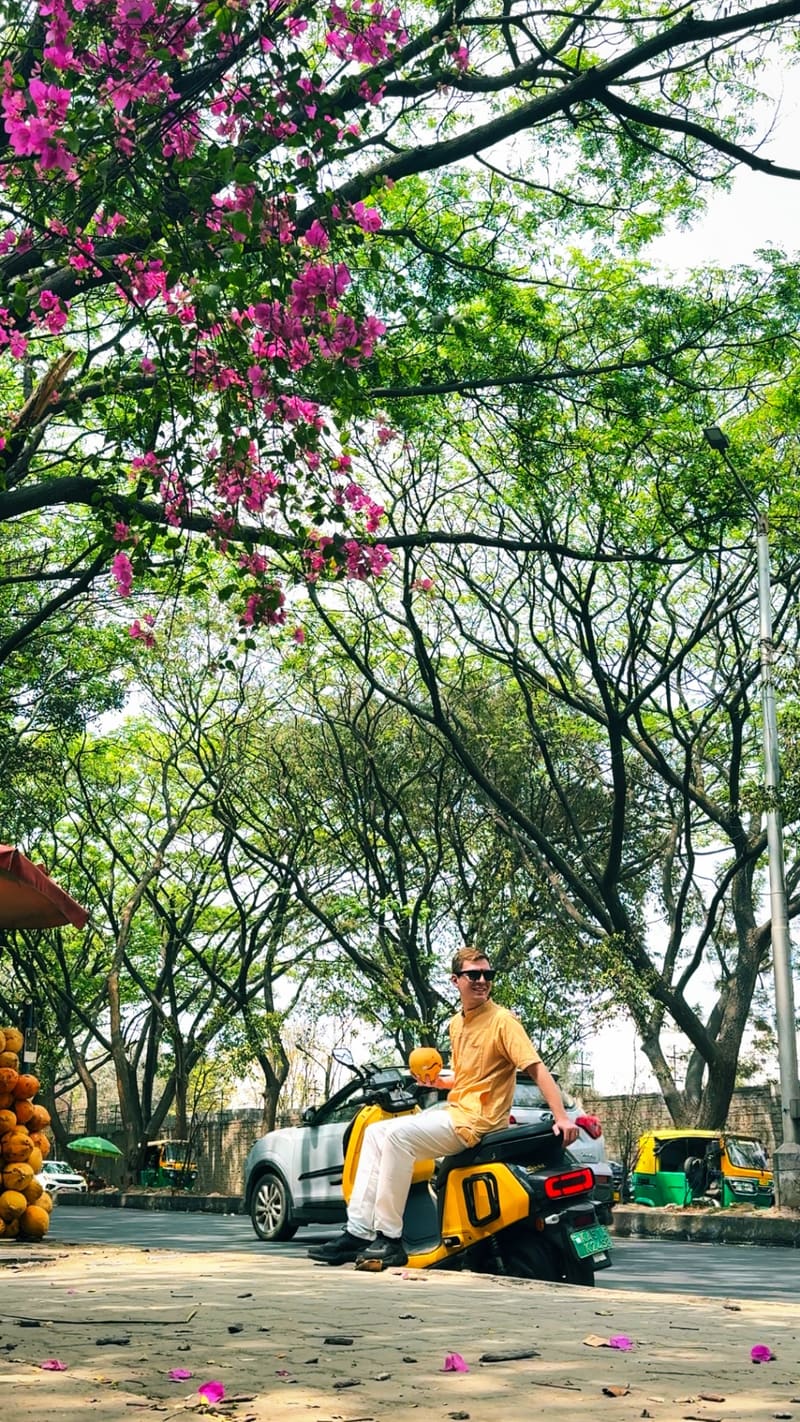
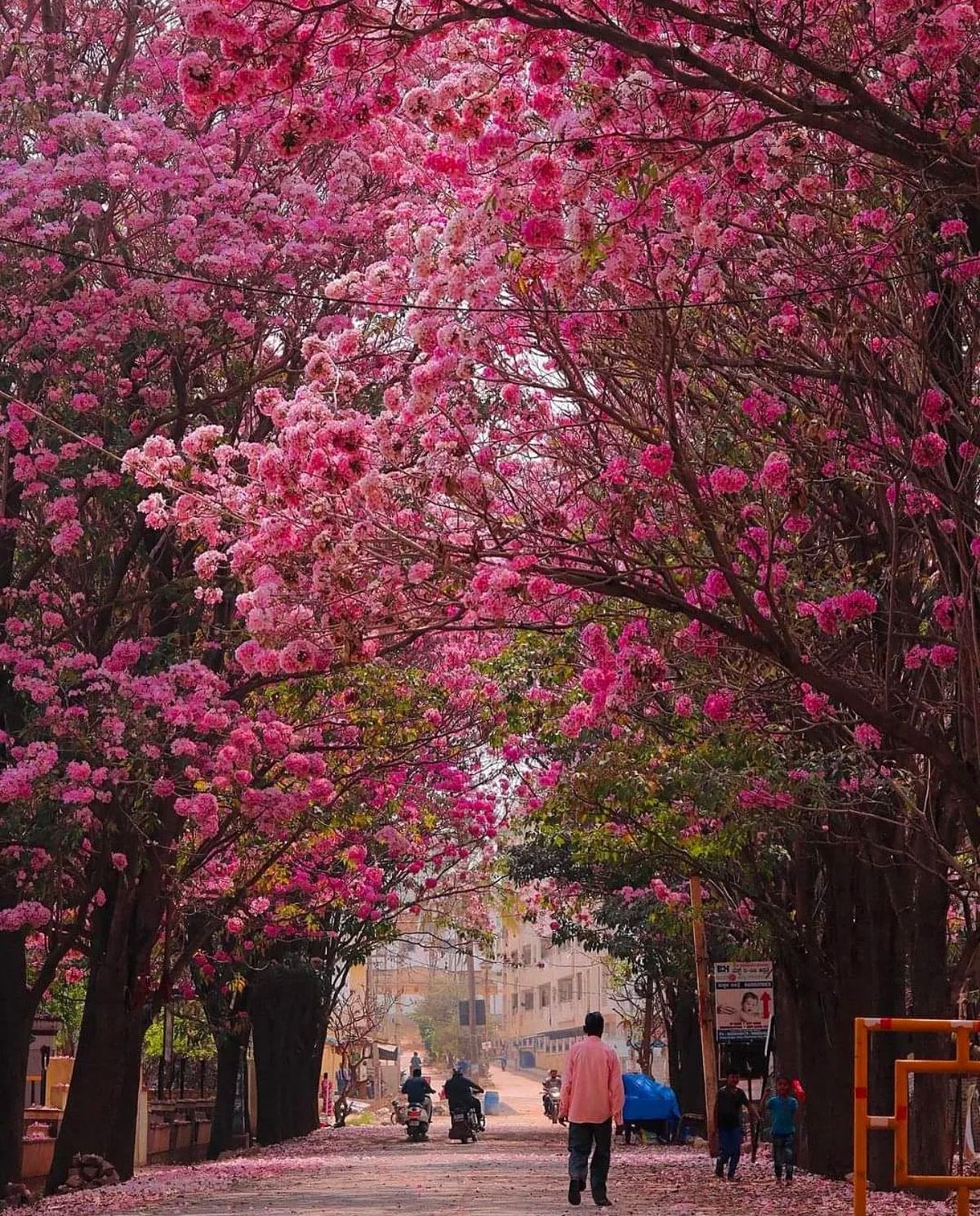
Every February–March, something magical happens in Bengaluru. The city's wide boulevards, parks, and residential lanes erupt in a cascade of pink and lavender blossoms. Locals call them "Indian cherry blossoms," and for a few glorious weeks, India's tech capital looks more like Kyoto than Karnataka.
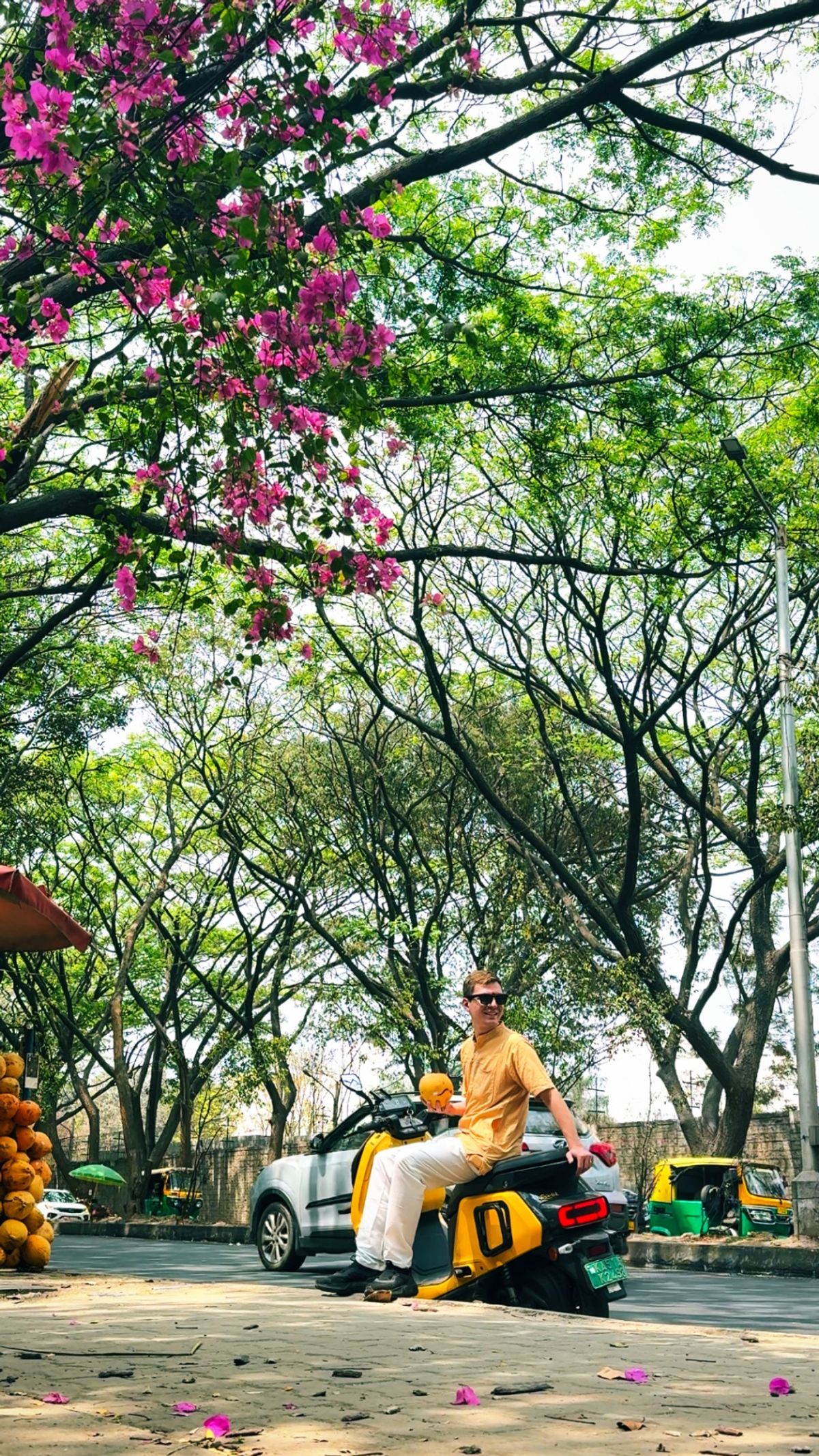
The Tree Behind the Magic: Tabebuia rosea
The tree responsible for this annual spectacle is Tabebuia rosea, native to Central and South America. Also known as the pink trumpet tree, it was introduced to India during the British colonial period. Unlike Japan's famous sakura, which blooms for barely a week, Tabebuia rosea holds its flowers for two to three weeks — sometimes longer in Bengaluru's mild climate.
The tree is deciduous: it sheds all its leaves before blooming, so the flowers emerge on bare branches, creating that dramatic, unmistakable "pink cloud" effect against the sky. Each trumpet-shaped flower is roughly 5–8 cm across and ranges from pale pink to deep magenta.
Two Visionaries Who Painted the City Pink
Bengaluru's Tabebuia story begins with two remarkable men who, decades apart, shared the same dream of a greener, more beautiful city.
Gustav Hermann Krumbiegel (1865–1956) was a German horticulturist who served as Superintendent of the Government Botanical Gardens (now Lalbagh) from 1908 to 1932. He introduced dozens of exotic species to Bengaluru, including Tabebuia rosea, and designed the tree-lined avenues that still define the city's older neighborhoods. His legacy lives on in every pink-canopied street in Jayanagar, Basavanagudi, and along the Lalbagh perimeter.
B. Neginhal, who served as Additional Principal Chief Conservator of Forests in the 1970s and '80s, scaled Krumbiegel's vision up dramatically. He championed mass plantings of Tabebuia along highways, medians, and public spaces across Karnataka. Thanks to his efforts, Bengaluru today has an estimated 1.5 million Tabebuia trees — more than any other city in India.
The Bengaluru Bloom: A Cultural Phenomenon
What started as a quiet horticultural tradition has become a full-blown cultural event. In recent years, the "Bengaluru Bloom" has taken social media by storm. Every February, Instagram and Twitter fill with photos tagged #BengaluruBloom and #IndianSakura.
The city has embraced its pink identity. Walking groups organize "bloom walks," cafés serve pink-themed specials, and amateur photographers head out at dawn to catch the golden-hour light filtering through the petals. In 2024, the city even launched the Bengaluru Bloom app — a crowd-sourced map showing where trees are flowering in real time.
Where to See the Best Blooms
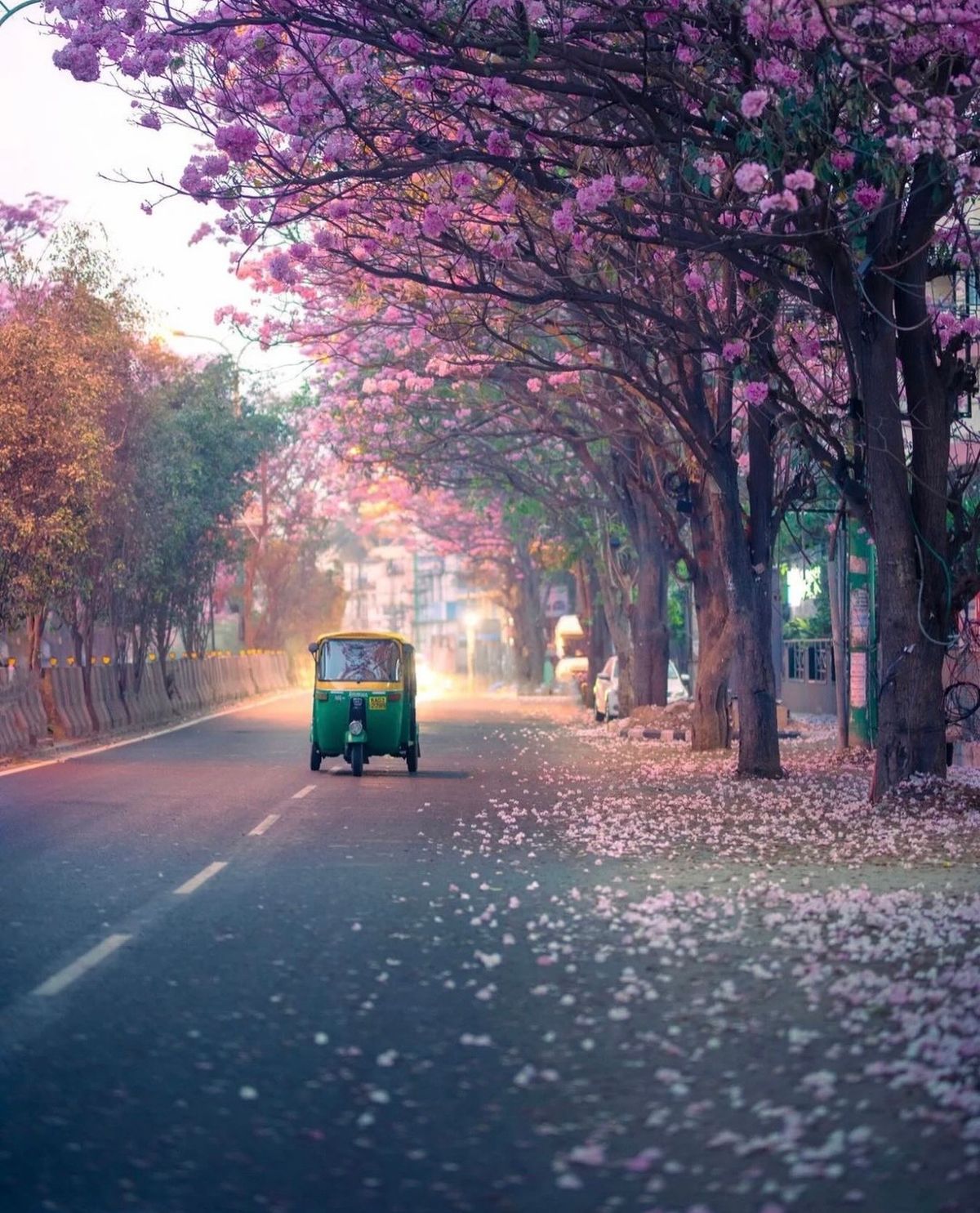
If you're visiting Bengaluru during bloom season, here are the top spots:
- Jayanagar 4th Block — The epicenter of Tabebuia. Nearly every street is lined with mature trees that form complete pink tunnels.
- Lalbagh Botanical Garden — Krumbiegel's original masterpiece. The garden has some of the oldest Tabebuia specimens in the city.
- Cubbon Park — The city's green lung transforms into a pink paradise, especially along the western paths.
- Basavanagudi — Old Bengaluru at its finest: heritage homes behind pink canopies, with Bull Temple as a backdrop.
- Sankey Tank — The combination of water reflections and blooming trees makes this a photographer's dream.
- Koramangala Inner Ring Road — A modern contrast — tech offices and startups framed by cascading pink blossoms.
Bloom Calendar: When to Visit
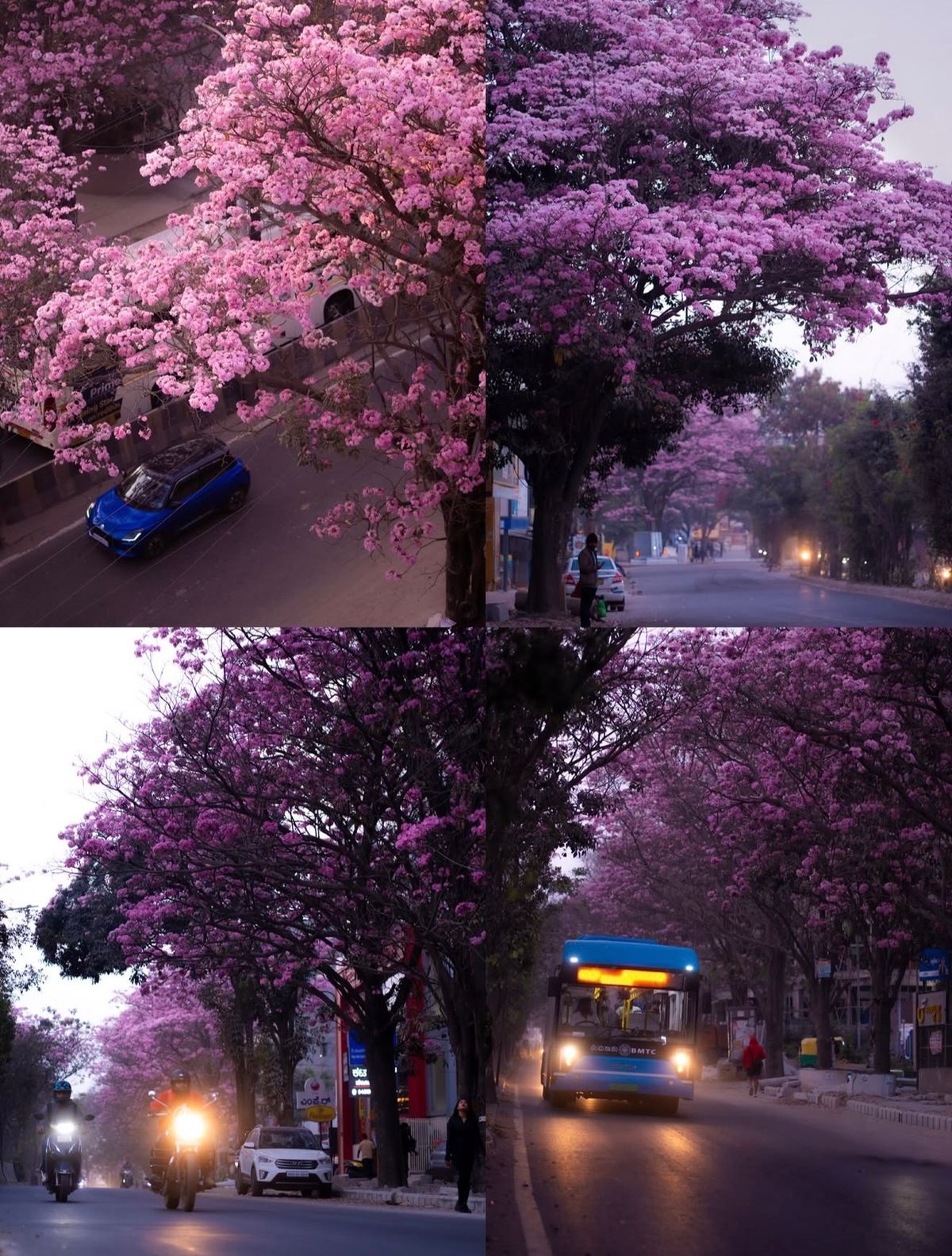
The bloom timing varies slightly each year depending on temperature and rainfall, but here's a general guide:
- Late January — First buds appear on trees in Jayanagar and Basavanagudi.
- February 1–15 — Early bloom. Trees start shedding leaves and first flowers open. Great for photography with a mix of green and pink.
- February 15 – March 5 — Peak bloom. This is the magic window. Full canopies, petals carpeting the streets.
- March 5–20 — Late bloom and petal fall. The "pink rain" effect as petals drift in the breeze. Still beautiful, increasingly ephemeral.
- Late March — New green leaves emerge. The show is over until next year.
Not Just Pink: The Full Tabebuia Palette
While Tabebuia rosea gets all the attention, Bengaluru actually has several Tabebuia species:
- Tabebuia rosea — Pink to lavender. The dominant species.
- Tabebuia aurea — Bright yellow. Called the "Golden Trumpet Tree." Blooms slightly earlier than rosea.
- Tabebuia pallida — Pale pink, almost white. Rarer, found mostly in Lalbagh.
- Tabebuia impetiginosa — Deep magenta. The most dramatic color, but least common.
If you time your visit right (early February), you can see yellow and pink Tabebuia blooming simultaneously — a truly spectacular sight.
Controversies and Challenges
The Tabebuia story isn't entirely rosy. Some ecologists argue that the focus on exotic ornamentals like Tabebuia has come at the expense of native trees. Bengaluru has lost significant green cover to development, and the preference for photogenic species over ecologically important native ones routinely draws criticism.
Then there's the standoff between infrastructure and trees. Road-widening projects in recent years have claimed hundreds of mature Tabebuias, sparking protests from residents and environmental groups. The battle between "development" and "heritage trees" continues to play out in city politics.
Practical Tips for Bloom Season
- Best time: Mid-February to early March (peak bloom).
- Best light: Early morning (6:30–8:00 AM) for golden hour, or late afternoon (4:00–5:30 PM).
- Getting around: Rent a scooter or bicycle — it's the best way to explore the tree-lined streets at your own pace.
- Photography tip: Look for streets where the canopy forms a tunnel. Jayanagar 4th T Block and 9th Main Road in Jayanagar are classic spots.
- Combine with: A visit to Lalbagh for the flower show (usually held in late January/Republic Day), or a day trip to Nandi Hills for sunrise.
- Bengaluru Bloom app: Download the crowd-sourced map to find which trees are blooming right now.
- Stay: Jayanagar or Basavanagudi if you want to wake up to pink streets. Koramangala for a more modern vibe with easy access to bloom spots.
The Bigger Picture
Bengaluru's Tabebuia bloom is more than just a pretty sight. It's a reminder that cities can be beautiful. In an era of concrete sprawl and environmental anxiety, these pink canopies show what's possible when visionaries plant trees and communities protect them.
Every February, Bengaluru proves that you don't need to fly to Japan for cherry blossom season. India has its own version — wilder, longer-lasting, and completely free. All you need to do is look up.