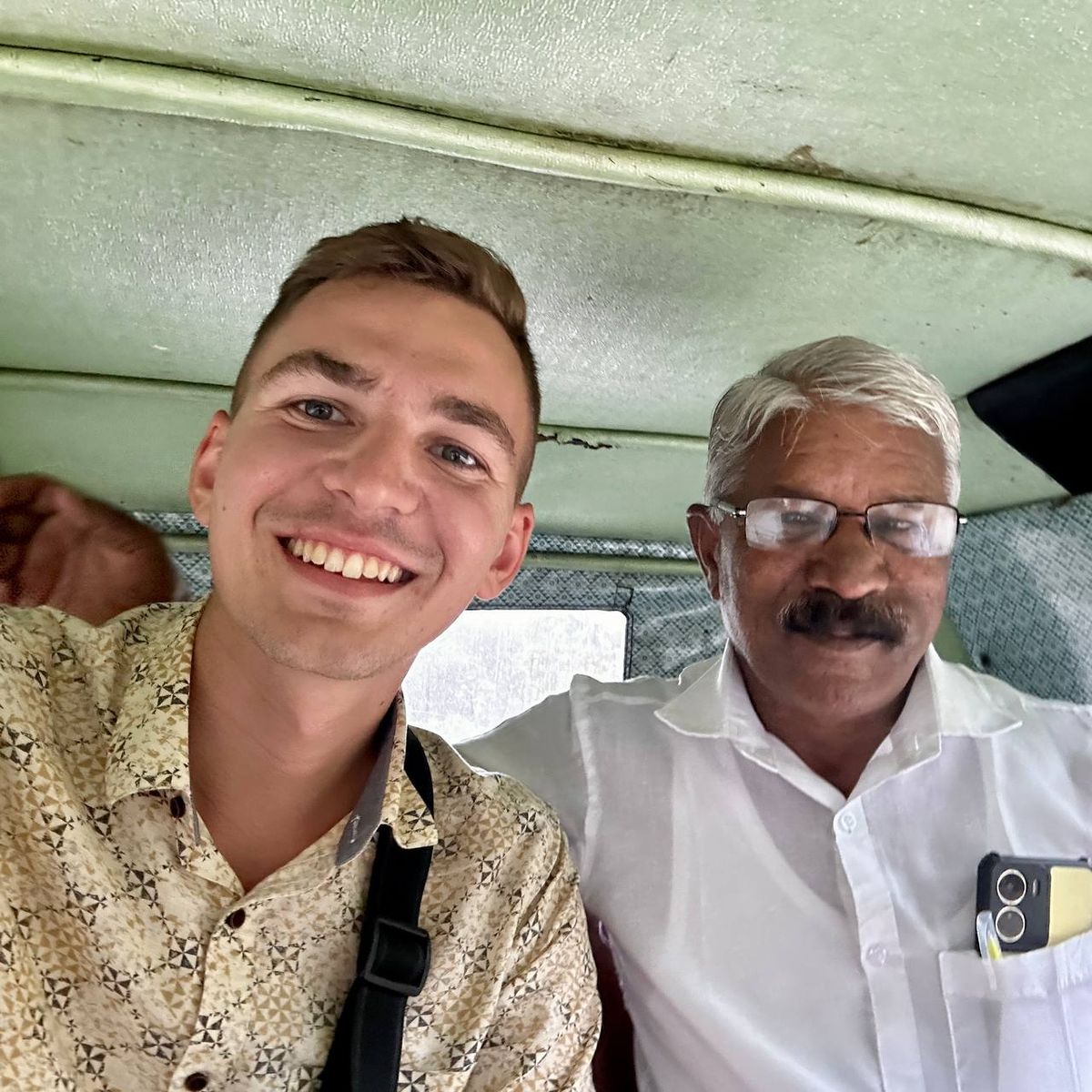
The squeaky auto-rickshaw climbs through the tea plantations of Munnar, and my co-passenger — a middle-aged man in a white mundu — hands me a pamphlet. Red background. Hammer and sickle. Malayalam text I can't read.
"You can pray to whoever you want," he says in English, noticing my puzzled expression. "But vote for the one who built the school."
He's a functionary for the Communist Party of India (Marxist), and entirely unselfconscious about it. He pulls up photos from the last rally on his smartphone — ten thousand people, red flags, portraits of Marx and Lenin held aloft under the tropical sun.
If you think communism died with the Soviet Union, welcome to Kerala.
The Visual Paradox
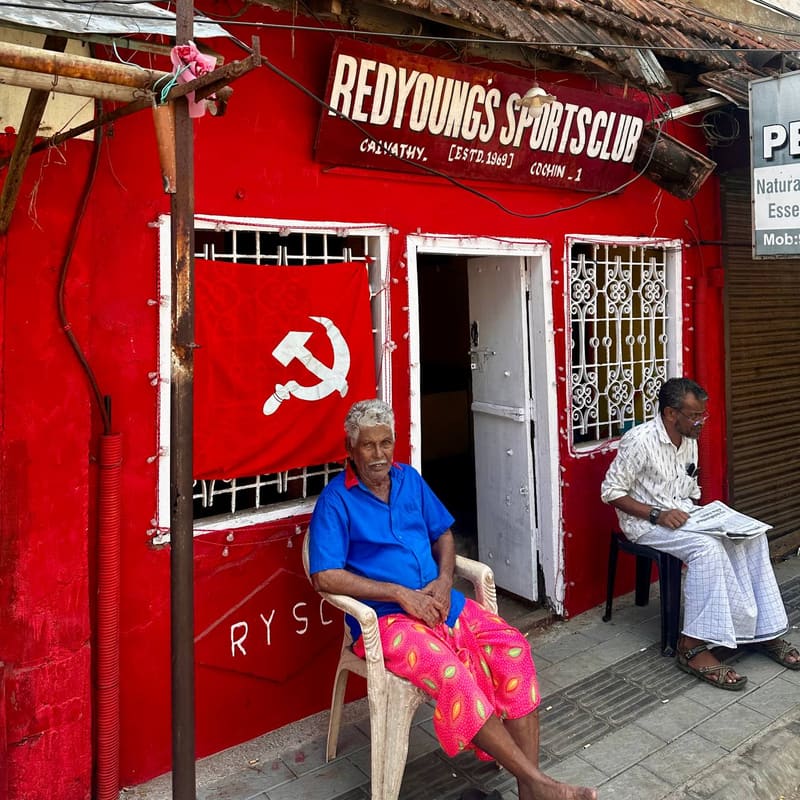
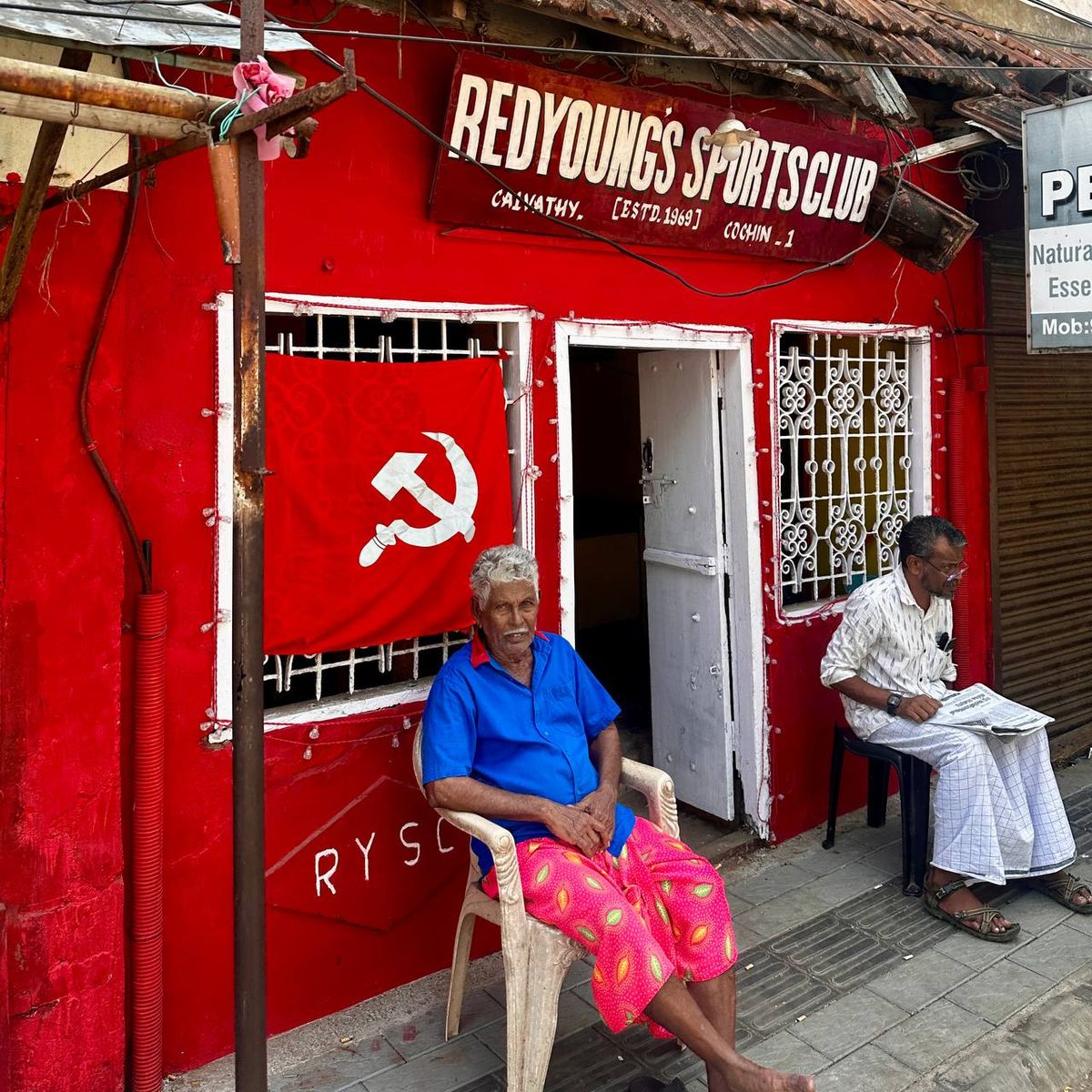
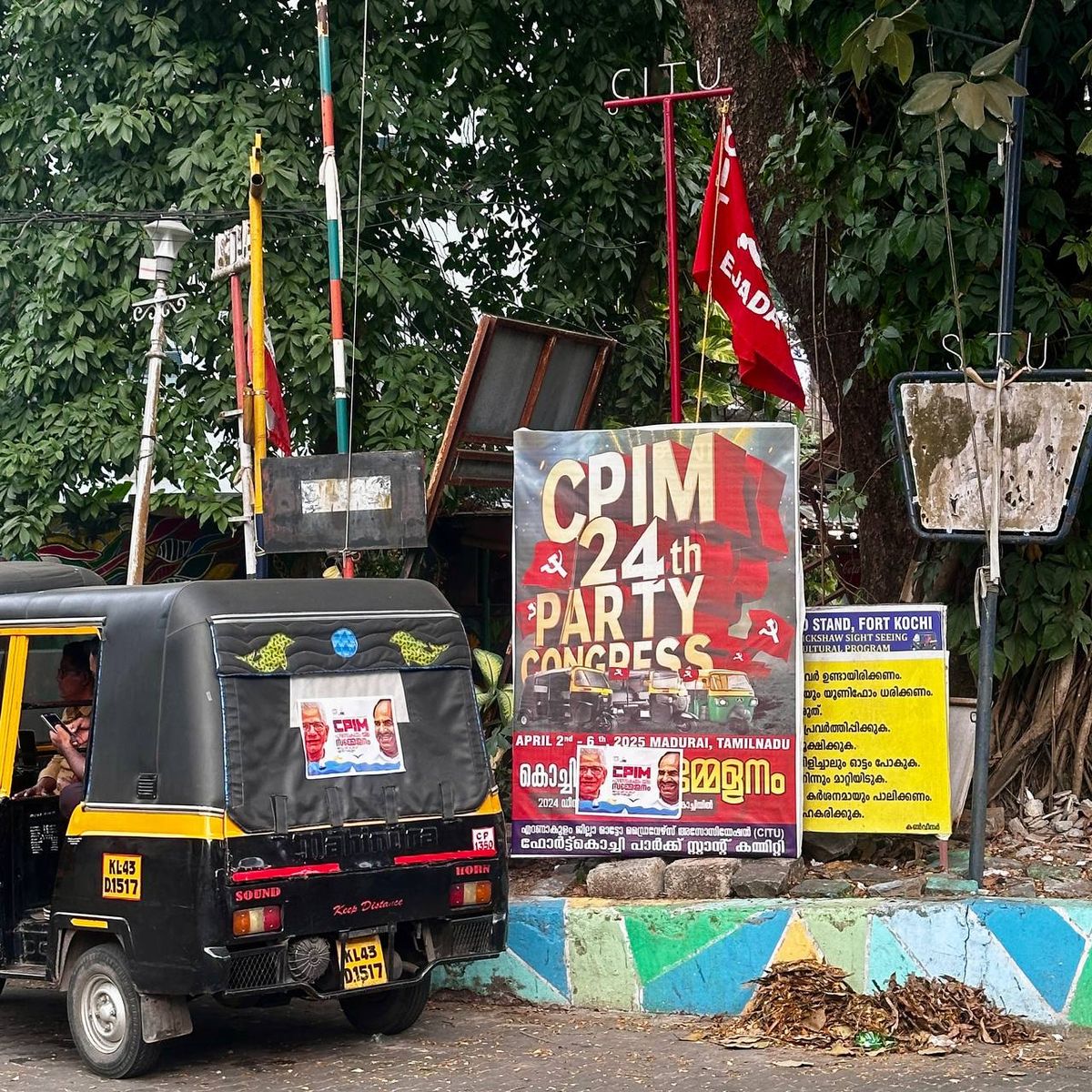
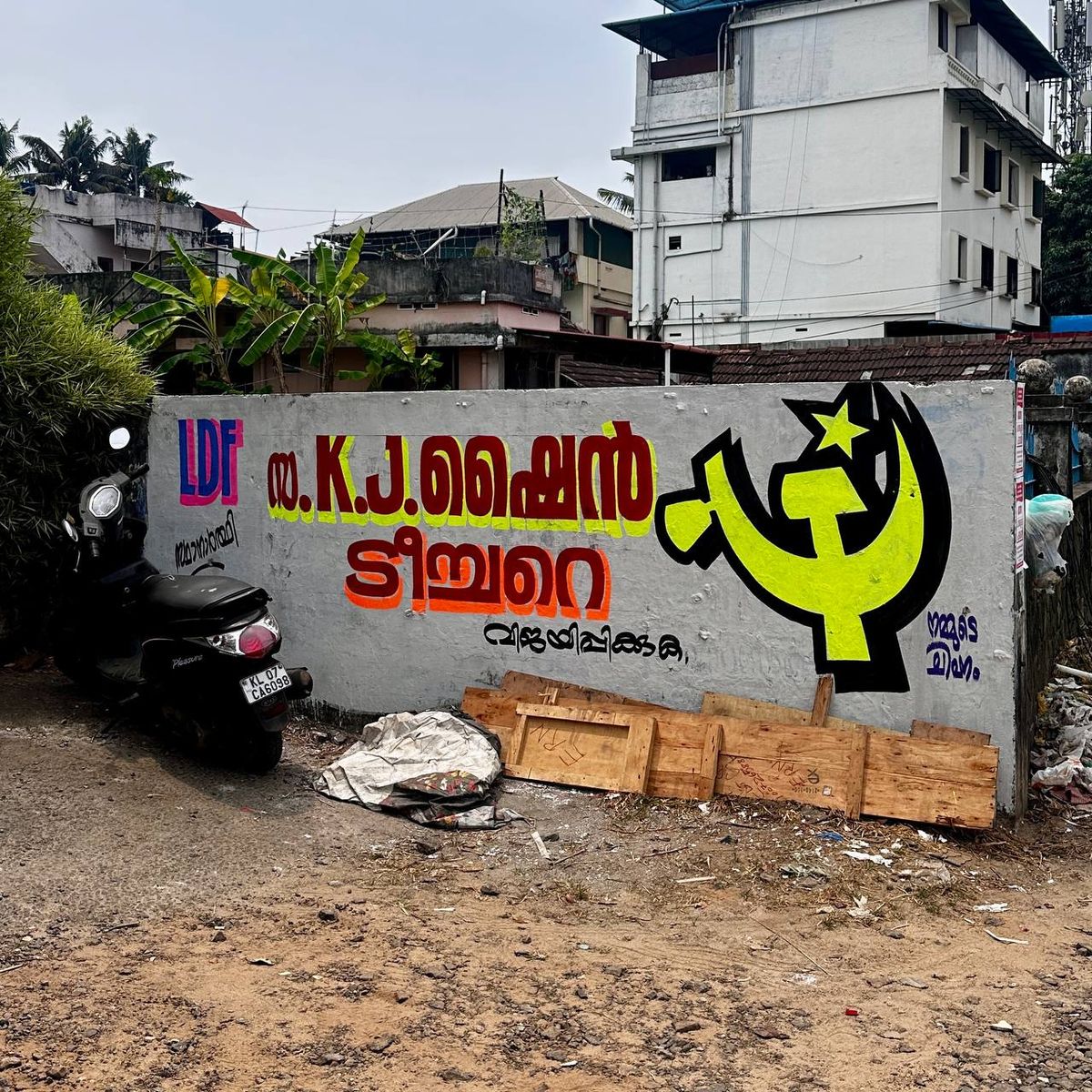
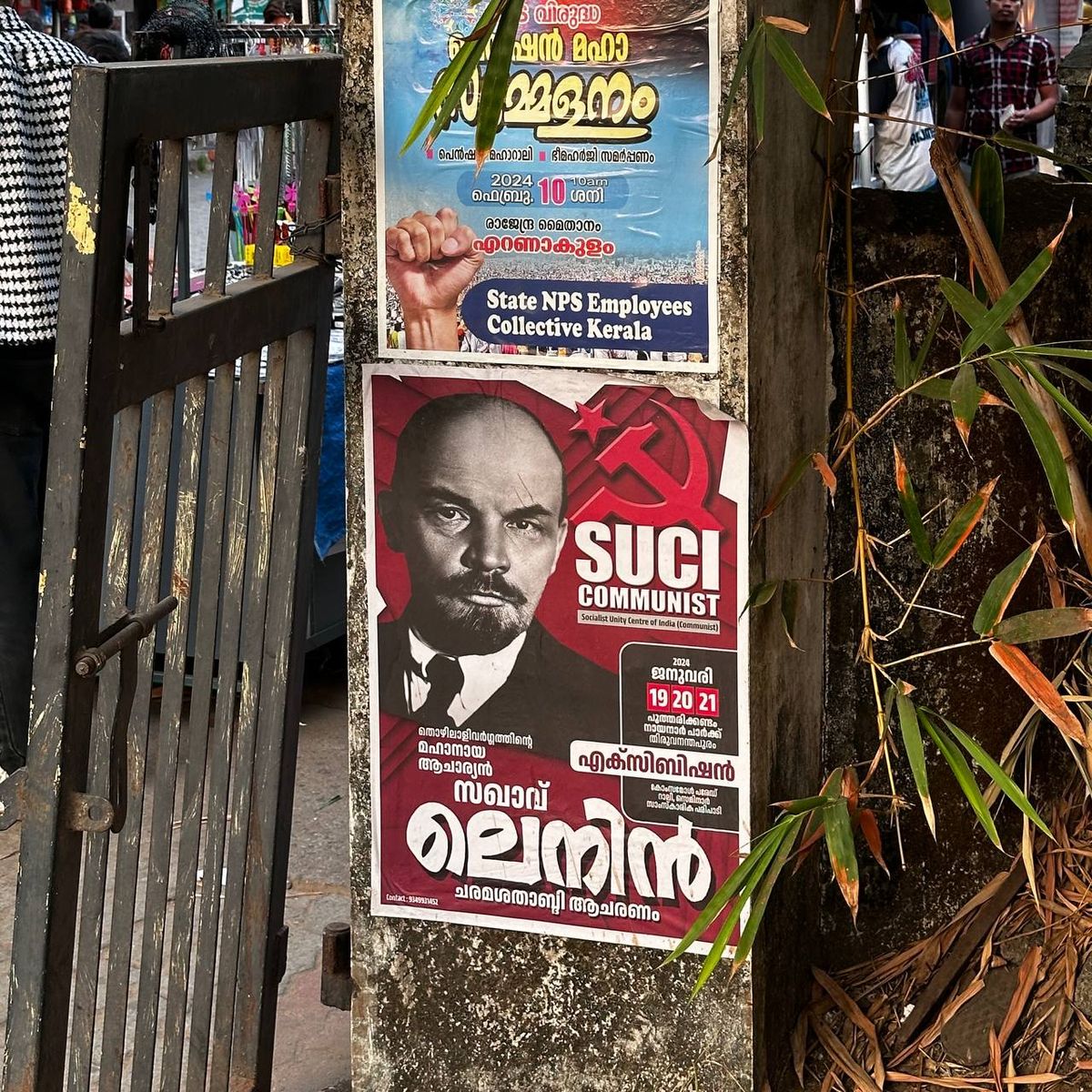
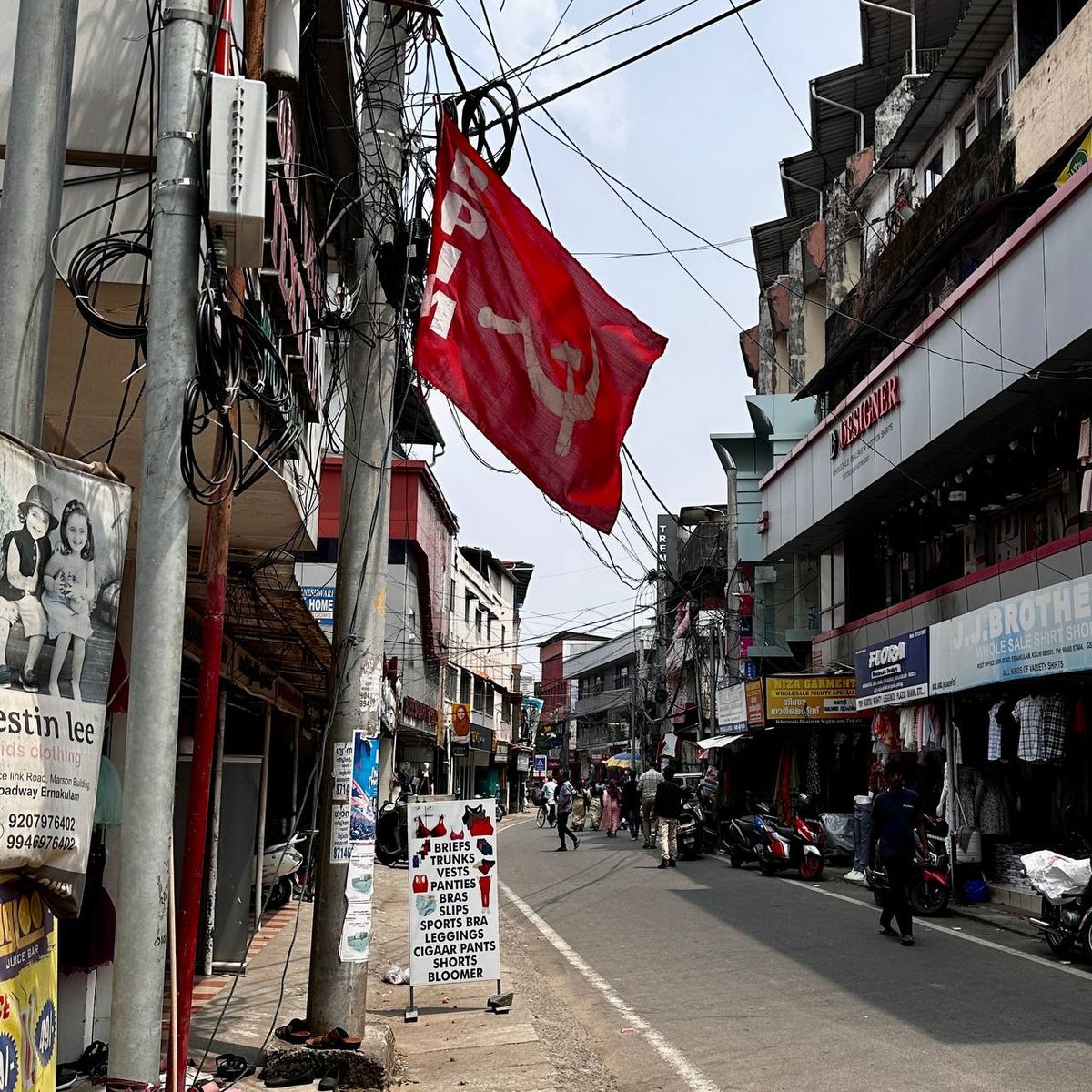
Nothing quite prepares you for the cognitive dissonance of Kerala's political landscape. The hammer and sickle doesn't sit in dusty museums here — it flies from balconies, decorates auto-rickshaws, adorns the walls of tea stalls. Portraits of Marx, Lenin, and Che Guevara appear in the streets with the same casual ubiquity as Hindu swastikas and Om symbols.
In some neighborhoods, party offices sit next to temples. Red flags flutter beside saffron ones. The iconography of 20th-century revolutionary socialism coexists with ancient religious traditions as if they'd always been neighbors.
Which, in a sense, they have. Kerala has been electing communist governments since 1957 — before the Cuban Revolution, before the Prague Spring, before most of the world's communist experiments began or ended. The red flags have been here longer than many of the buildings they now decorate.
1957: The Election That Shocked the World
On April 5, 1957, something unprecedented happened in world history. The Communist Party of India won a free, fair, multi-party election in the newly formed state of Kerala, and E.M.S. Namboodiripad became the first democratically elected communist head of government anywhere in the world.
Think about that for a moment. Not through revolution. Not through armed struggle. Through the ballot box.
Kerala had been formed just months earlier, on November 1, 1956, when the States Reorganisation Act merged the princely states of Travancore and Cochin with the Malabar district. The new state was one of India's poorest — rife with inequality, food deficits, and an oppressive caste system that made the rest of India look progressive by comparison.
The Communist Party built its platform on a simple proposition: welfare for the people. Land reform. Education access. Workers' rights. Minimum wages.
The established order — Congress, the Church, upper-caste organizations — watched in horror as the "Godless Communists" won 60 of 126 seats and formed a government.
The CIA's Indian Problem
What happened next reads like a Cold War thriller — because it was one.
The Namboodiripad government moved fast. Within a week of taking office, it announced radical land reforms: tenant farmers couldn't be evicted, landholdings were capped at 15 acres, agricultural laborers gained new rights. The Education Bill sought to bring private schools under government oversight — a direct challenge to the Church's educational monopoly.
In Washington, alarm bells rang. A democratically elected communist government in the world's largest democracy? Domino theory said this could spread. The CIA began funding what insiders called efforts to prevent "additional Keralas."
In Kerala itself, a strange alliance formed: the Catholic Church, Hindu caste organizations like the Nair Service Society, the Congress Party, and various landed interests united against the communist government. They launched the "Vimochana Samaram" — the Liberation Struggle — framing themselves as freedom fighters against communist tyranny.
On July 31, 1959, Prime Minister Jawaharlal Nehru — initially reluctant but pressured by his daughter Indira Gandhi, then Congress president — invoked Article 356 of the Constitution to dismiss Kerala's elected government. It was the first time this constitutional provision had been used against a state government.
The communist government had lasted 28 months. But the story was far from over.
The Pendulum That Keeps Swinging Left
Here's where Kerala's political trajectory diverges from every other communist experiment in history.
The communists came back. Again and again.
After the 1964 Sino-Soviet split divided global communism, India's Communist Party fractured too. The Communist Party of India (Marxist) — the CPI(M) — emerged as the dominant leftist force in Kerala. In 1967, Namboodiripad returned as Chief Minister, leading a seven-party coalition.
Since 1980, Kerala politics has been dominated by two major coalitions: the Left Democratic Front (LDF), led by the CPI(M), and the United Democratic Front (UDF), led by the Congress Party. For four decades, they alternated in power with clockwork regularity — until 2021, when the LDF under Chief Minister Pinarayi Vijayan broke the pattern and won re-election, the first incumbent government to do so in 40 years.
The LDF won 99 of 140 seats. The communists weren't just surviving; they were thriving.
The Kerala Model: Communism That Works?
And here's the part that confuses ideologues on both sides: Kerala's communist-influenced governance has delivered remarkable results.
- Literacy: 96.2% — the highest in India, compared to a national average of around 74%.
- Life Expectancy: 77 years, compared to 70 for India overall.
- Infant Mortality: 7 per 1,000 live births — comparable to developed nations and dramatically lower than India's average of 28.
- Maternal Mortality: 53 per 100,000 live births, the lowest in India.
- Healthcare Infrastructure: Over 2,700 government medical hospitals with 330 beds per 100,000 population — the highest ratio in India.
- Poverty: Kerala has the lowest multidimensional poverty rate in India, at just 0.55%.
The "Kerala Model" — as development economists began calling it in the 1970s — is a paradox that challenged the conventional wisdom: high social development indicators achieved without matching economic growth. Kerala proved you could have first-world human development on a third-world income.
How Did They Do It?
The explanations are multiple and overlapping.
Land Reform: The communist governments completed what the first Namboodiripad ministry started. Feudal landlordism was abolished. Tenant farmers gained ownership rights. The agrarian structure was fundamentally reorganized in favor of those who actually worked the land.
Education Investment: Beginning with progressive rulers in the princely states and accelerated by communist governments, Kerala prioritized universal education. Schools were built in every village. Women's education became a particular focus.
Healthcare as a Right: The public healthcare system was expanded systematically. Preventive care, maternal health, and child nutrition became state priorities.
Strong Labor Unions: Kerala's workers are highly organized. Minimum wages are among the highest in India. Labor rights are enforced.
Decentralization: The Panchayati Raj system of local governance is robust in Kerala. Village councils have real power and resources.
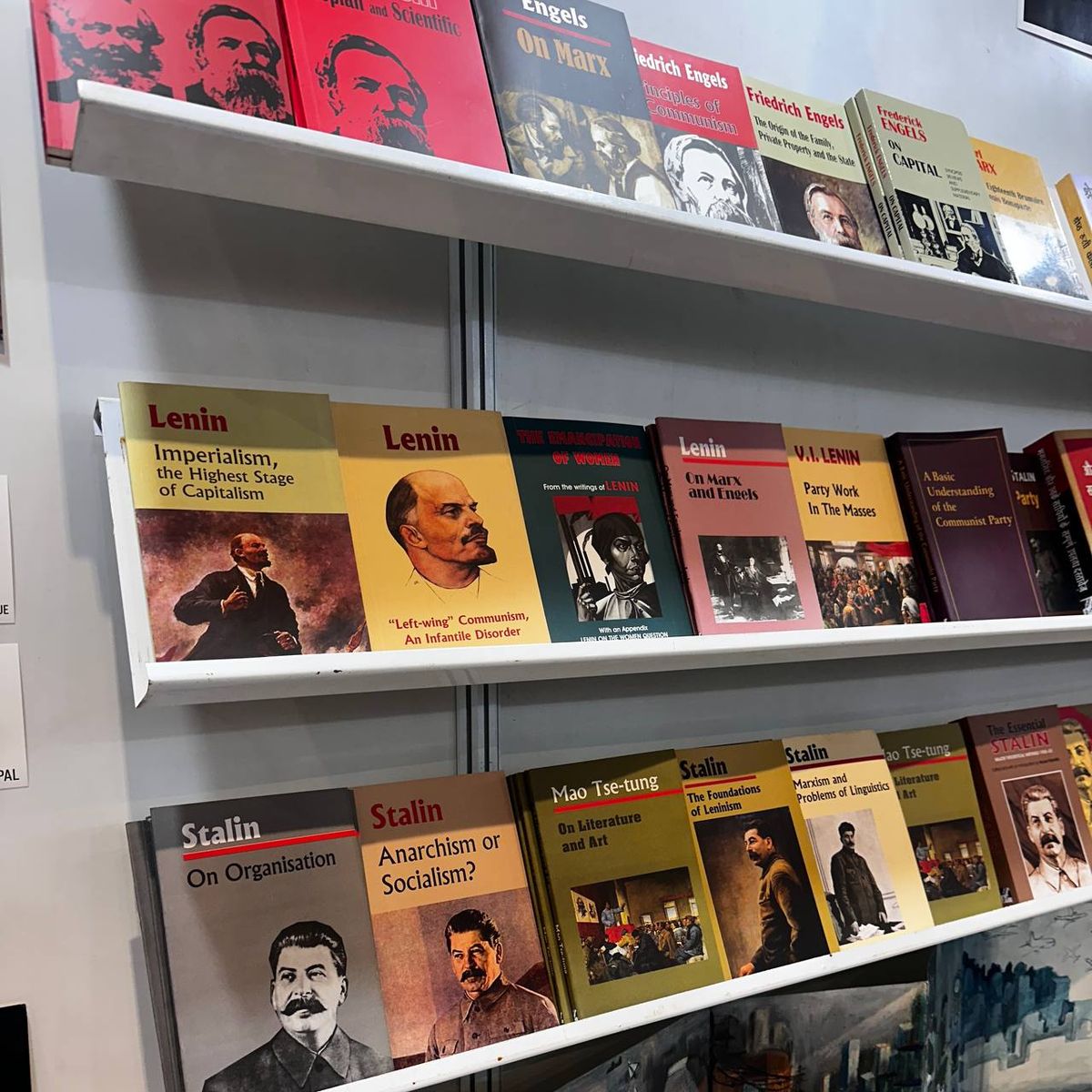
The Religion of the Left
Sitting in a tea shop in Kannur — the heartland of communist Kerala, where party offices line every street — I understand what the man in the auto-rickshaw meant about voting for who built the school.
Communism in Kerala isn't really about Marx's dialectical materialism or Lenin's vanguard party theory. It's about something more pragmatic and, in its own way, more spiritual.
The party provides. The party organizes. The party remembers who you are.
When there's a flood, party workers show up. When there's a health crisis — like the Nipah virus outbreak or COVID-19 — the party apparatus mobilizes alongside the government. When you need help navigating bureaucracy, the local party office knows someone.
It's not so different, structurally, from how temples and churches function in other parts of India. The red flag has become a symbol of community belonging, of social identity, of shared history and collective struggle.
"We don't believe in God," a young party worker tells me, grinning. "But we believe in the people."
It sounds like a catechism.
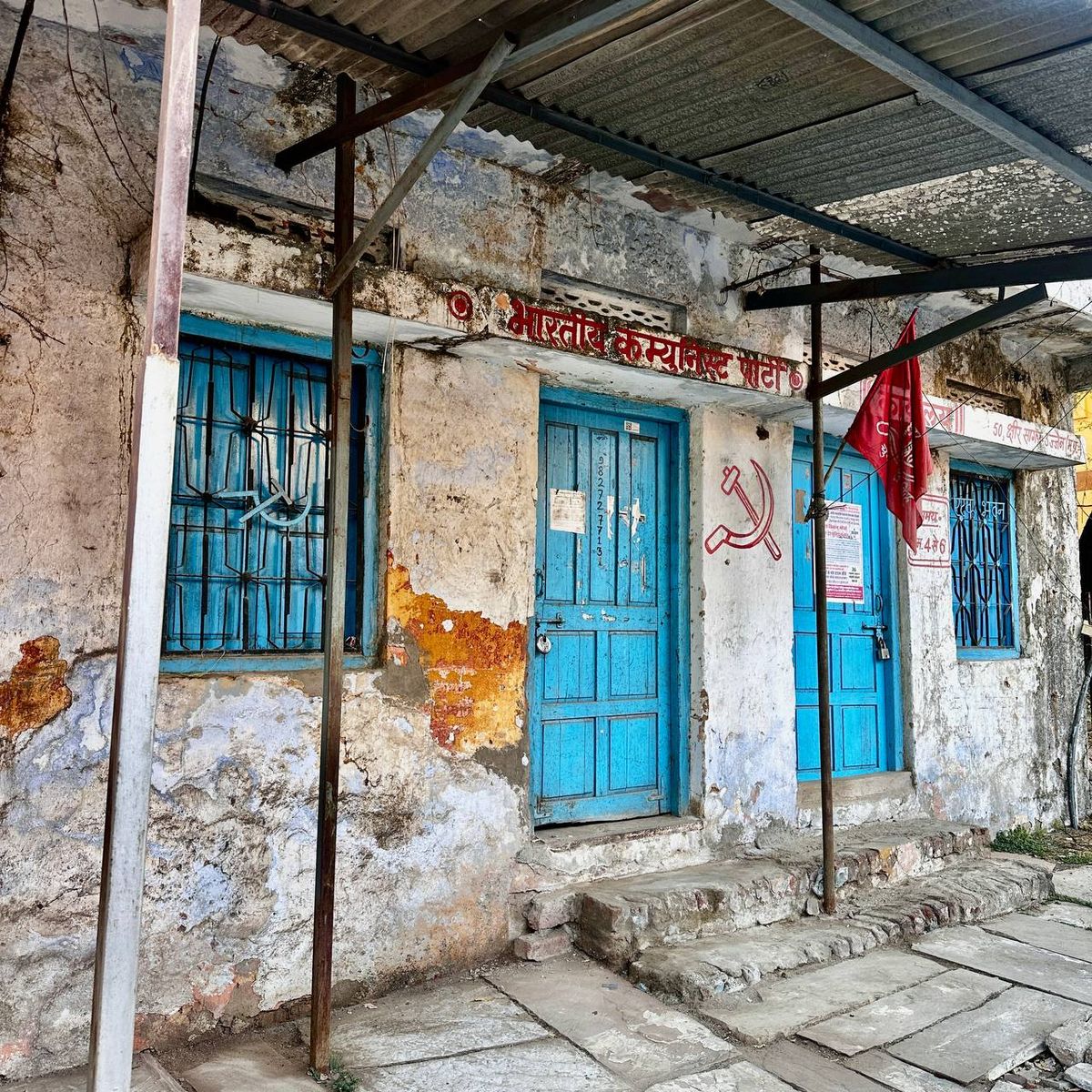
The Contradictions
No honest account of Kerala's communist experiment can ignore its contradictions.
Economic Growth: While social indicators soar, Kerala's GSDP growth has sometimes lagged behind more industrialized states. Critics argue the Kerala Model prioritized redistribution over wealth creation.
Unemployment: Paradoxically, highly educated Keralites often can't find work at home. The state exports workers — to the Gulf countries, to other Indian states, to the West. Remittances from the diaspora contribute significantly to household incomes but create their own dependencies.
Political Violence: The CPI(M)'s history, particularly in northern Kerala, includes periods of violent conflict with the RSS (the Hindu nationalist organization) and with rival leftist factions. Kannur district has seen hundreds of political killings over the decades.
Demographic Transition: Kerala's success in reducing fertility has created an aging population. The demographic dividend is ending; the challenges of an elderly society are beginning.
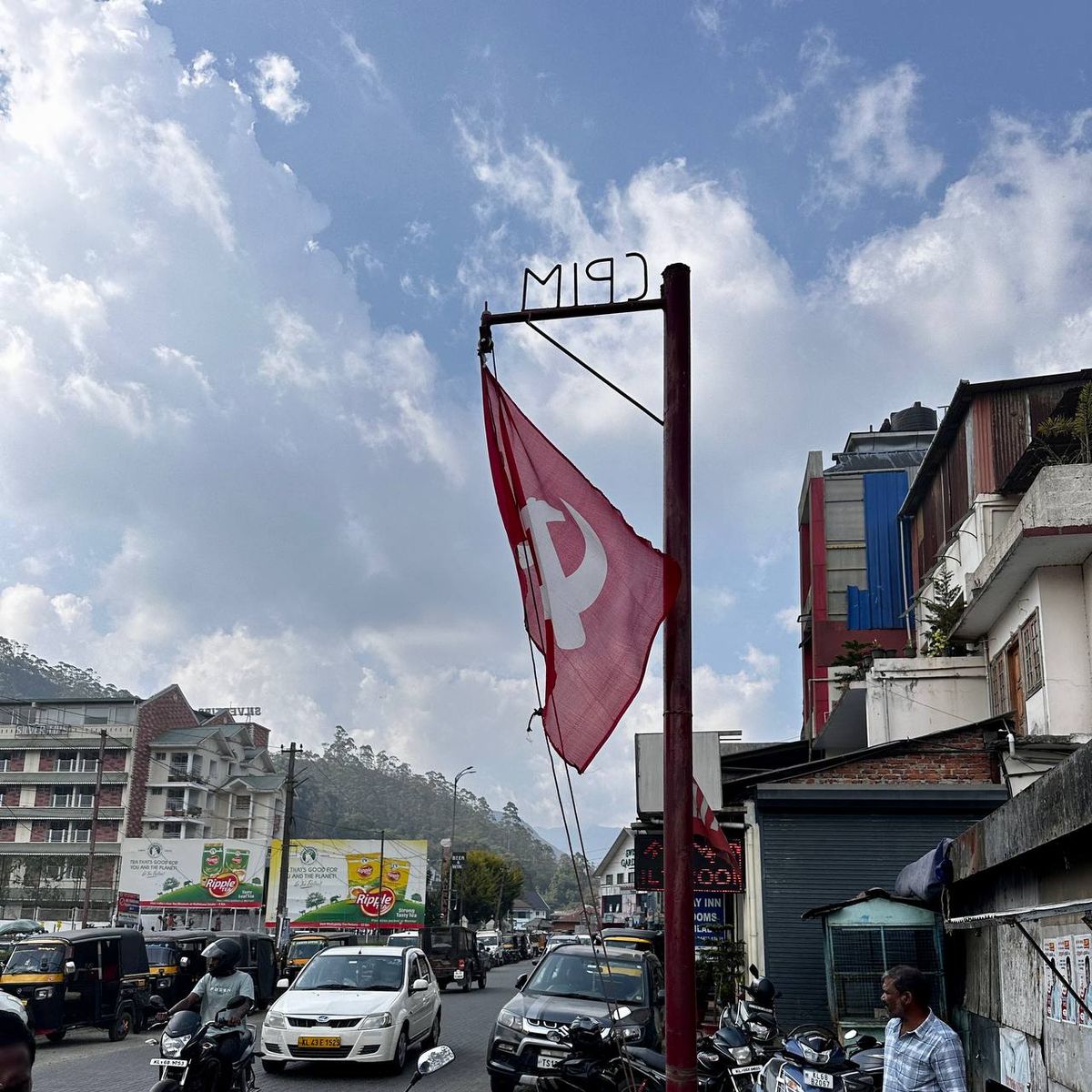
What Kerala Teaches
What does Kerala's communist experiment mean for the world?
For those who believe communism inevitably leads to totalitarianism: here's a counter-example. Multi-party democracy has functioned continuously since 1957. Power has transferred peacefully between coalitions. Civil liberties, while sometimes strained, have never been suspended. The press remains free and frequently hostile to whoever's in power.
For those who believe socialism can't deliver results: here's a state that outperforms most of India on nearly every human development indicator. Not through market magic, but through public investment, redistribution, and political prioritization of the poor.
For those who believe ideology doesn't matter: here's evidence that it does. Kerala's achievements weren't accidental. They resulted from specific policy choices, driven by specific ideological commitments, sustained over decades by parties with genuine mass bases.
For those who believe any single model can be universally applied: here's a reminder that Kerala's success depended on specific historical conditions — the reformist traditions of the princely states, the social movements against caste, the peculiar demographics of a literate society exporting labor. It's not a blueprint that can simply be transplanted elsewhere.
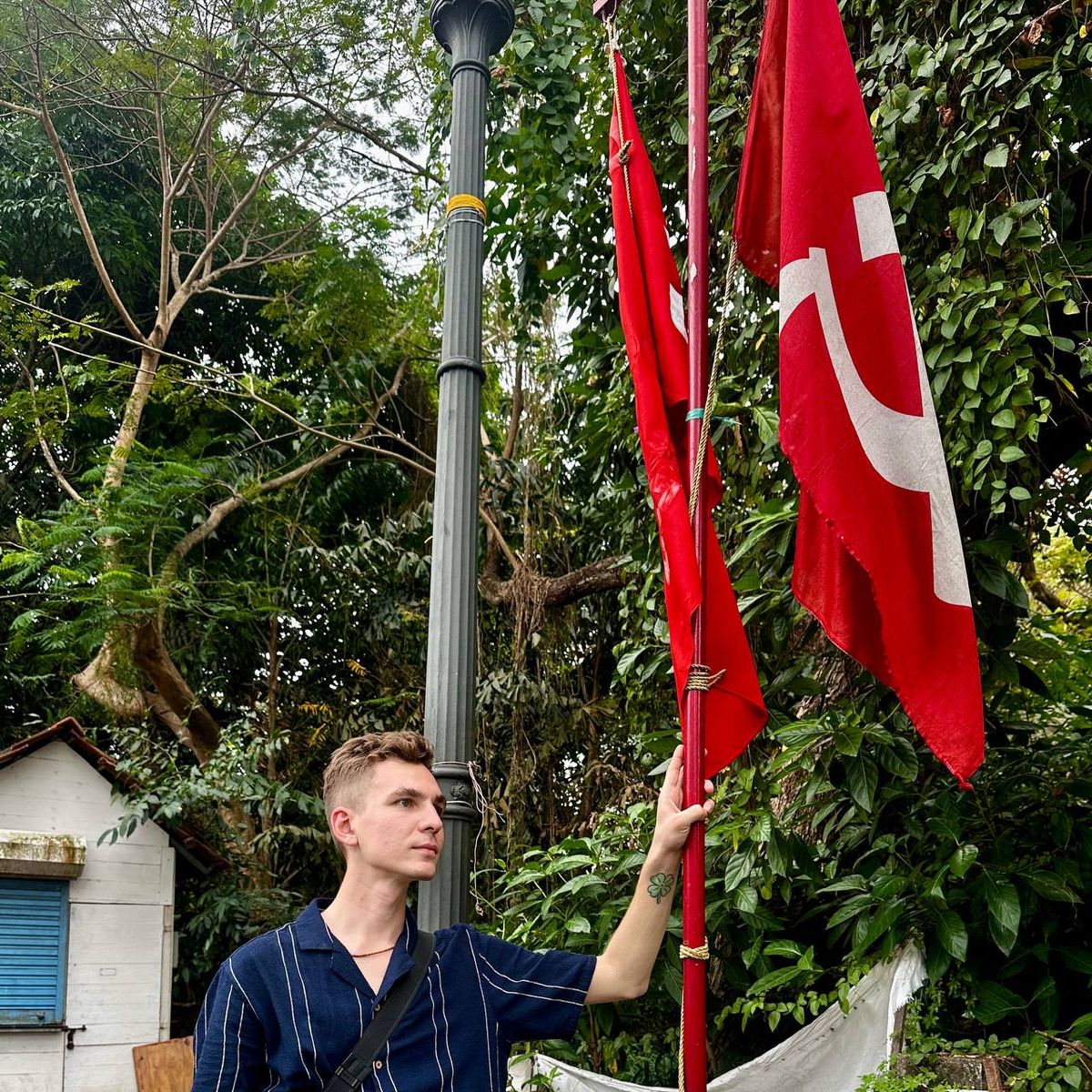
Spices, Tea, Lenin
If someone had told me that one of the last strongholds of communism would be a tropical Indian state known for coconuts, Kathakali dance, and Ayurvedic massage, I would have laughed.
Then I came and saw it: the hammer and sickle flying over backwater houseboats, the portraits of revolutionary heroes in spice markets, the party offices next to temples, the red flags among the palm trees.
It shouldn't work. Every political science textbook suggests it shouldn't work. And yet, for nearly seven decades, it has worked — imperfectly, contentiously, but undeniably.
The auto-rickshaw driver who brought me down from Munnar had a small Lenin sticker on his dashboard, next to a picture of a Hindu goddess.
"No contradiction," he said when I asked about it. "Both want good for the people."
Maybe that's the secret. In Kerala, communism stopped being a foreign ideology imported from Europe via Russia. It became something indigenous — absorbed into the soil along with the tea plants and pepper vines, syncretized with local traditions of social reform and spiritual egalitarianism.
The revolution came to Kerala and decided to stay. Not as a violent upheaval, but as a permanent feature of the political landscape. Not as a totalitarian system, but as one option among several in a functioning democracy.
Spices, tea, Lenin. All still in place.