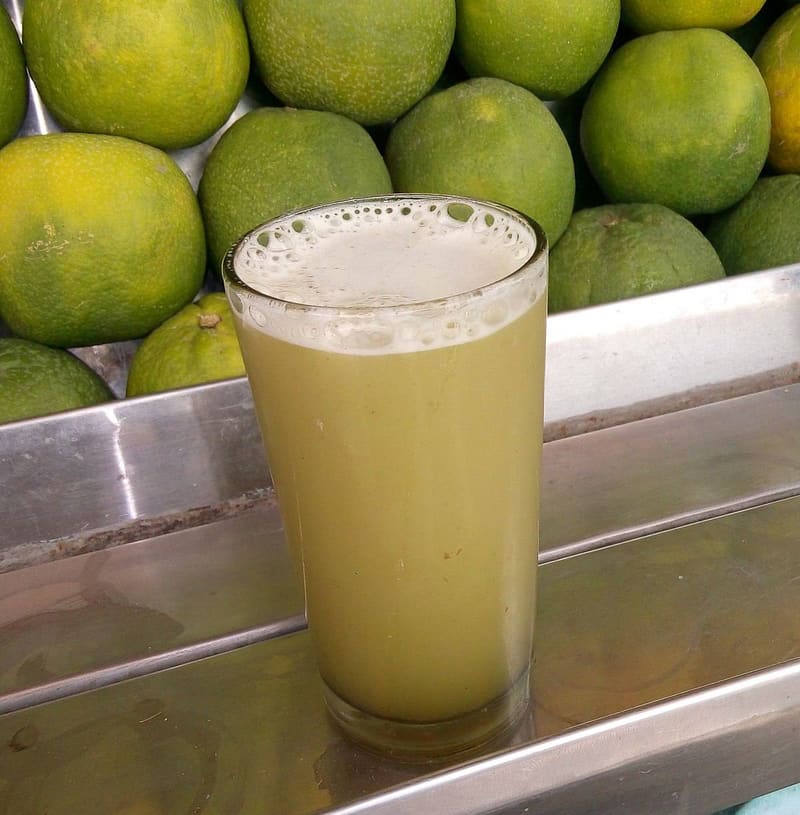
On every corner, near every temple, beside every bus stand — the screech of metal rollers crushing bamboo-hard stalks, the pale-green juice flowing into a steel cup. India's most ubiquitous street drink costs less than a text message but carries four thousand years of medicinal tradition.
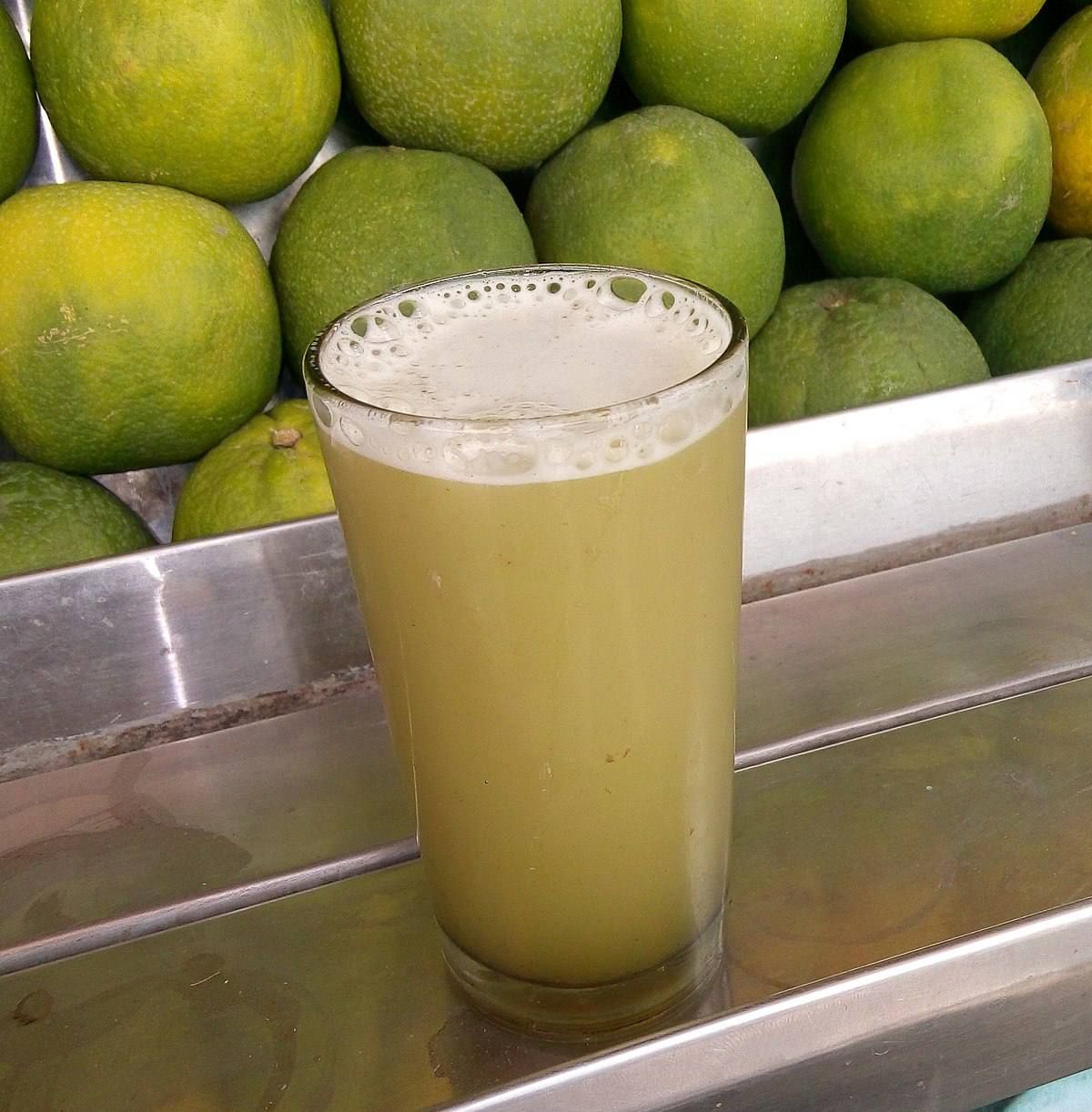
The sound is unmistakable. A grinding, squealing protest of metal against fibrous stalk — the voice of a sugarcane press squeezing juice from canes thick as a child's arm. The vendor feeds stalks into the rollers, sometimes powered by hand crank, sometimes by a small petrol engine, sometimes by an electric motor. Out flows a fresh, lightly cloudy juice — the natural greenish hue of crushed cane, foam riding on top.
A squeeze of lime. A knob of fresh ginger crushed in. A scoop of ice. Served in a steel tumbler or recycled glass.
Total cost: ten to thirty rupees. Roughly eight American cents at the low end.
In Europe, this would be marketed as "organic cold-pressed sugarcane elixir with ginger and citrus." It would cost six euros and come in sustainable bamboo packaging with a QR code linking to the farmer's story.
In India, it's just ganne ka ras — sugarcane juice — and fifty million people drink it daily.
The World's Second-Largest Harvest
India produces roughly 400–490 million tonnes of sugarcane annually, making it the world's second-largest producer after Brazil. The crop covers more than five million hectares across the country, concentrated mostly in Uttar Pradesh (which alone accounts for about 41% of India's total), Maharashtra, Karnataka, Tamil Nadu, and Andhra Pradesh.
This isn't just agricultural trivia. It explains why sugarcane juice costs almost nothing. When your country grows nearly a quarter of the world's sugarcane, the raw material for a cup of juice becomes essentially free. The vendor's costs are the press, the ice, the cups, and the rent for a corner of sidewalk. The cane itself? Negligible.
Sugarcane (Saccharum officinarum) belongs to the grass family — technically, drinking sugarcane juice means drinking grass extract. The plant originated in New Guinea around six thousand years ago, spread through Southeast Asia via Austronesian migrations, and reached India roughly three thousand years ago. Here it hybridized with local wild varieties and became one of civilization's foundational crops.
The Sanskrit word for sugarcane is ikṣu, and it appears throughout ancient texts. The plant earned the poetic title "Truna Raja" — king of grasses.
Ayurvedic Classification
In classical Ayurvedic texts, sugarcane juice receives detailed pharmacological classification:
- Rasa (taste): Madhura (sweet)
- Guna (qualities): Guru (heavy for digestion), Snigdha (unctuous/slimy)
- Vipaka (post-digestive effect): Madhura (sweet)
- Veerya (potency): Sheeta (cooling)
- Karma (action): Vatapitta shamaka (reduces aggravated vata and pitta doshas)
The practical meaning: Ayurveda considers sugarcane juice cooling, heavy, moistening, and beneficial for conditions involving excess heat or dryness in the body. Traditional texts prescribe it for burning sensations, excessive thirst, fatigue, and liver complaints.
The Unani medical tradition — the Islamic adaptation of Greek medicine practiced widely in South Asia — independently reached similar conclusions about sugarcane's benefits for liver function.
Modern pharmacological studies have confirmed some of these traditional claims. Research indicates sugarcane juice contains antioxidants (flavonoids and polyphenolic compounds), exhibits anti-inflammatory properties, and shows hepatoprotective (liver-protecting) activity in laboratory conditions.
The Jaundice Connection
Ask any Indian grandmother about treating jaundice, and she'll likely mention sugarcane juice before anything else. This isn't folk superstition — both Ayurvedic and Unani texts specifically recommend sugarcane juice for jaundice patients, and the practice has continued for centuries.
The traditional reasoning: jaundice indicates liver dysfunction and elevated bilirubin (which causes the yellowing). Sugarcane juice supposedly supports liver function, helps maintain electrolyte balance, and provides easily digestible natural sugars that don't strain an already-compromised organ.
Whether or not sugarcane juice actually cures jaundice, generations of Indian patients have consumed it during recovery with no apparent ill effects — which, given the drink's low cost and general palatability, makes it at minimum a pleasant placebo.
Nutritional Profile
A 240ml glass of fresh sugarcane juice (without additives) contains approximately:
- Calories: 180-250
- Sugar: 25-30 grams (natural sucrose, glucose, fructose)
- Fat: Essentially zero
- Cholesterol: Zero
- Protein: Trace amounts (0.2 grams)
Minerals present include potassium, calcium, magnesium, iron, phosphorus, and zinc. The juice also contains small amounts of B vitamins (thiamin, riboflavin) and vitamin C.
What makes sugarcane juice interesting nutritionally isn't any single spectacular nutrient but its role as rapid hydration with electrolyte replacement. In India's brutal summer heat, when temperatures routinely exceed 40 °C (104 °F), that combination matters.
The Vendor Ecosystem
A typical sugarcane juice vendor operates with minimal infrastructure. The essential equipment includes:
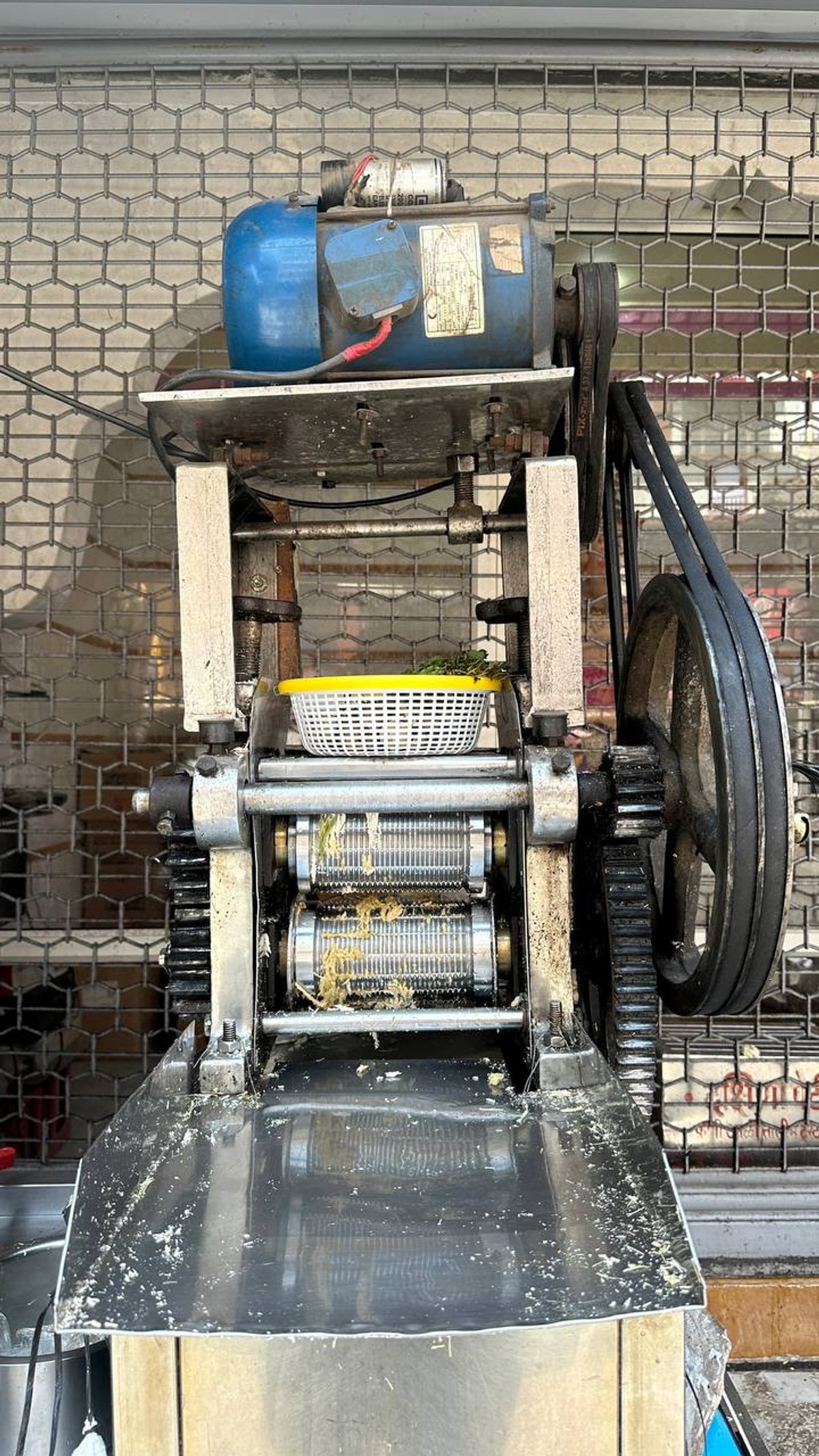
The press: Hand-cranked models cost around ₹15,000–20,000 ($180–240). Electric or petrol-powered automatic machines run ₹25,000–50,000 ($300–600). The machine consists of metal rollers that crush the stalks, extracting juice and leaving behind bagasse — the dry fibrous residue, recycled as fuel or animal feed.
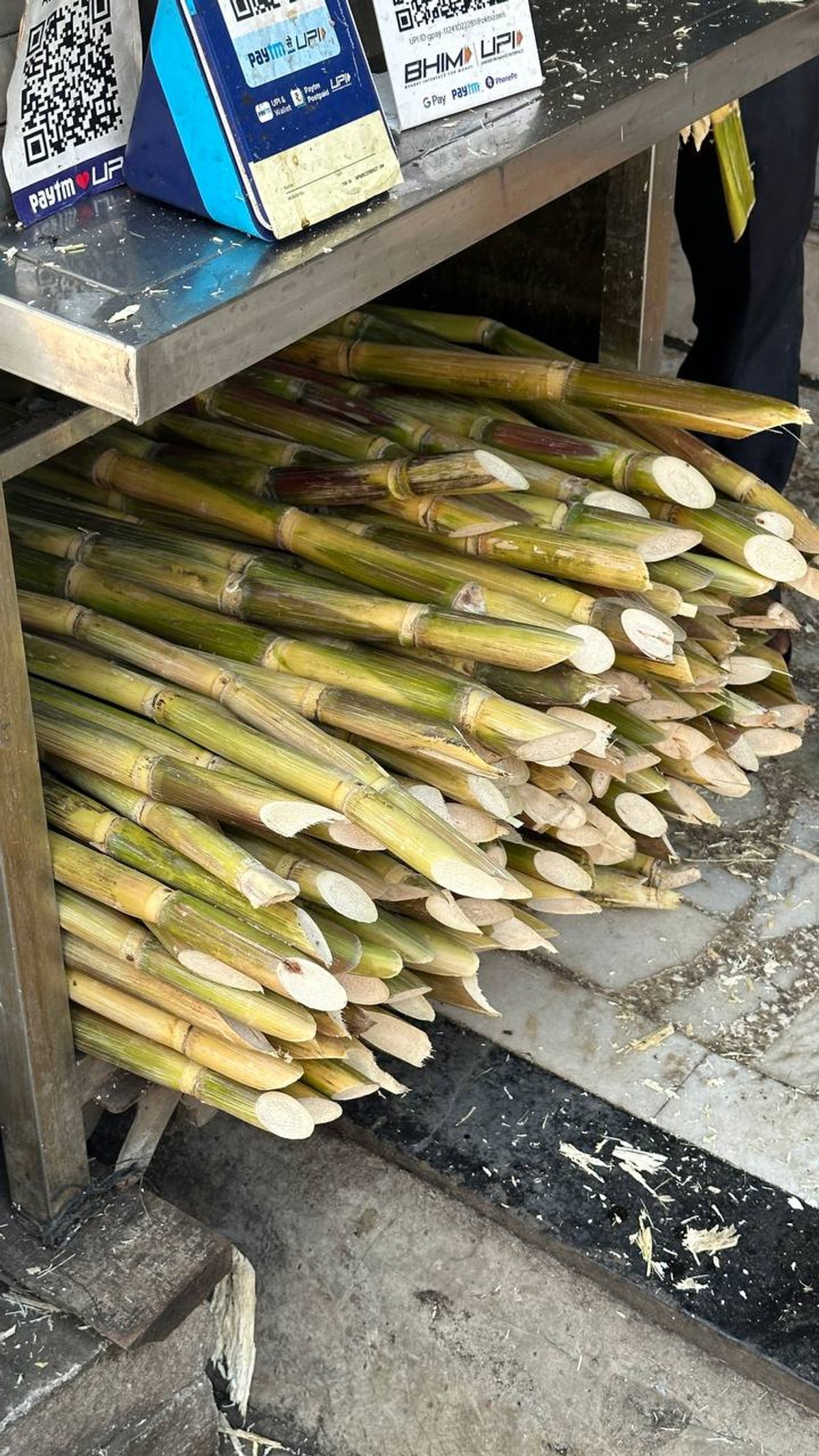
Raw material: Vendors purchase sugarcane stalks daily from wholesale markets. Fresh canes are essential — older ones yield less juice and taste different.
Additives: Fresh ginger (usually ground on-site), lemons or limes, black salt or regular salt, occasionally mint leaves.
The business model works because margins are generous despite low prices. A sugarcane stall in a good location (near a temple, railway station, bus stand, market, or college) can serve hundreds of customers daily during summer months.
The Hygiene Question
Here's where honesty becomes uncomfortable.
Street sugarcane juice in India carries genuine health risks. Multiple microbiological studies have documented contamination with coliform bacteria, E. coli, Staphylococcus aureus, enterococci, and occasionally more serious pathogens.
Practical risk-reduction strategies:
- Choose busy stalls: High turnover means fresher juice and less time for bacterial growth.
- Skip the ice: Ask for juice without ice (bina baraf). Yes, it's less refreshing. Yes, it's safer.
- Watch the preparation: If the vendor's hygiene gives you pause, trust your instincts and move on.
- Consider timing: Early morning means freshly started operation.
- Accept disposable cups: Worth the extra rupee or two.
Indians develop gastrointestinal resistance over years of exposure to environmental bacteria. Foreign visitors often lack this acquired immunity. The honest advice for foreign travelers: street sugarcane juice is a calculated risk.
The Energy Drink Before Energy Drinks
Sugarcane juice is India's original energy drink — a role it has played for centuries, long before Red Bull existed.
The mechanism is straightforward: natural sucrose delivers quick-release glucose for immediate energy. The potassium helps replace electrolytes lost through sweat. The cooling effect counters heat exhaustion. The sheer volume of liquid tackles dehydration.
Unlike caffeine-based energy drinks, sugarcane juice gives you no stimulant kick. Unlike alcohol, it doesn't impair anything. Unlike soda, it contains no artificial additives. It's simply concentrated plant energy in liquid form.
Laborers, rickshaw pullers, construction workers, students, and office workers alike pause at sugarcane stalls for a mid-day boost. The drink doesn't discriminate by class — you'll see software engineers in pressed shirts standing beside manual workers in dust-covered clothes, both drinking from the same vendor's glasses.
The Impossible European Price
Let's construct the hypothetical product:
"Organic cold-pressed sugarcane elixir with activated ginger and hand-squeezed lime. Single-origin cane from regenerative farms in Maharashtra. No preservatives. No artificial sweeteners. Raw, unfiltered, living nutrition. Sustainably packaged in biodegradable containers."
The premium juice bar prices this at €6–8. The farmers' market version runs €5. The bottled shelf-stable version at a Whole Foods equivalent: €4.
The actual ingredient cost? Maybe €0.30 of sugarcane, €0.05 of ginger, €0.02 of lime. The remaining €5.63 covers branding, premium packaging, cold-chain logistics, retail markup, and the general premium Western consumers pay for anything labeled "ancient wisdom."
In India, sugarcane juice is too cheap to brand. Too ubiquitous to premiumize. Too everyday to be exotic. It just exists, on every corner, in every city, for everyone.
That accessibility may be its greatest feature.