When people talk about electric vehicles, the first names that come to mind are Tesla, China, and European autobahns. India sounds like an unlikely entry on that list. And yet, quietly and confidently, one of the largest electric transformations on the planet is unfolding right here — and it's starting not on four wheels, but on two.
I've lived in India for several years and traveled through more than 40 cities — from Himalayan mountain passes to the Kerala coast. Where electric transport once felt like a novelty, it's now a fixture of the everyday landscape: on the streets of Bangalore, in the traffic of Hyderabad, near the temples of Udupi. I've visited showrooms, test-ridden electric scooters and motorcycles, talked to owners — and come away convinced something significant is happening. This isn't just a change of fuel. It's a change of paradigm.
In this article, I'll explain why two-wheeled transport has become the epicenter of India's electric revolution, which brands are setting the pace, and why this market matters far beyond the subcontinent.
Why Two Wheels — and Why India
To grasp the scale, one number says it all: as of 2022, India had roughly 263 million registered two-wheelers — more than the population of most countries. More than 20 million motorcycles and scooters are sold here every year. It's the largest two-wheeler market on the planet, which is precisely why electrification began not with cars (as in Europe or the US) but with scooters and bikes.
The logic is simple: two-wheeled transport is the backbone of mobility for hundreds of millions of people — students and delivery riders, families in small towns, entrepreneurs in megacities. A scooter here isn't an accessory; it's a necessity. Going electric tackles several problems at once: fuel savings (petrol prices in India sting), less pollution in smog-choked cities, and reduced dependence on imported oil.
The government has stepped in, too. Subsidies under the PM E-DRIVE program, reduced GST on electric vehicles, and support for startups have created an ecosystem in which new companies have grown in just a few years. By the end of 2025, India had sold roughly 1.28 million electric two-wheelers — a record — yet EV share still stands at only about 6.3% of the overall two-wheeler market. The room to grow is enormous.
River Indie — The SUV of Scooters
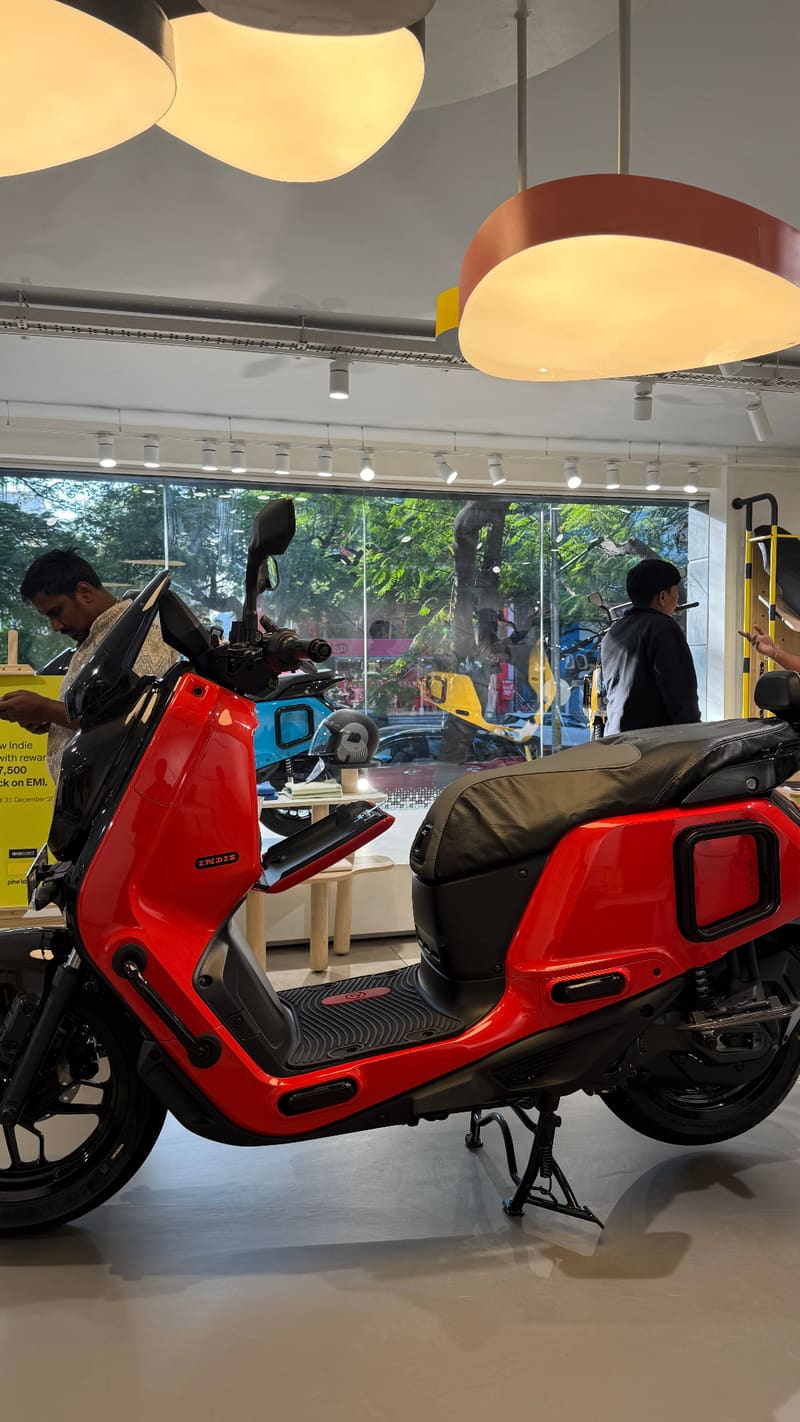
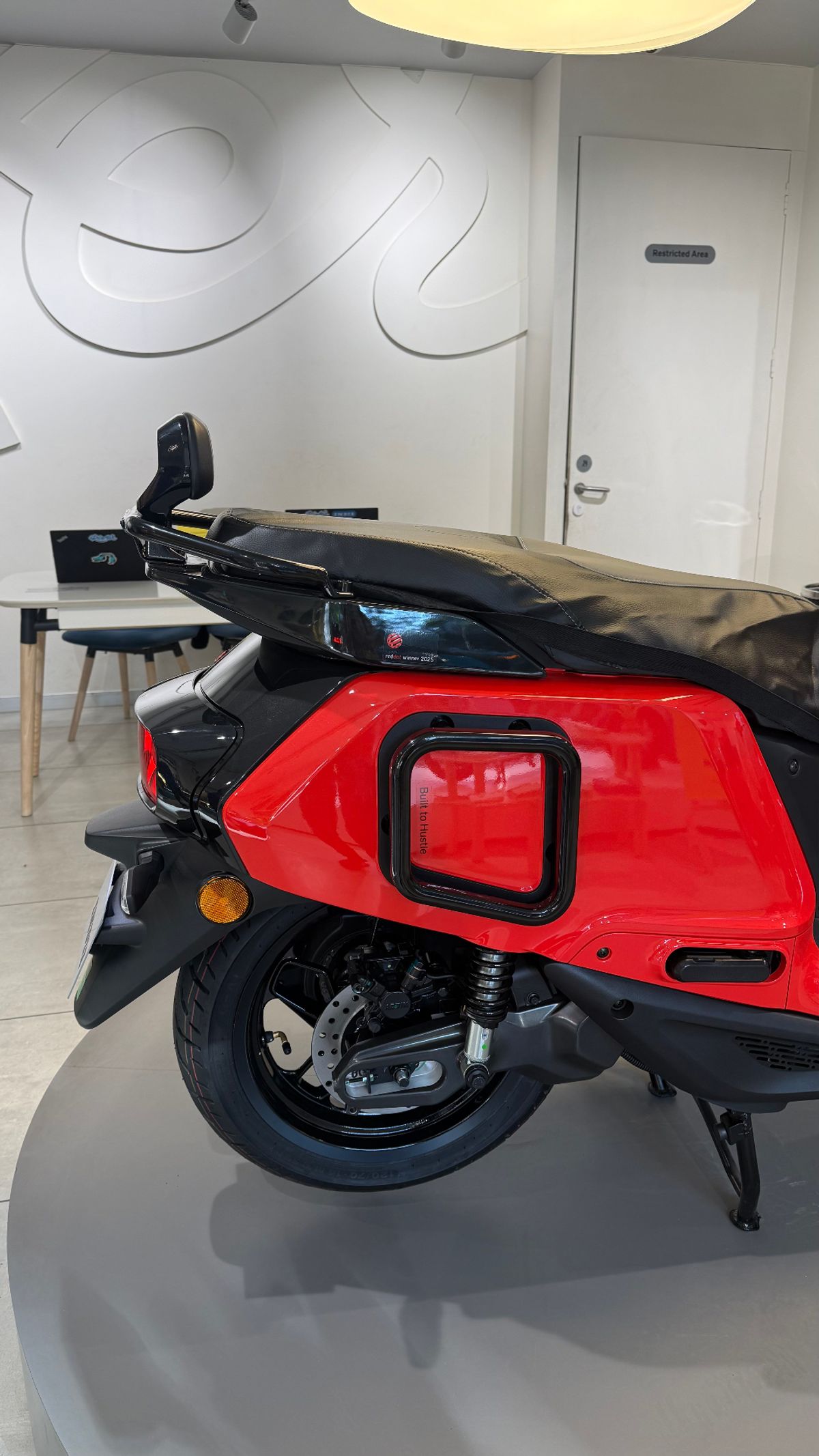
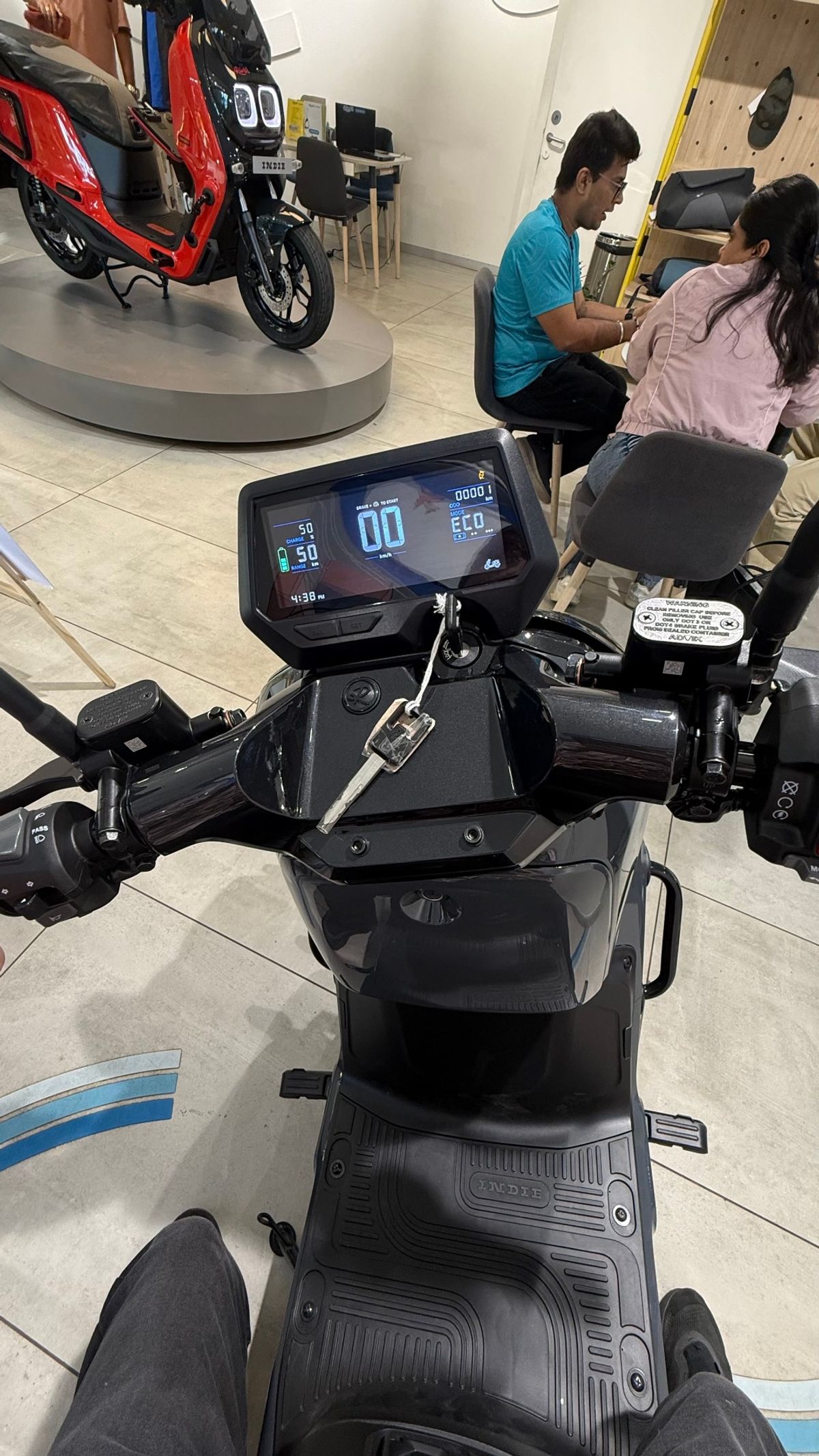
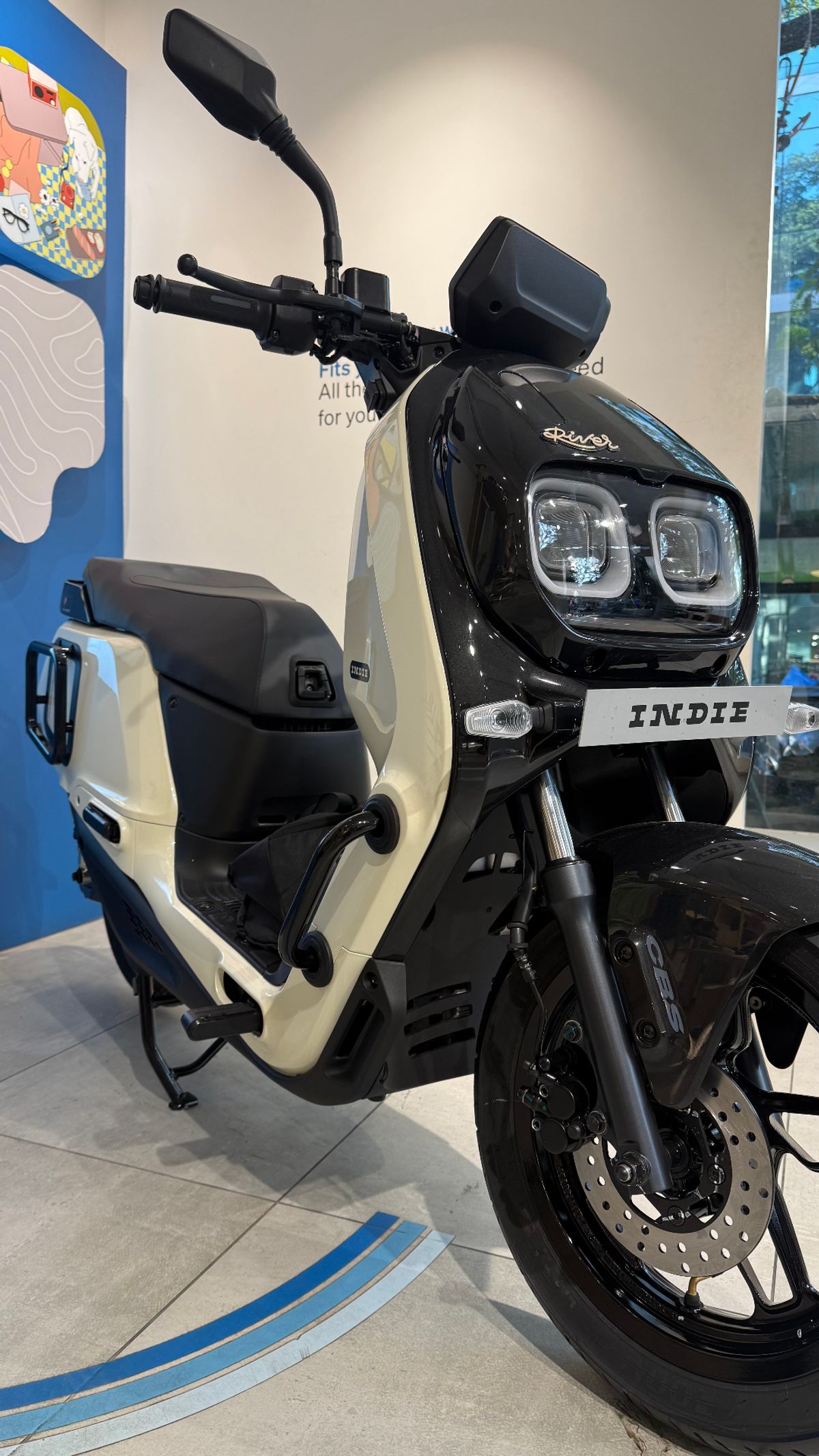
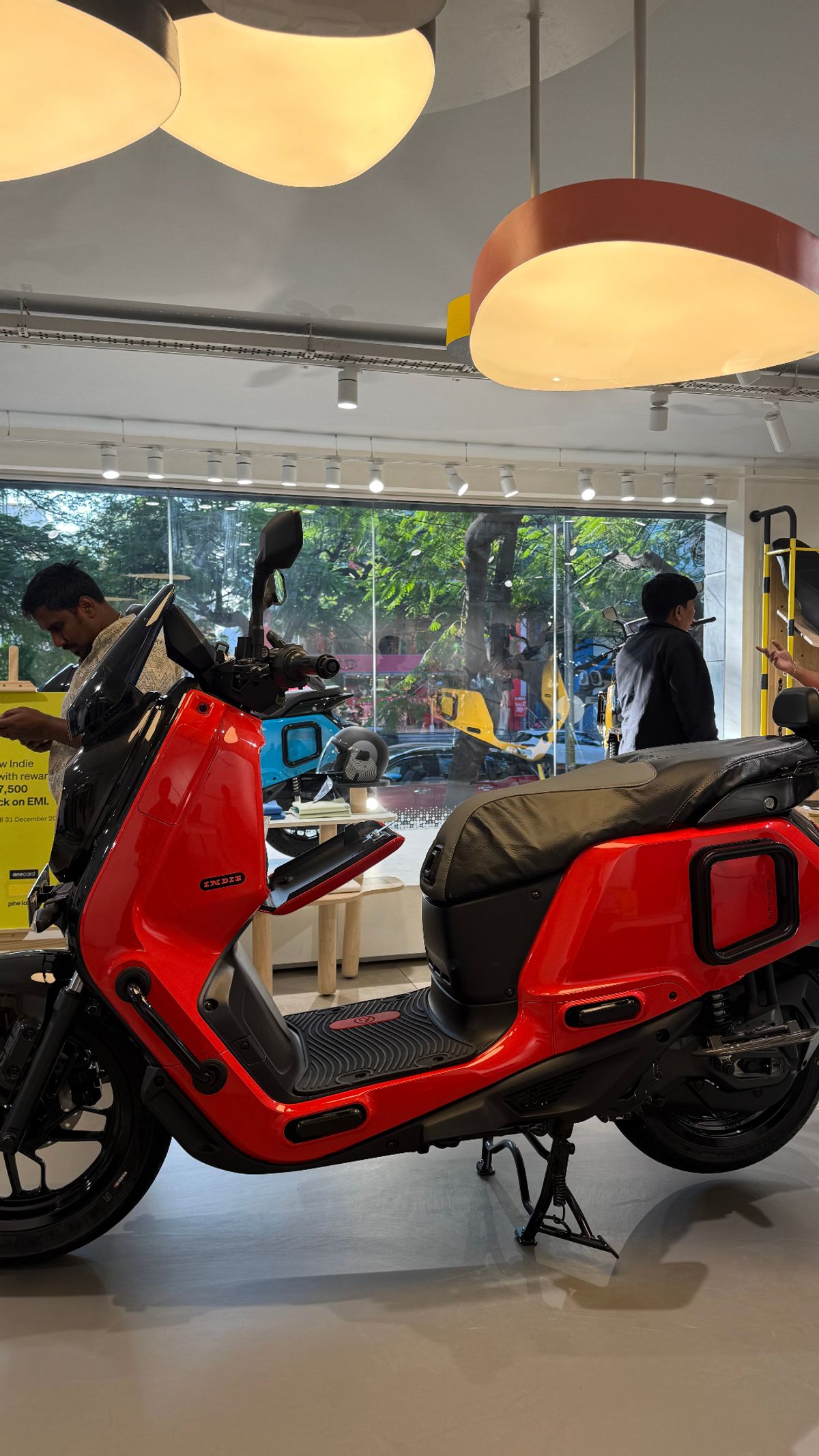
The first brand that truly caught my attention was River. A Bangalore startup founded in 2019, it built a scooter that's hard to confuse with anything else on the road. The River Indie — nicknamed "the SUV of scooters" — is massive, rugged, rides on 14-inch wheels (motorcycle-sized!), and packs a record-setting amount of storage.
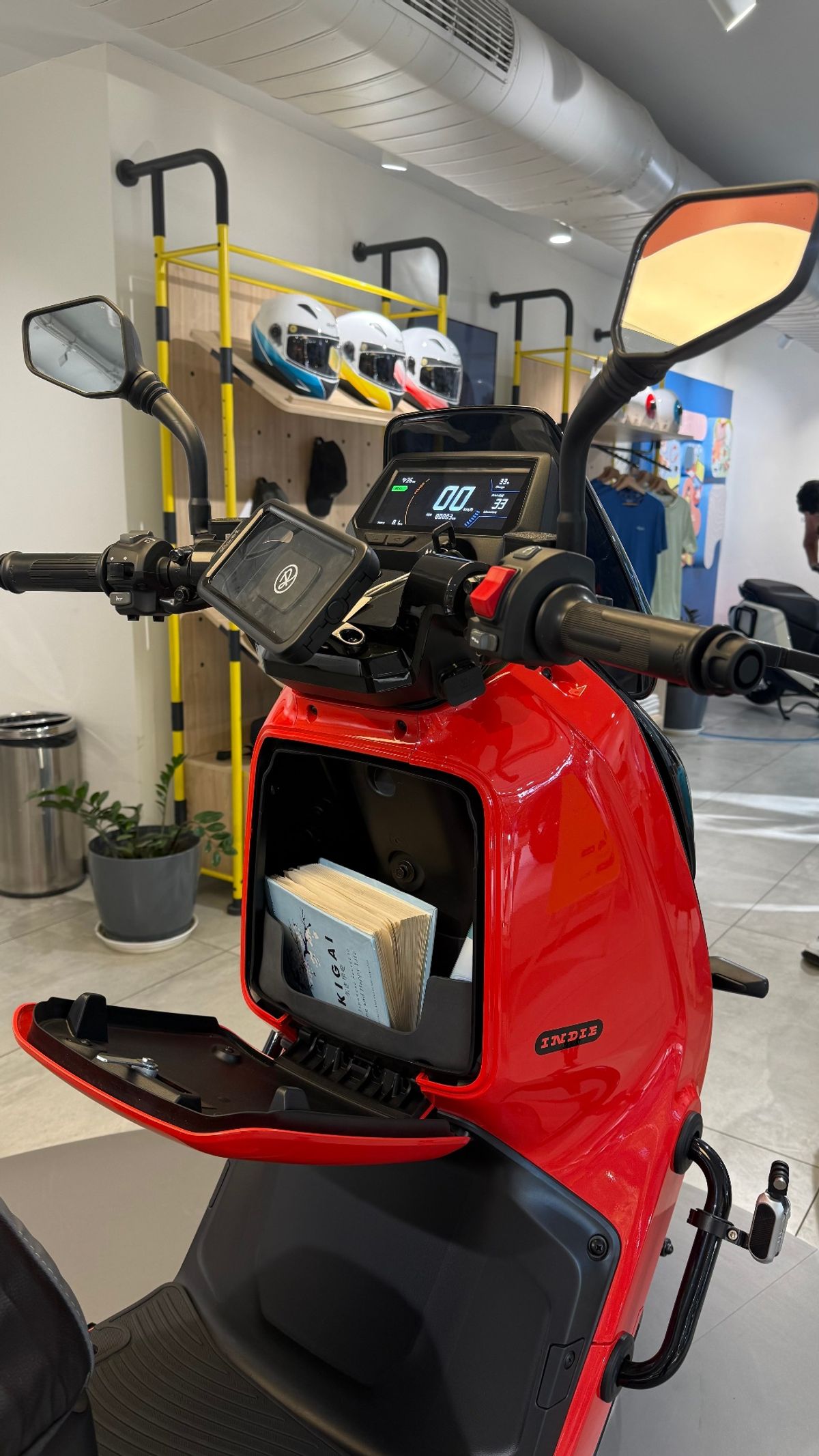
The moment you sit on the Indie, you feel like you're on something completely different. The front glovebox holds 12 liters and has a USB charging port — enough for a backpack or a helmet. The main underseat boot adds 43 liters, bringing total storage to 55 liters. That's more than most conventional petrol scooters.
The specs impress too: a 4 kWh battery, a 6.7 kW motor, a range of up to 163 km per charge on the Indian Driving Cycle. Three riding modes: Eco for maximum range, Ride for everyday commuting, and Rush when you need to accelerate in traffic. Top speed — 90 km/h. Price — around ₹1,46,000, or approximately $1,750.
The Indie has won two prestigious Red Dot Awards — for concept in 2024 and for product design in 2025. But the biggest validation came from Japan: Yamaha Motor invested in River and built its first electric scooter for the Indian market — the EC-06 — on the Indie's platform. Production runs at River's factory in Hoskote, Karnataka.
The fact that a Japanese giant chose not to develop its own platform from scratch but came to an Indian startup for technology speaks louder than any marketing slogan. The dynamic has flipped: global brands no longer dictate to India how to build transport — Indian startups are becoming technology partners for global corporations.
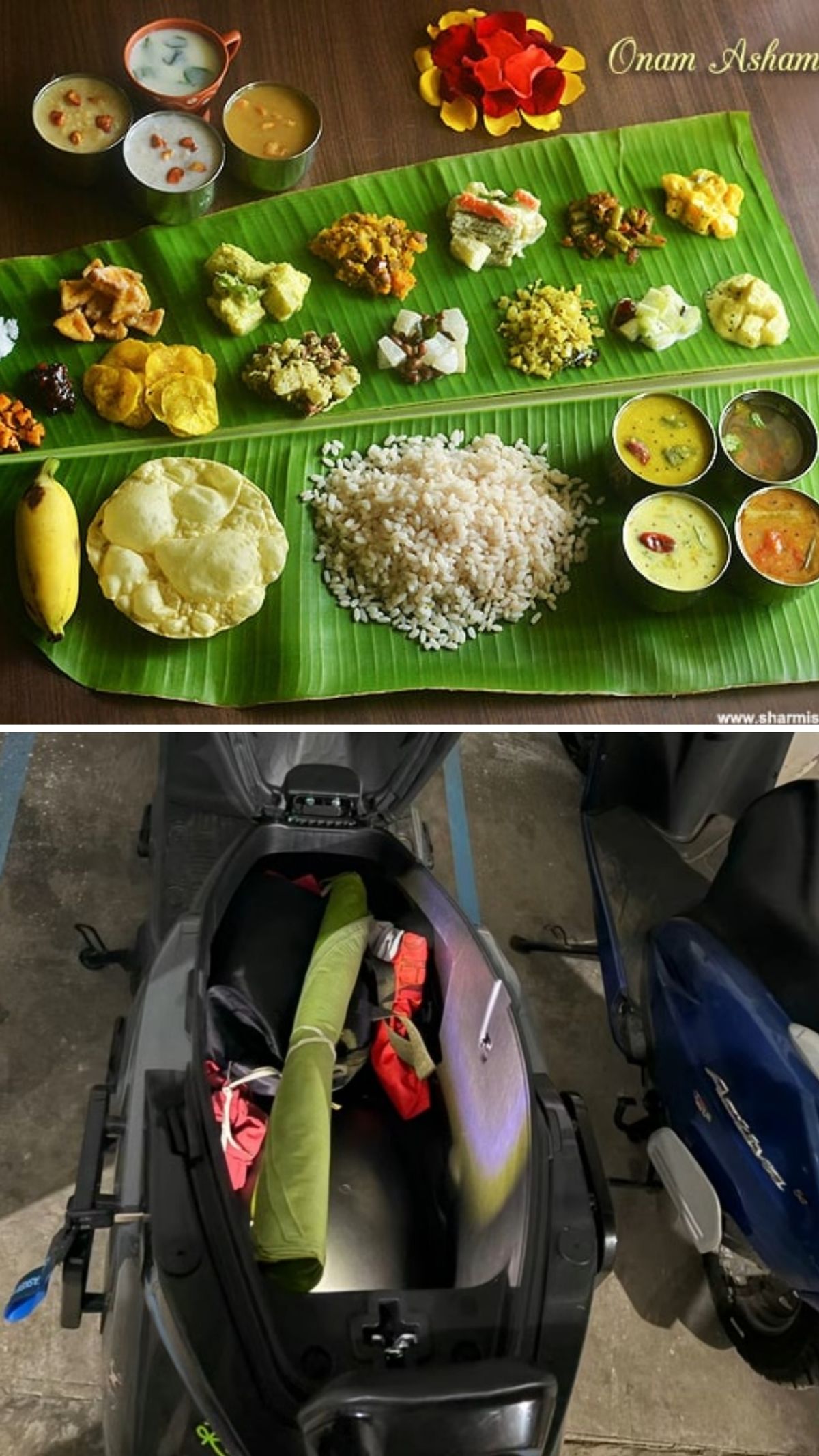
I was watching a YouTube review of the River Indie and stumbled on the perfect example of how the Indian market throws up the most unexpected use cases. Asked "why did you choose this scooter?" the owner opened the storage compartment and showed that it fits an entire banana leaf — the kind used as a traditional plate for Sadhya, a South Indian festive feast. If you ever plan to launch a product in India, be prepared: the use cases will land far beyond your imagination.
Ola Electric — From Ride-Hailing to an Electric Empire
Ola is a name known to anyone who has spent time in India — the local equivalent of Uber and one of the country's largest ride-hailing platforms. In 2017, founder Bhavish Aggarwal decided the future was electric and launched Ola Electric.
The ambitions were outsized from day one. On a 500-acre site in Krishnagiri, Tamil Nadu, the company built the FutureFactory — one of the world's largest two-wheeler EV plants. At full capacity, it can produce up to 10 million units a year. A unique feature: the production floor is staffed entirely by women — thousands of them at peak output.
Nearby, a GigaFactory is being built for in-house production of 4680-format battery cells — the same technology used by Tesla. In 2025, Ola became the first Indian company to create its own cell using dry electrode technology — the so-called 4680 Bharat Cell. This delivers an energy density of 275 Wh/kg and a lifespan of over 1,000 charge cycles.
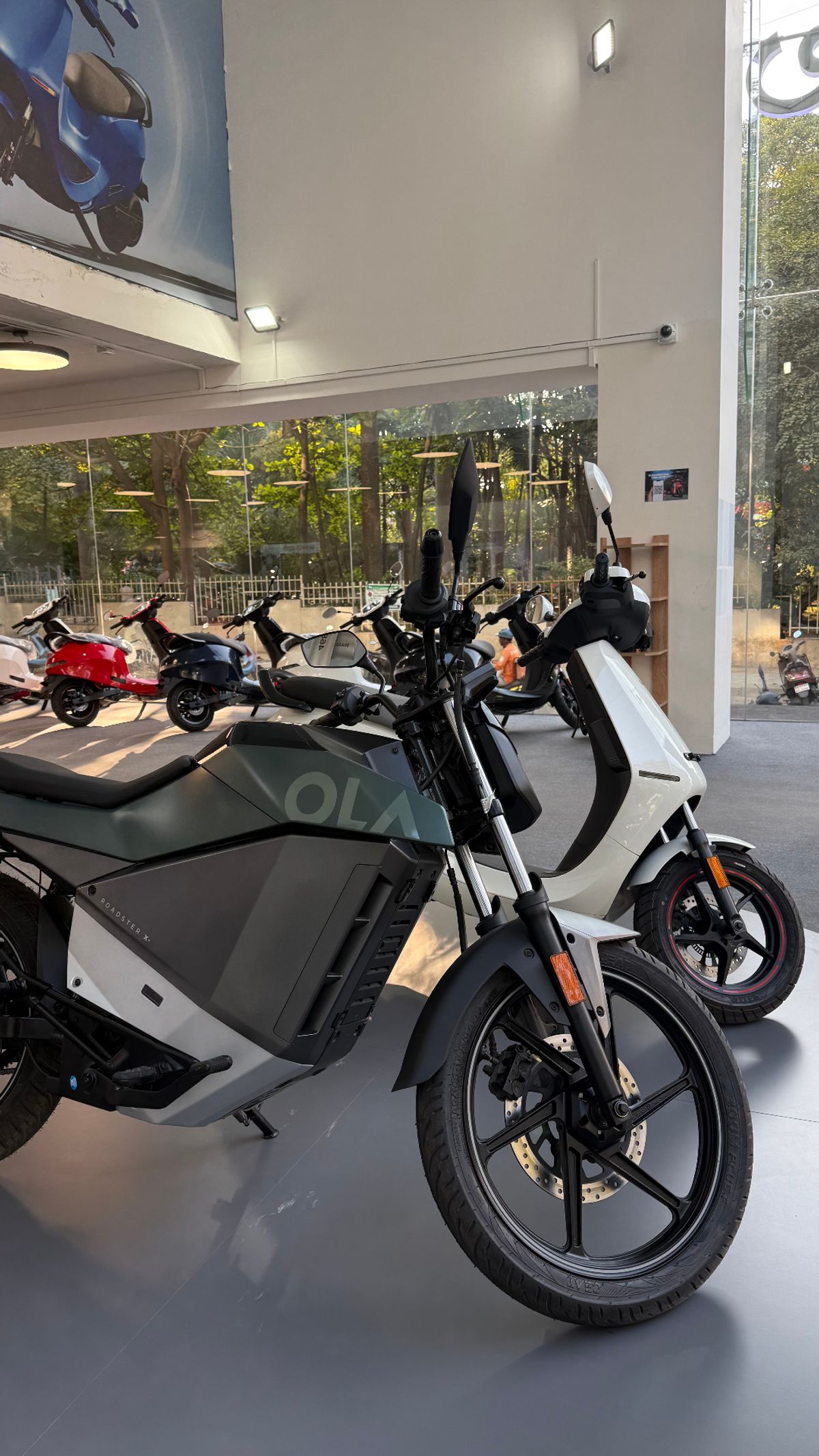
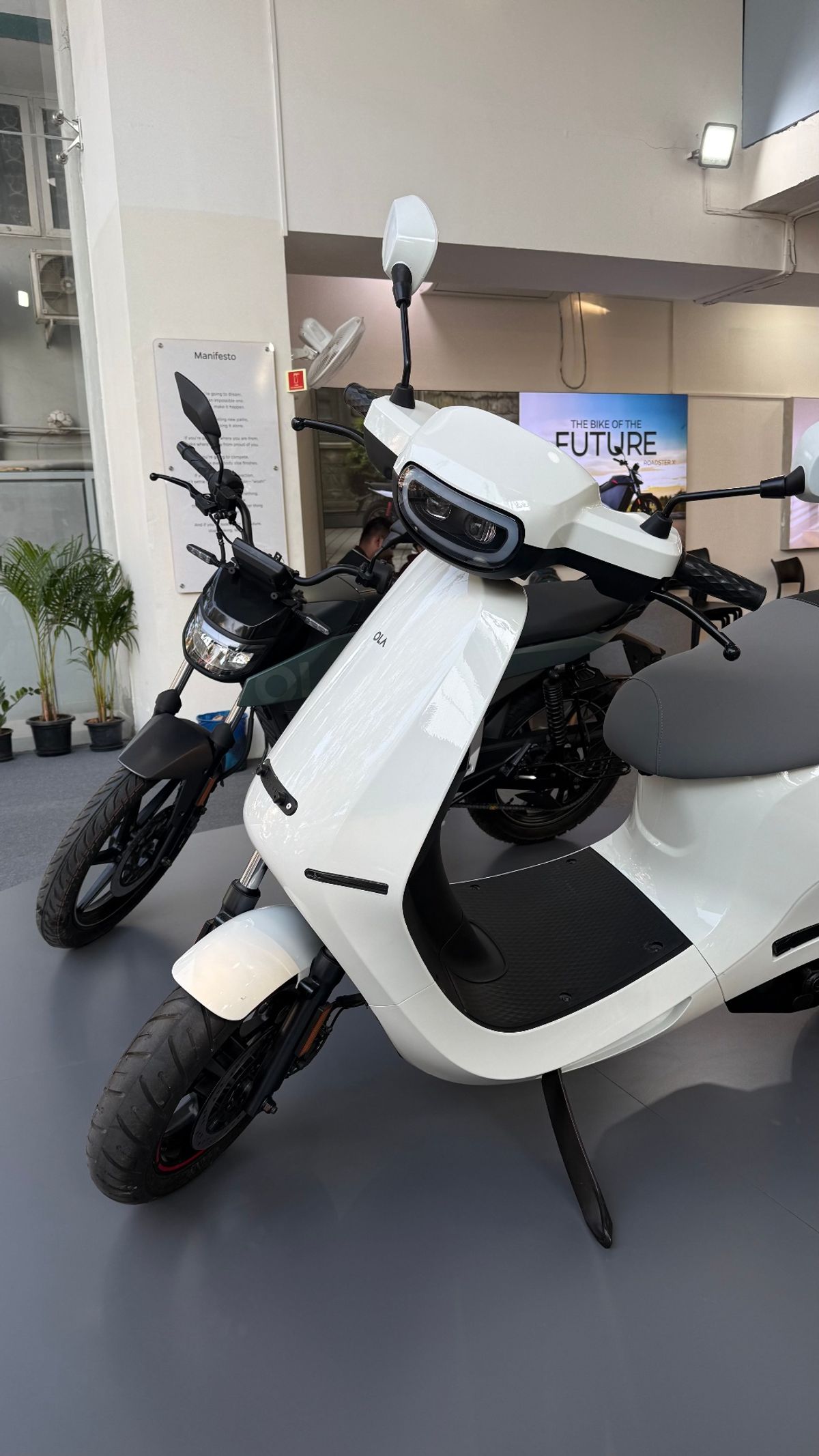
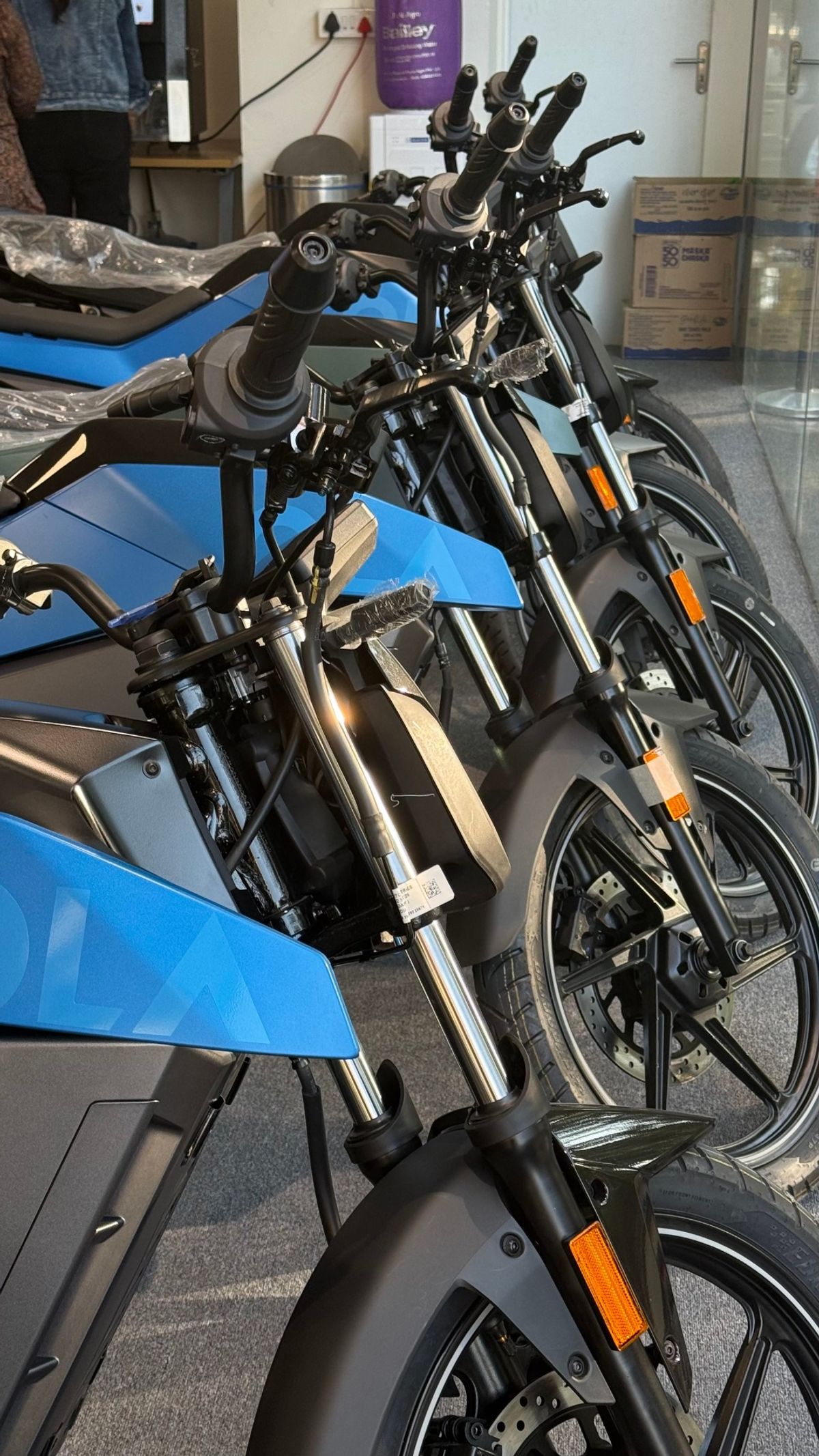
Ola's scooter lineup is broad — from budget models to premium. But the real headline was its entry into motorcycles. The Roadster X — the company's first production electric motorcycle — starts at ₹74,999 (approximately $900) for the base version with a 2.5 kWh battery and a range of 144 km. The Roadster X+ with a 9.1 kWh battery claims an impressive range of up to 501 km — a record for electric motorcycles.
That said, Ola's path hasn't been smooth. 2025 was a tough year: scooter sales dropped roughly by half compared to the record 2024 — from 407,000 to about 199,000 units. The reasons: quality issues, delivery delays, and customer complaints about after-sales service. TVS Motor took over leadership in electric two-wheelers.
Even so, the scale of what Ola is building remains impressive. This isn't just a scooter manufacturer — it's a company building a complete vertical ecosystem, from battery cells to software.
When a Scooter Becomes a Gadget
Here's what struck me most while test-riding electric vehicles in Indian showrooms: the line between vehicle and gadget has essentially vanished.
Instead of analog gauges — a color touchscreen display. Instead of an ignition key — PIN unlock or unlocking via app. In the settings — riding modes, parking mode, vacation mode (to prevent battery degradation during long idle periods). Built-in navigation, cruise control, over-the-air firmware updates — just like a smartphone. Even music playback.
It feels less like starting a motorcycle and more like booting up a new device. That fundamentally reshapes how young Indians think about transport — for them, an electric scooter isn't "the alternative to petrol" but an entirely different product category, closer to a tech gadget than to a traditional motorbike.
OTA updates are a story in themselves. Ola Electric runs MoveOS — an operating system for its scooters and motorcycles that gets regular updates adding new features. Buy a scooter today, and a month later it's faster and smarter without a single service visit.
The Competitive Landscape: Who Else Is in the Game
India's electric two-wheeler market is one of the most competitive in the world. Beyond River and Ola, several major players are driving the space:
TVS Motor — the largest seller of electric scooters in India by the end of 2025. The company sold around 299,000 units, capturing 23% of the market. The iQube model became one of the segment's bestsellers.
Bajaj Auto — the second-largest player with the Chetak model. Around 270,000 units sold and 21% market share. A classic example of a traditional manufacturer successfully transitioning to electric.
Ather Energy — a Bangalore startup and pioneer of the premium electric scooter segment. Crossed 200,000 units in a year for the first time. The Rizta, aimed at family buyers, became a hit.
Hero MotoCorp — the world's largest two-wheeler manufacturer by volume, actively ramping up its electric division through the Vida brand.
And then there's Suzuki with the e-Access, VinFast from Vietnam with five models, and dozens of local startups. Competition at this level guarantees one thing: prices will keep falling, and quality will keep rising.
The Ecosystem: Not Just Scooters, but Batteries, Charging, and Software
India isn't just producing electric scooters — it's building its own technology ecosystem from the ground up. That fundamentally sets it apart from countries that depend on Chinese batteries or European technology.
Ola is building its own GigaFactory for battery cell production. Ather Energy developed its own platform from scratch. River created a product so compelling that Yamaha came not to compete, but to collaborate. Tata Group is investing in lithium-ion cell manufacturing. Reliance is building a gigafactory in Jamnagar.
In parallel, infrastructure is growing: charging stations are popping up at shopping malls, residential complexes, and office parking lots. Startups like Ather Grid, Battery Smart, and Sun Mobility are working on fast-charging networks and battery-swap stations.
UPI — India's instant payment system processing over 100 billion transactions per year — is already integrating into the charging ecosystem: pull up, scan a QR code, pay, and ride on. No cards, no apps, no subscriptions.
All of this comes together into a unified picture: India isn't copying someone else's EV model — it's building its own, tailored to the realities of a country of 1.4 billion people where the middle class is growing rapidly but price sensitivity remains high.
What It All Means
India's electric revolution isn't a story about a distant future. It's happening right now, on the streets I ride through every day on my bike.
When I first came to India, electric scooters were a rarity — a curiosity for tech enthusiasts. Today, they account for over 6% of all two-wheeler sales, and in some states like Kerala and Goa, penetration is even higher.
But the most interesting part isn't the numbers. It's what's happening at the cultural level. Young Indians see an electric scooter not as a compromise, but as an upgrade. It's quieter, accelerates faster, costs less to maintain, and — crucially for a generation raised on smartphones — it's internet-connected and updates over the air.
India is showing the world that electric mobility isn't just about Tesla and premium cars. It's also about scooters for $1,000, motorcycles for $900, charging via QR code, and a trunk that fits a banana leaf for a festive meal.
If you want to understand what the future of transport looks like for the next billion people — don't look at Silicon Valley. Look at Bangalore, Hyderabad, and Chennai. The future is already here, and it's riding on two wheels.