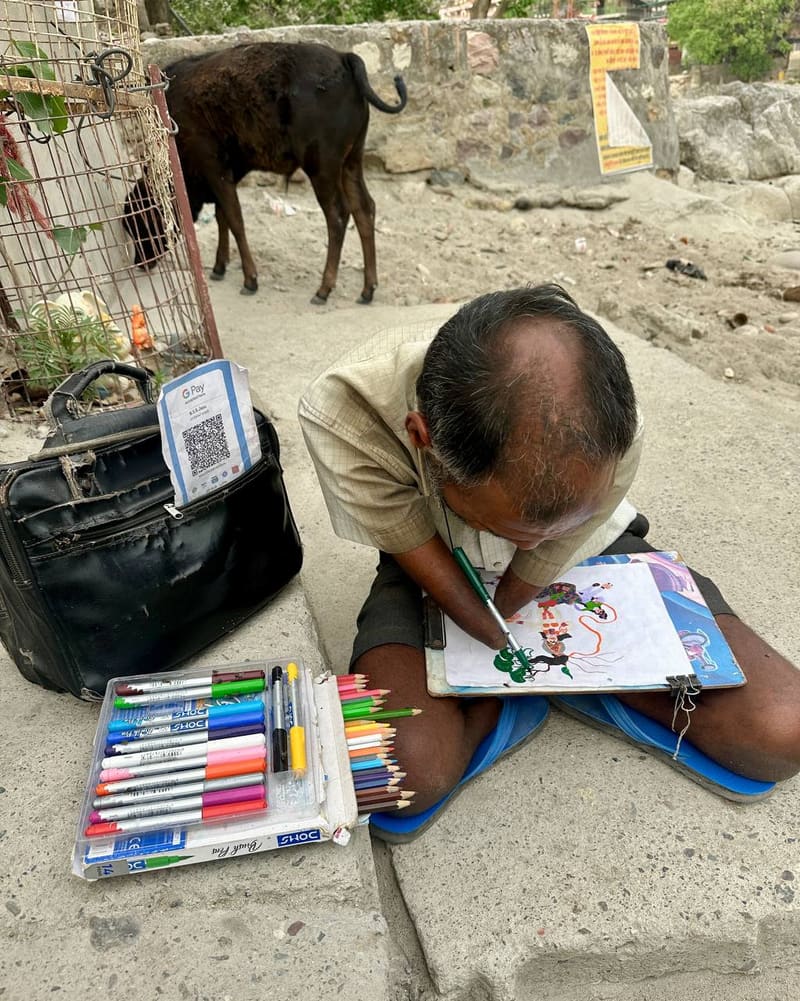
Here's a scene that would have been unthinkable a decade ago: An armless artist sits on the banks of the Ganges in Varanasi, painting with his feet. Beside him, a laminated QR code invites passersby to tip him digitally.
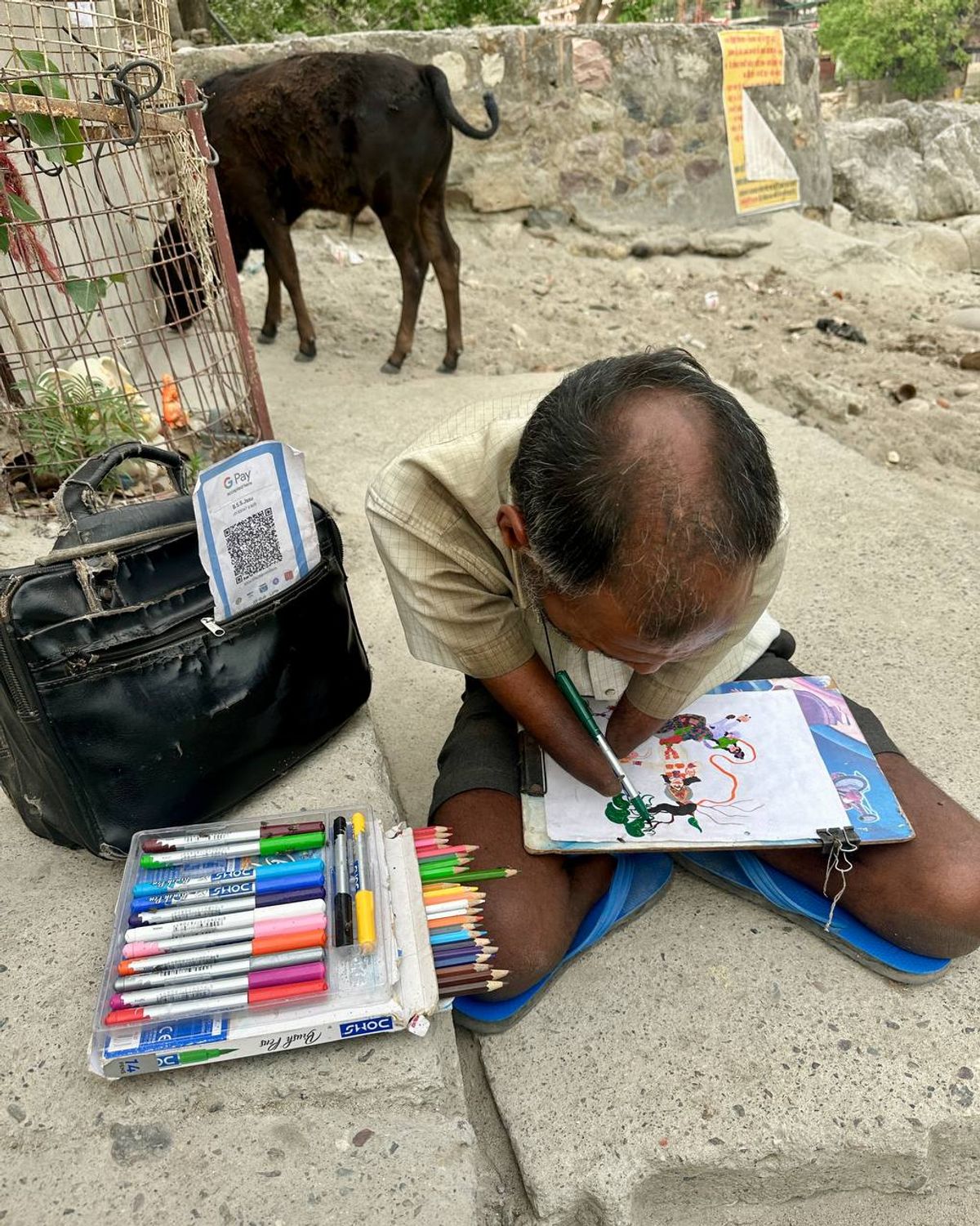
This is modern India — where the corner chaiwalla has a UPI code taped to his stall, temple offerings come in through QR codes, and you can pay an autorickshaw, a vegetable cart, or a five-star hotel with the same two taps on your phone. India now processes nearly half of all real-time digital payments on Earth — a staggering achievement for a nation that was overwhelmingly cash-based just a few years ago.
But the story of money in India runs deeper than technology. It weaves through five centuries of currency evolution, a traumatic overnight demonetization, ancient spiritual teachings about wealth, and a homegrown payment system that has become the envy of nations worldwide.
The Rupee: Five Centuries of Currency
The Indian rupee (₹) is one of the world's oldest currencies still in active use. The word itself derives from the Sanskrit rūpyakam, meaning "wrought silver" or "stamped coin."
The modern rupee traces its origins to Sher Shah Suri, the Afghan ruler who briefly unseated the Mughal dynasty in the 16th century. During his reign from 1540 to 1545, Sher Shah introduced a standardized silver coin weighing roughly 11.53 grams (178 grains), which he called the rupiya. This wasn't merely a monetary innovation — it was an administrative revolution. By replacing a chaotic array of regional coinages with a single uniform currency, Sher Shah made taxation, trade, and governance across his empire possible at an unprecedented scale.
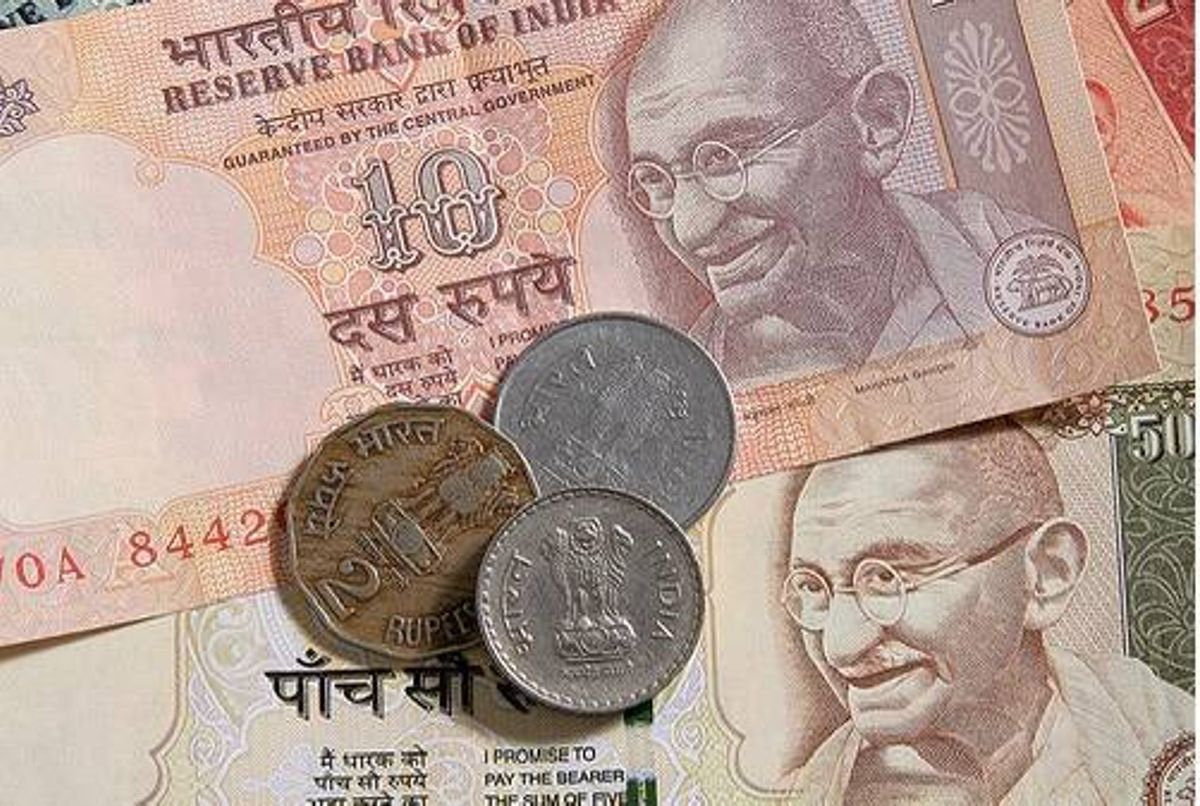
Today's paper rupees carry a striking linguistic feature that reflects the nation's diversity. Each banknote displays its denomination in 17 languages: Hindi and English on the front, plus 15 regional scripts on a panel on the reverse.
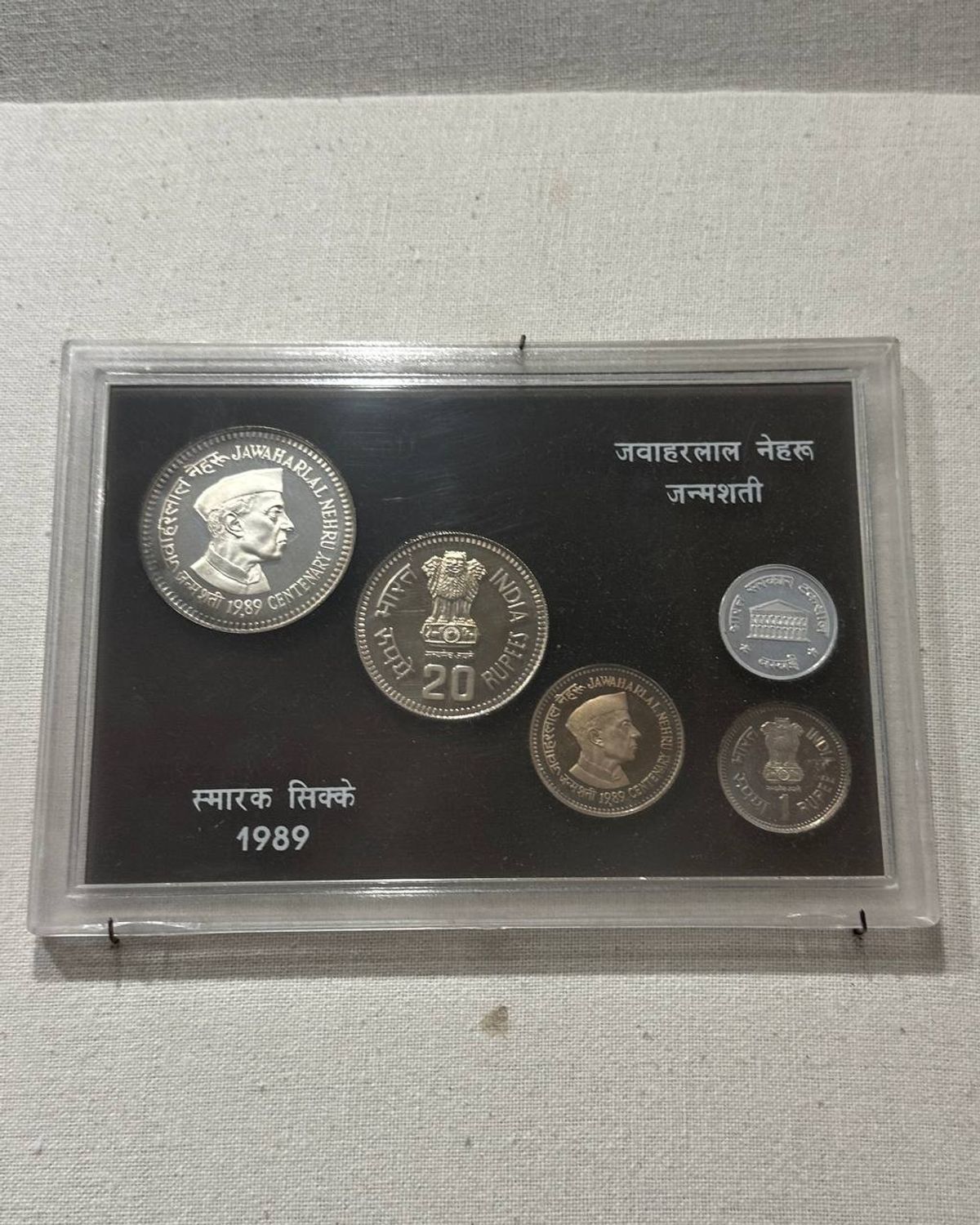
A curious fact for travelers: Non-residents are legally prohibited from bringing Indian rupees into or out of India. Indian citizens can carry up to ₹25,000 when traveling internationally, but for everyone else, rupees must be obtained and spent within the country.
The Night India's Money Died: Demonetization 2016
At 8:15 PM on November 8, 2016, Prime Minister Narendra Modi appeared on national television with an announcement that would upend the lives of a billion people. Effective at midnight — just four hours away — the ₹500 and ₹1,000 banknotes would cease to be legal tender. Those two denominations accounted for 86% of all cash in circulation.
The stated goals were ambitious: to combat "black money" (undeclared wealth used for tax evasion and corruption), eliminate counterfeit currency funding terrorism, and push India toward a digital economy.
What followed was chaos on a scale unprecedented in modern economic history. India at the time was roughly 90% cash-reliant. Overnight, the nation ground to a halt. Banks were overwhelmed. ATMs, calibrated for the old note sizes, couldn't dispense the new currency. Lines stretched for hours. Several deaths were attributed to the crush at exchange counters and the stress of waiting.
The economic verdict remains contested. The Reserve Bank of India later reported that 99.3% of the demonetized notes had returned to banks — meaning almost none of the expected "black money" was destroyed. Yet something else happened: India's digital payment infrastructure experienced explosive growth.
UPI: India's Gift to Global Finance
The Unified Payments Interface (UPI) may be the most significant financial innovation of the 21st century — and most people outside India have never heard of it.
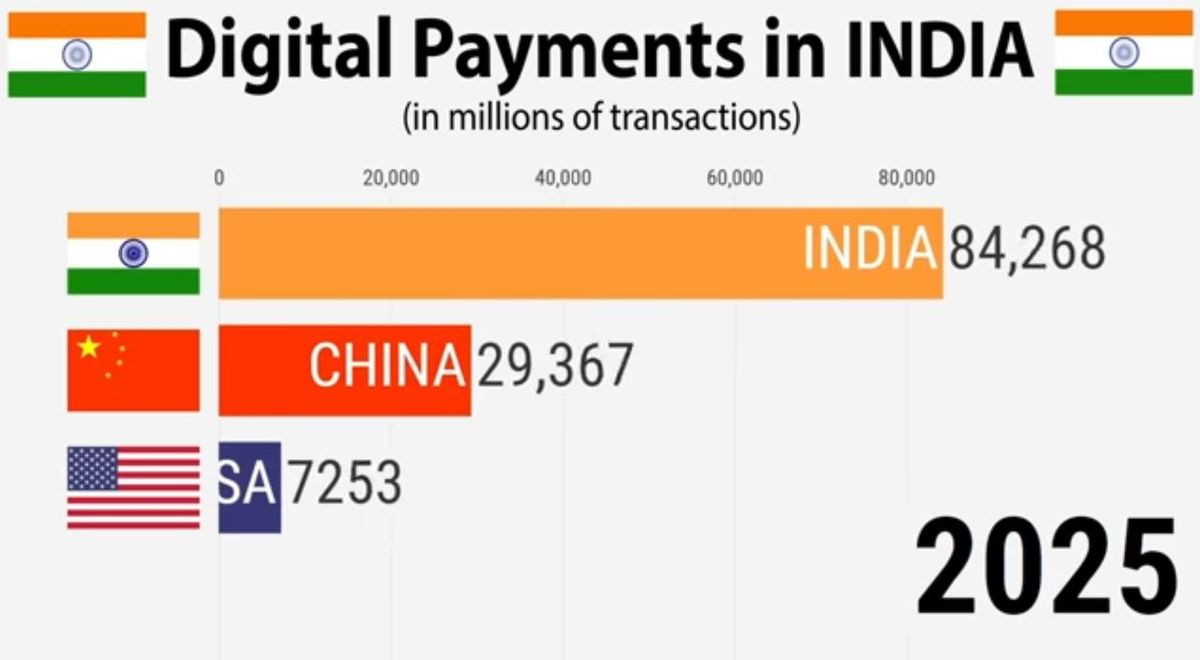
Launched in April 2016 by the National Payments Corporation of India (NPCI), UPI is a real-time payment system that allows instant money transfers between bank accounts using just a mobile phone. No card numbers, no branches, no waiting periods. Link your phone number to your bank account and you can send or receive money in seconds, 24 hours a day, with zero transaction fees.
The numbers are staggering. In fiscal year 2023-24, UPI processed over 131 billion transactions worth more than ₹200 lakh crore (approximately $2.4 trillion). According to ACI Worldwide's 2024 report, India now accounts for approximately 49% of all real-time payment transactions globally.
The impact on small merchants has been transformative. Street vendors, auto-rickshaw drivers, roadside food stalls — businesses that could never afford card terminals now display laminated QR codes. Customers scan, enter an amount, confirm with a PIN, and the money lands in the merchant's account within seconds.

Practical tip for tourists: You can use UPI in India even as a foreign visitor. Apps like MONY allow non-residents to register, link a foreign card, and make UPI payments. It's worth setting up before your trip — in much of India, having a QR payment option is now more useful than carrying cash.
Money as Sacred Energy: Hindu Philosophy of Wealth
Understanding India's relationship with money requires looking beyond economics into spirituality. In Hindu tradition, wealth is not merely material — it's a form of divine energy requiring wisdom, gratitude, and ethical management.

Lakshmi: The Goddess of Fortune
Lakshmi is the supreme deity of wealth, fortune, and prosperity in Hinduism. Typically depicted seated on a lotus, showering gold coins from her hands, she represents not just financial abundance but harmony, happiness, and spiritual prosperity. As the consort of Lord Vishnu, the preserver of cosmic order, Lakshmi's blessings sanctify material success.
Her worship is especially prominent during Diwali, the festival of lights. On this night, millions of Hindus perform Lakshmi Puja, inviting the goddess into their homes and businesses for the coming year.
Kubera: The Treasurer of the Gods
Where Lakshmi grants wealth, Kubera protects and multiplies it. As the king of the Yakshas (nature spirits) and the divine treasurer, Kubera represents the management and stewardship of riches. Hindu philosophy holds that worshiping both Lakshmi and Kubera together — the goddess who attracts wealth and the god who preserves it — creates a balanced approach to prosperity.
Wealth as Dharma
The Hindu concept of artha (material prosperity) is one of the four legitimate aims of human life, alongside dharma (righteousness), kama (pleasure), and moksha (liberation). Pursuing wealth isn't worldly distraction — it's a sacred responsibility when conducted ethically.
Practical Tips for Handling Money in India
The Cashless Transformation
India's journey toward digital payments accelerated dramatically after 2016, but the destination remains incomplete. Despite UPI's explosive growth, cash still circulates widely, particularly in rural areas where smartphone penetration and internet connectivity remain challenges.
Yet the transformation is undeniable. Village shopkeepers who once dealt only in crumpled notes now maintain UPI accounts. Temple donation boxes increasingly feature QR codes alongside traditional hundis. Even the informal economy — historically invisible to tax authorities — has begun leaving digital trails.
For travelers, the practical implications are significant. In urban India, you can now navigate entire trips without touching paper currency. Hotels, restaurants, shops, auto-rickshaws, and even street food vendors accept digital payments. In rural areas and smaller towns, cash remains essential, but the balance shifts yearly.
India's relationship with money reflects its broader character: ancient and modern intertwined, spiritual and practical coexisting, tradition adapting to transformation. The street vendor accepting a digital payment isn't abandoning tradition — he's extending it into new forms, continuing the 500-year evolution of the rupee into its latest incarnation: invisible, instant, and everywhere.