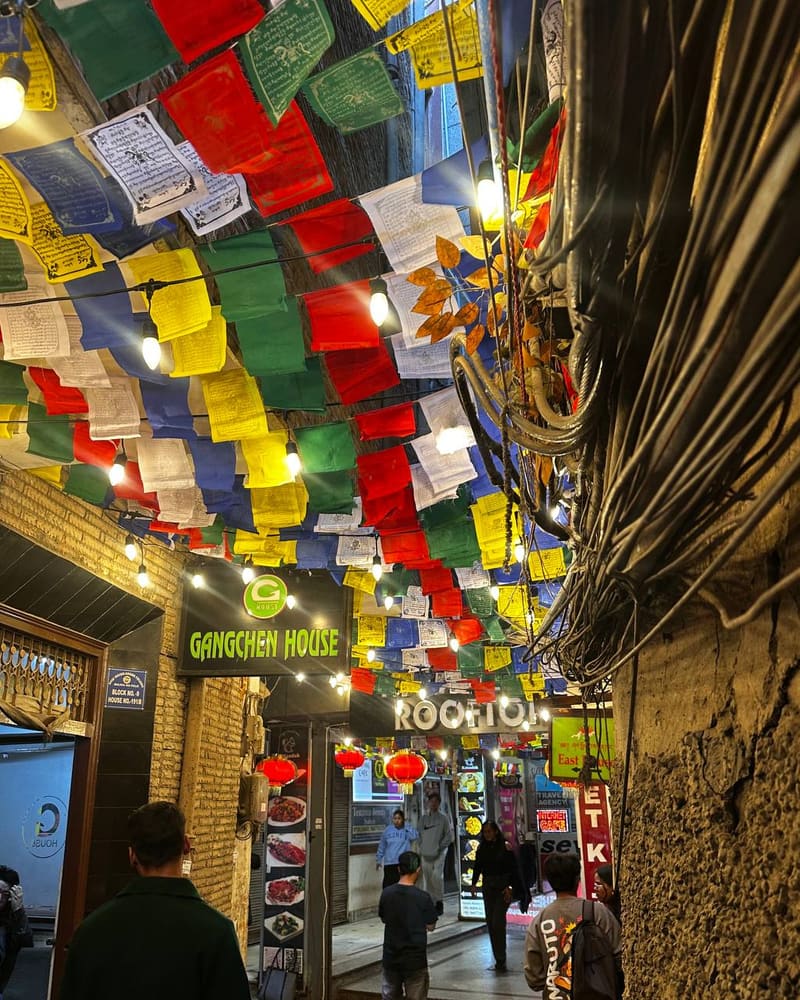
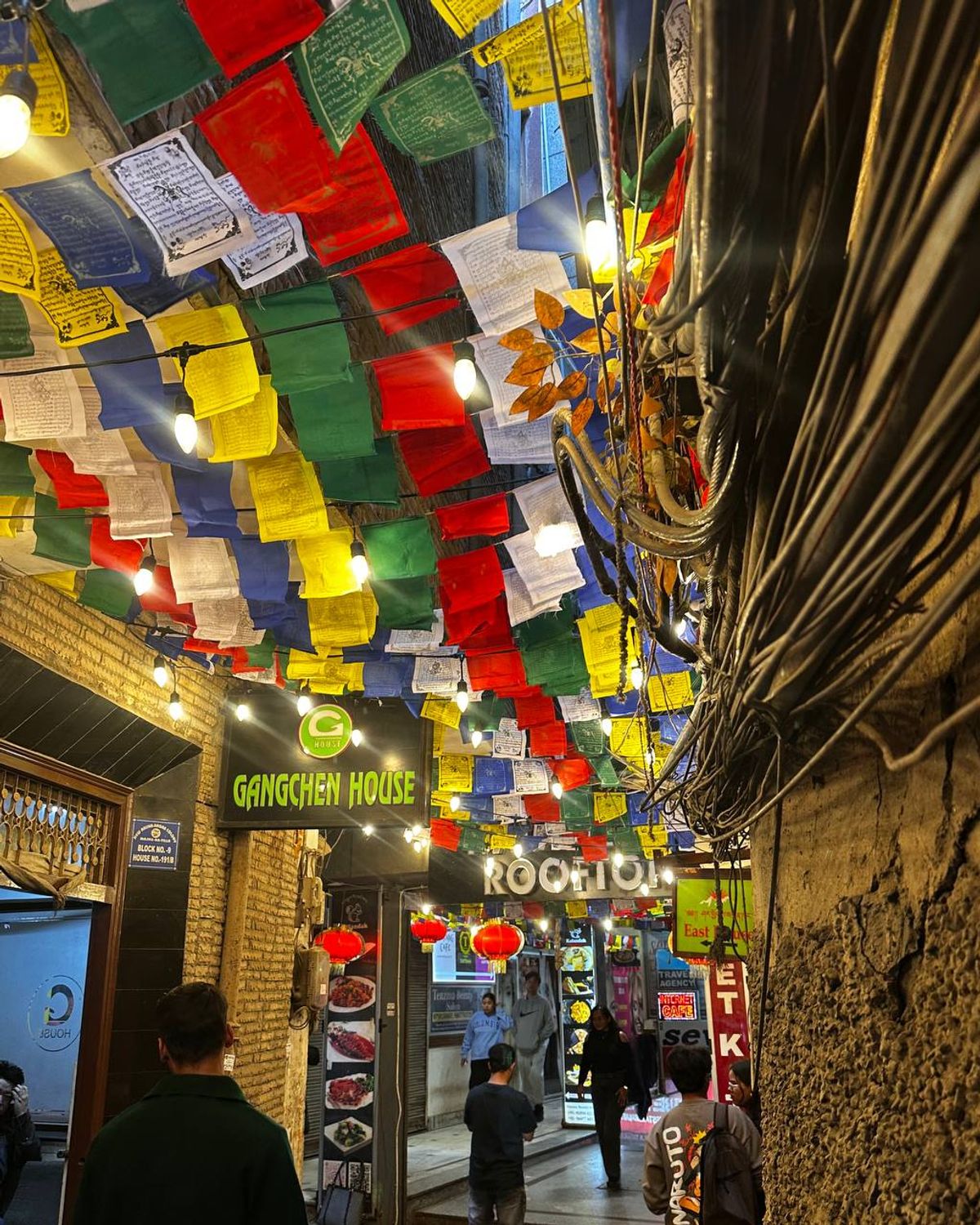
Step through one of the narrow entrances off the Ring Road near Kashmiri Gate, and you leave Delhi behind. The honking recedes. Prayer flags appear overhead, strung between buildings in every color of the rainbow. The air fills with incense and the aroma of steamed dumplings. You've entered Majnu Ka Tilla — Delhi's Little Tibet.
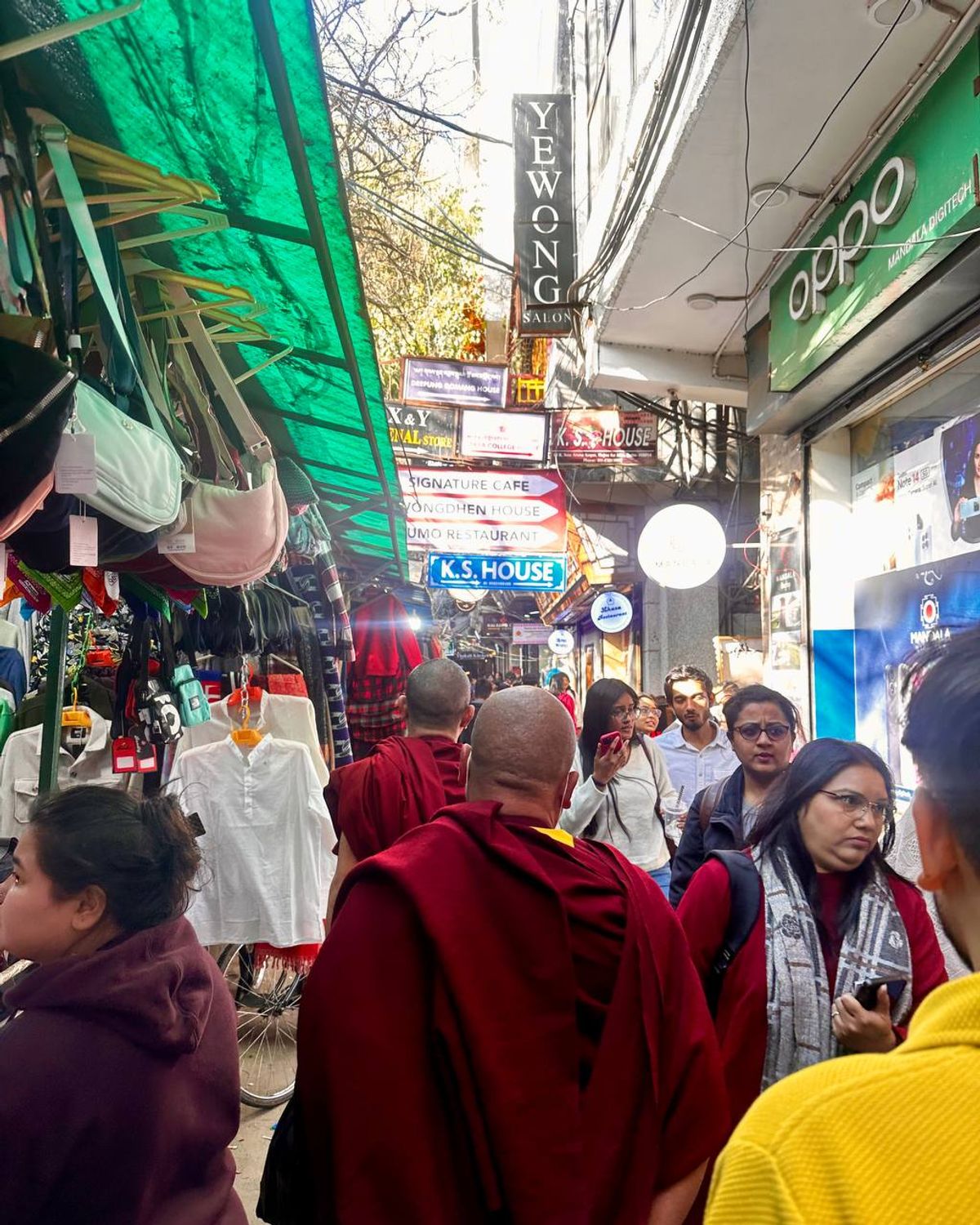
This compact neighborhood, officially known as New Aruna Nagar Colony, is home to one of India's most vibrant Tibetan communities. It's a place where monks in maroon robes queue alongside college students at café counters, singing bowls and Korean skincare share shelf space, and the flavors of the Himalayan plateau meet the appetites of a megacity. For travelers seeking authenticity off the standard tourist circuit, MKT (as locals call it) delivers an experience unlike anywhere else in India's capital.
A History Written in Exile
The story of Majnu Ka Tilla begins with tragedy and transformation. Following the 1959 Tibetan uprising against Chinese occupation, the Dalai Lama fled to India along with approximately 80,000 refugees. Many initially settled in temporary camps along the Yamuna River's banks.
In 1960, Prime Minister Jawaharlal Nehru's government formally allocated this 1.2-acre plot on the Yamuna floodplain to Tibetan refugees. What began as a cluster of makeshift tents and barracks gradually grew into a permanent settlement. Early residents remember the colony as a "dumping place" with no basic amenities — no toilets, no running water, unpaved streets that flooded during the monsoons.
The neighborhood's name, however, predates the Tibetan settlement by centuries. "Majnu Ka Tilla" means "Majnu's Mound," referring to Abdullah, a Sufi mystic nicknamed "Majnu" (the mad lover) who lived here during the reign of Sultan Sikandar Lodhi in the late 15th century. According to legend, Majnu ferried travelers across the Yamuna free of charge as an act of devotion to God. In 1505, he met the first Sikh Guru, Guru Nanak Dev Ji, who stayed at this spot. The 18th-century Gurdwara Majnu Ka Tilla, built by Sikh military leader Baghel Singh in 1783, still stands nearby, commemorating that encounter.
Today the colony houses roughly 2,500–3,500 residents in a dense maze of narrow lanes and multi-storey buildings. It has transformed from a marginalized shantytown into a thriving commercial hub — though its legal status remains complicated.
The Spiritual Heart: Monastery and Temple
At the center of Majnu Ka Tilla's labyrinthine streets stands the Buddhist monastery, known as the Ganden Tharpa Ling Monastery. The courtyard opens suddenly from the cramped alleys — a square of calm adorned with colorful prayer flags, thangka paintings, and the quiet hum of Buddhist chanting.
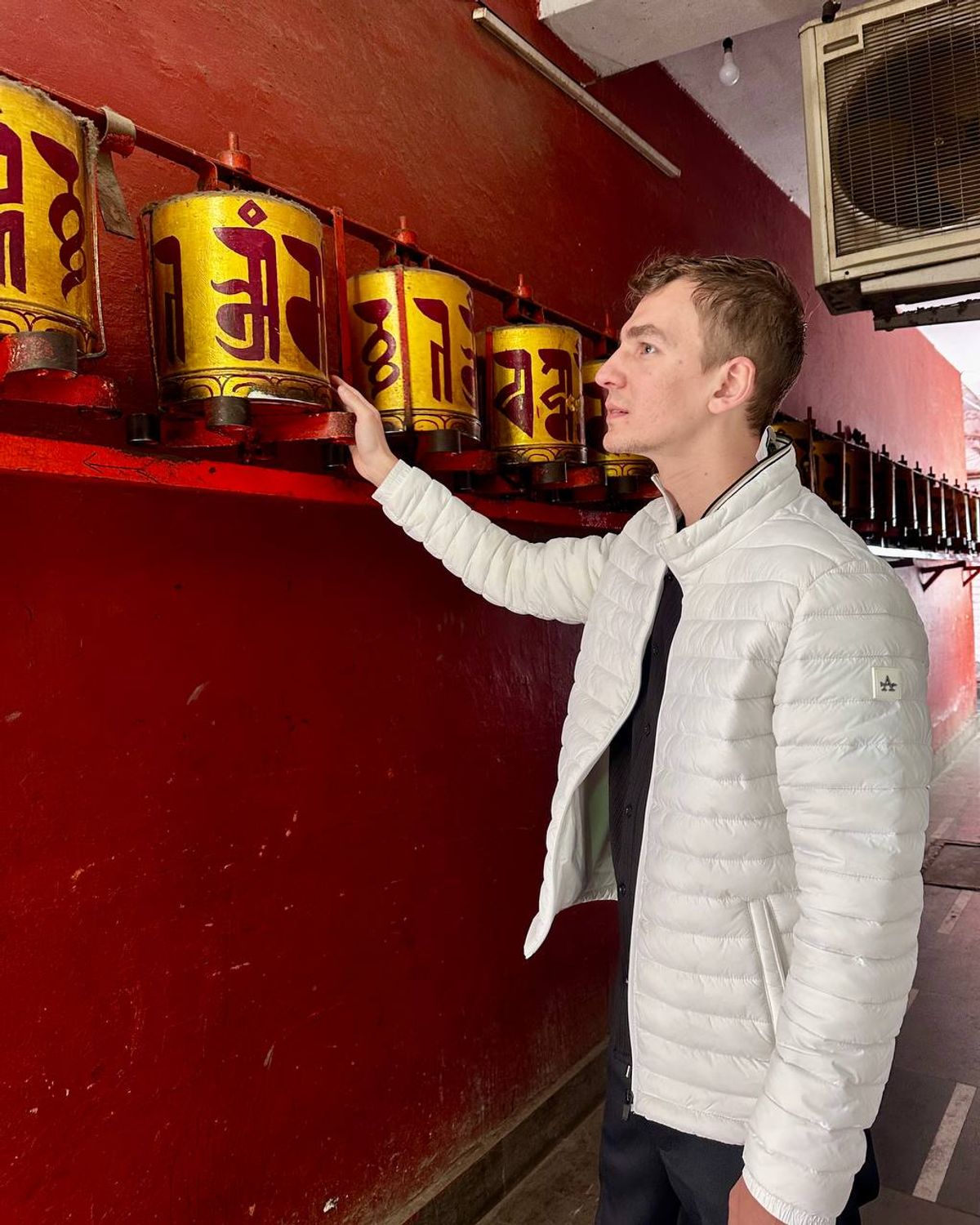
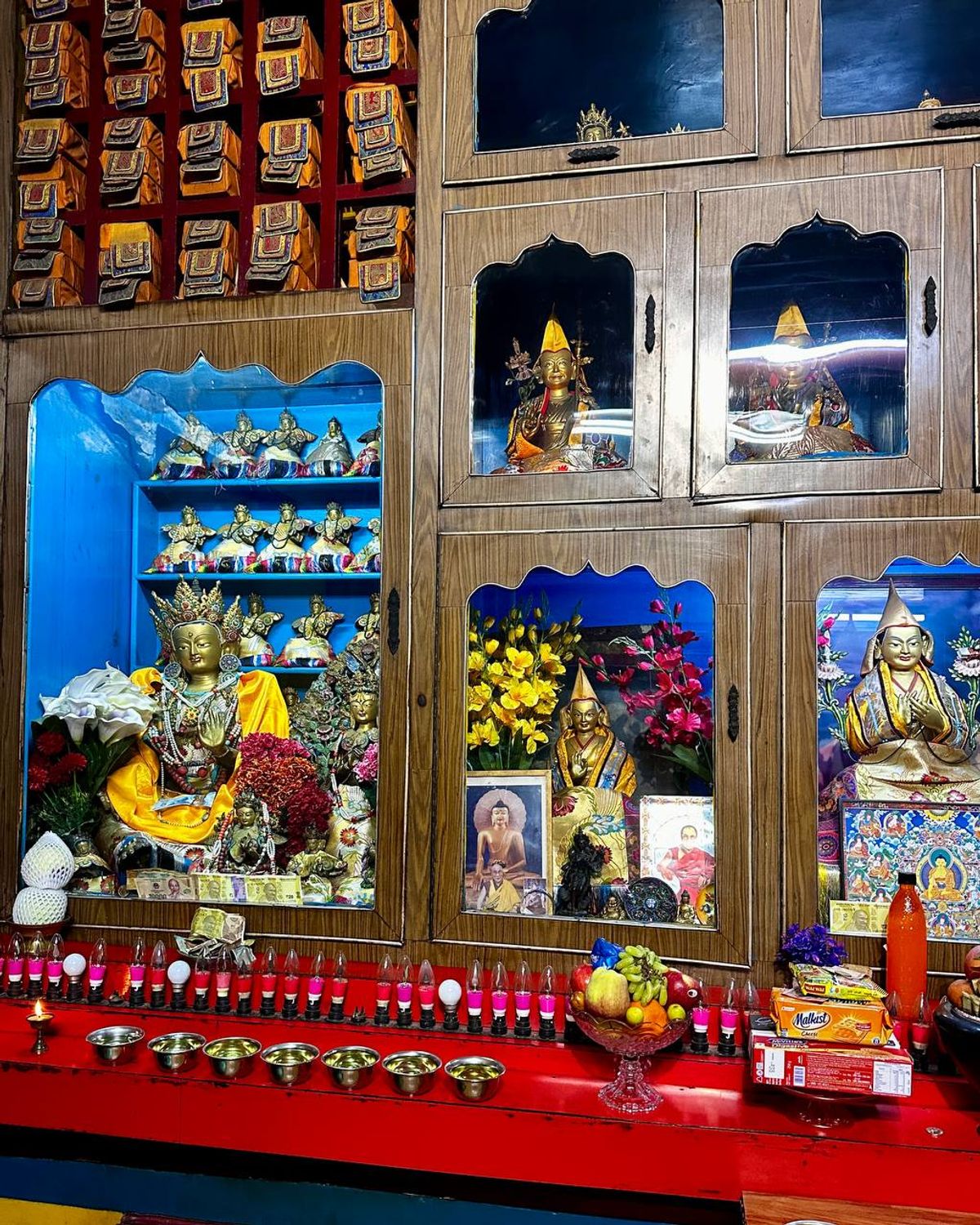
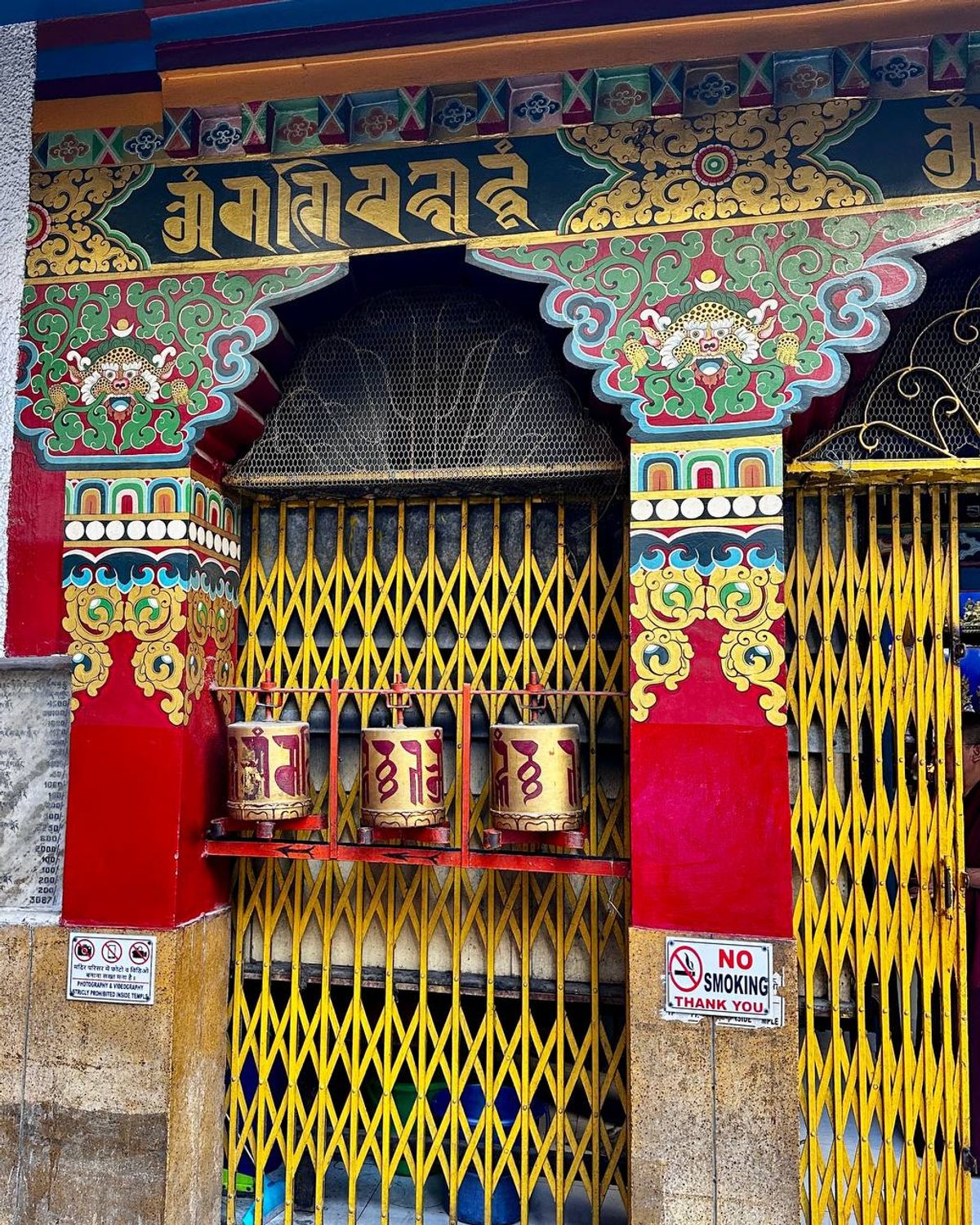
The monastery was established in the 1960s by the refugee community and remains the spiritual anchor of the settlement. Prayer wheels line the entrance, and visitors are welcome to spin them clockwise while circumambulating the building. Inside, you'll find golden Buddha statues, butter lamps flickering in the dimness, and intricate frescoes depicting scenes from Buddhist scripture.
What strikes most visitors is how the monastery is woven into daily life. This isn't a museum piece sealed off from the neighborhood. Monks in maroon robes emerge from prayers and join the lunch crowd at nearby restaurants. Elderly Tibetan women sit in the sunny courtyard folding fresh momos for sale. Children cut through on their way home from school. The sacred and the mundane coexist seamlessly.
The monastery comes alive during Tibetan Buddhist festivals. Losar (Tibetan New Year, usually in February or March) transforms the entire colony into a celebration of cultural identity, with traditional dances, elaborate rituals, and community gatherings.
Shopping: From Prayer Beads to Korean Skincare
Majnu Ka Tilla has grown into a shopping destination that caters to spiritual seekers, bohemian fashionistas and bargain hunters alike. The market runs roughly from 10:00 AM to 9:00 PM, though some shops open earlier and close later.
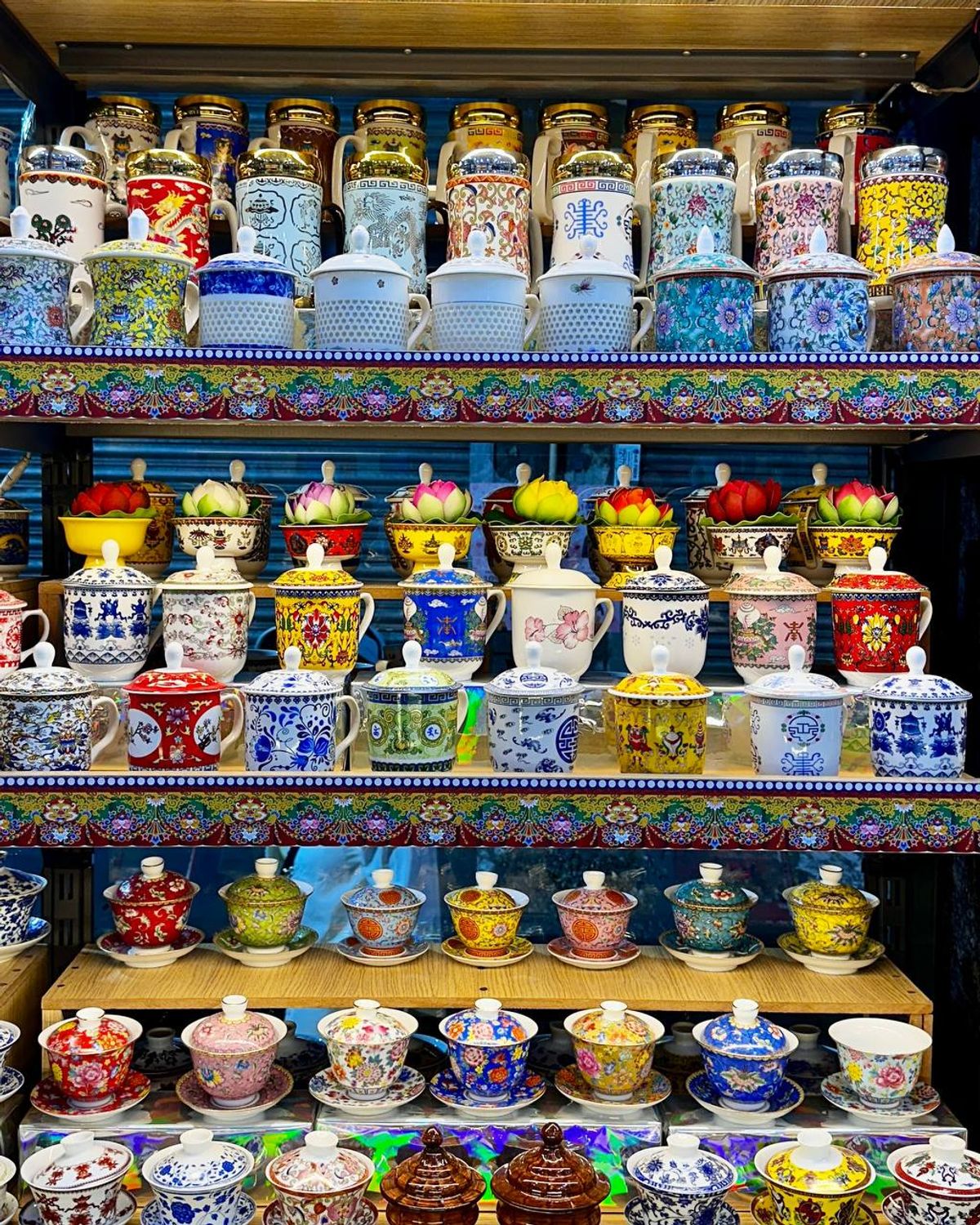
Tibetan handicrafts and spiritual items form the traditional core of MKT's retail offerings. You'll find singing bowls in various sizes (the genuine Tibetan ones produce a distinctive sustained resonance), incense from Dharamsala monasteries, Buddha statues in brass and bronze, prayer wheels, mala beads (Buddhist rosaries) in everything from sandalwood to semiprecious stones, thangka paintings, silver jewelry with turquoise and coral, and books on Buddhist philosophy.
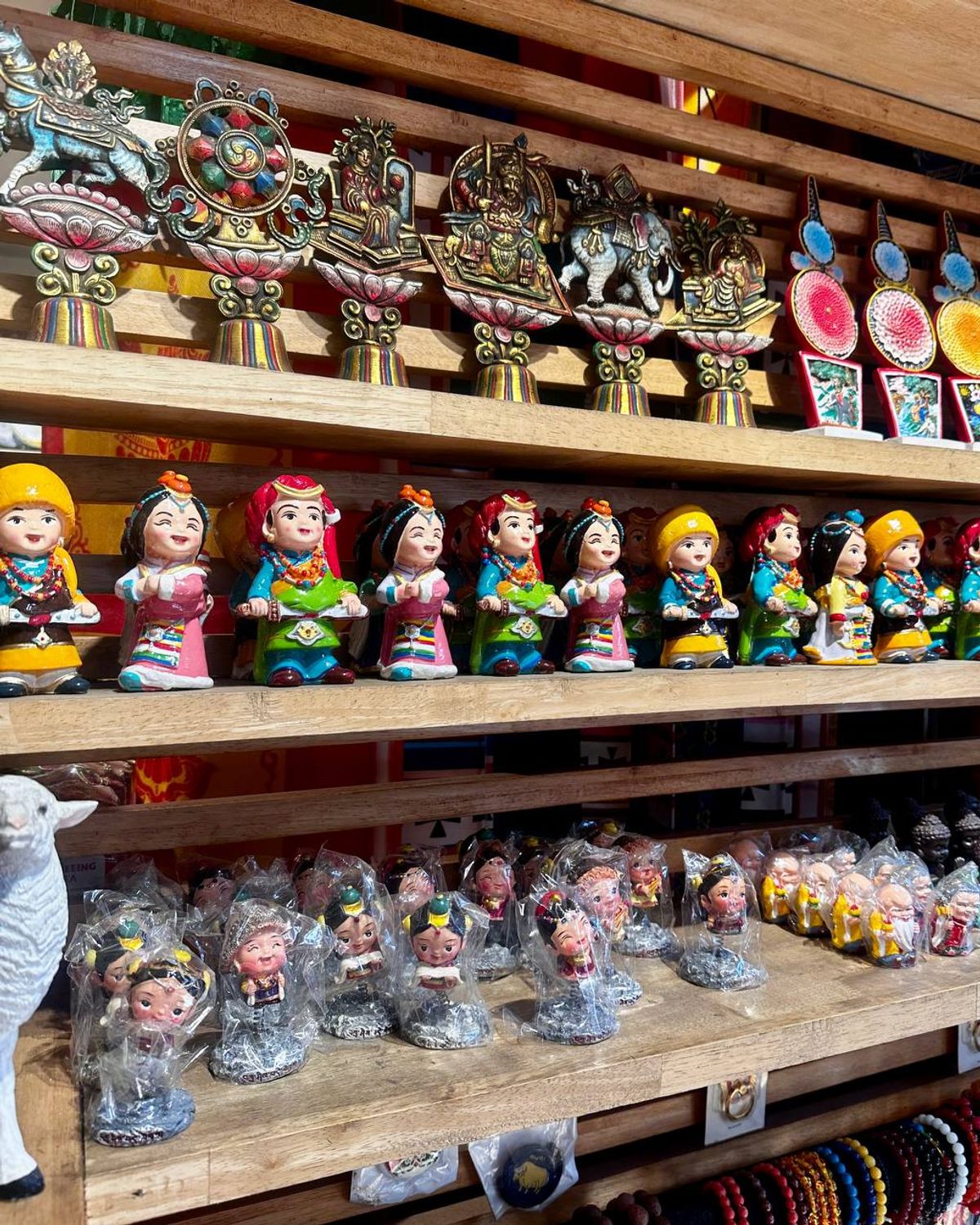
The most unexpected evolution in recent years has been the influx of Korean and Japanese pop culture merchandise. K-pop's enormous popularity among Indian youth has spawned shops selling Korean skincare products, K-beauty cosmetics, bubble tea, and idol merchandise.
The Food: A Himalayan Feast
Food is Majnu Ka Tilla's greatest draw. The colony offers what many consider the most authentic Tibetan cuisine in Delhi, at prices that make repeat visits easy.
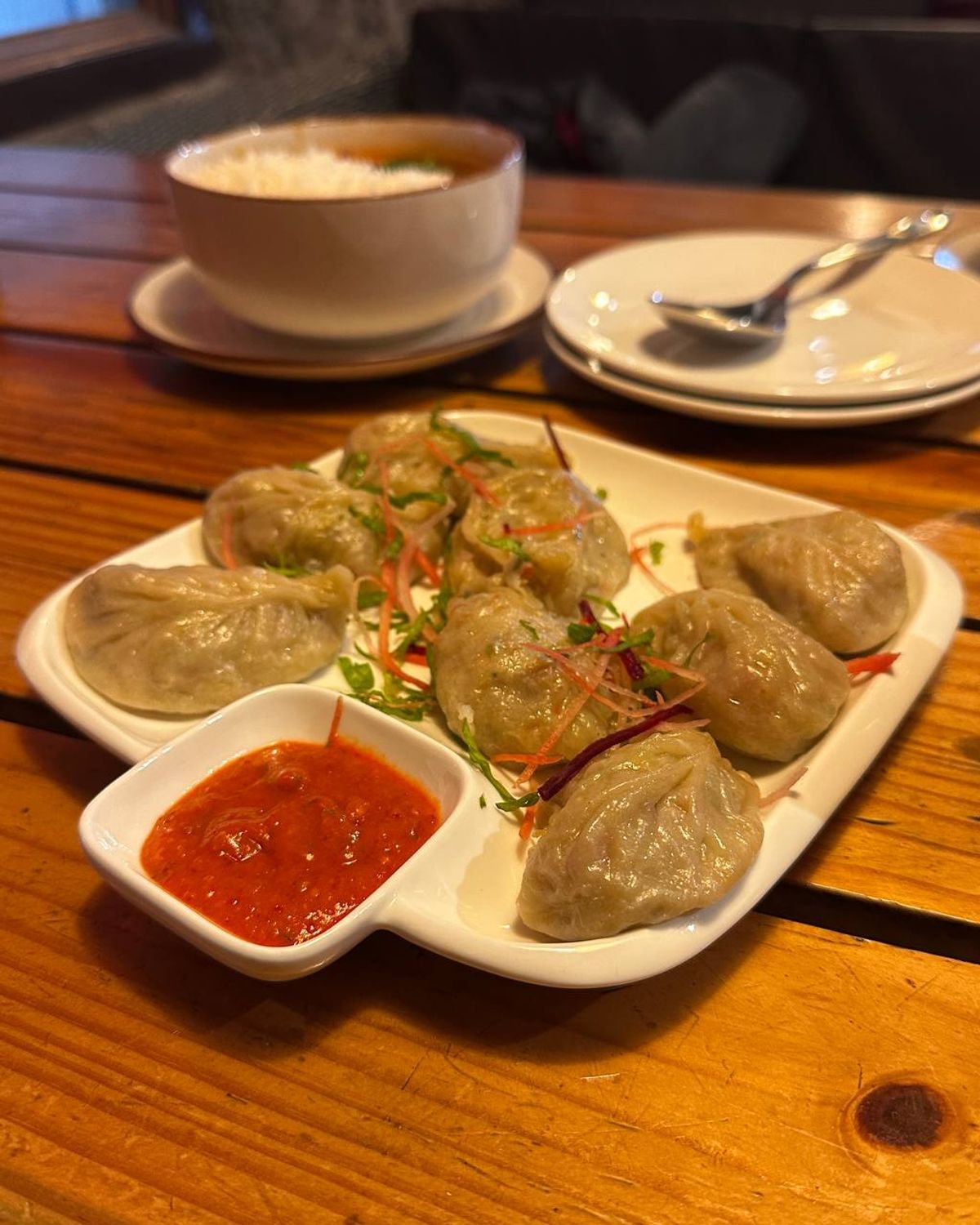
Momos are the undisputed stars. These Tibetan dumplings — steamed, fried, or served in soup — appear on virtually every menu. While momos have spread across Delhi's street food scene, MKT versions remain the gold standard. Try the classic steamed vegetable or chicken momos, the pan-fried variety with crispy bottoms, or the Erma Datse Momos from Dolma's Since 1984 — steamed momos dipped in a creamy Bhutanese cheese and chili curry.
Thukpa is the soul-warming noodle soup at the heart of Tibetan cooking. Hand-pulled wheat noodles swim in a fragrant broth with vegetables, meat (usually chicken or buff) and warming spices. It's comfort food perfected over generations in the harsh climate of the Tibetan plateau.
Laphing offers something completely different — cold mung bean noodles tossed in a spicy, tangy sauce of garlic, soy, vinegar and chili paste. The texture is slippery and chewy, the flavor sharp and addictive.
Practical note: Non-vegetarian food is not served on Wednesdays at many establishments — a tradition observed throughout the Tibetan community.
The Vibe: Where Tradition Meets Trend
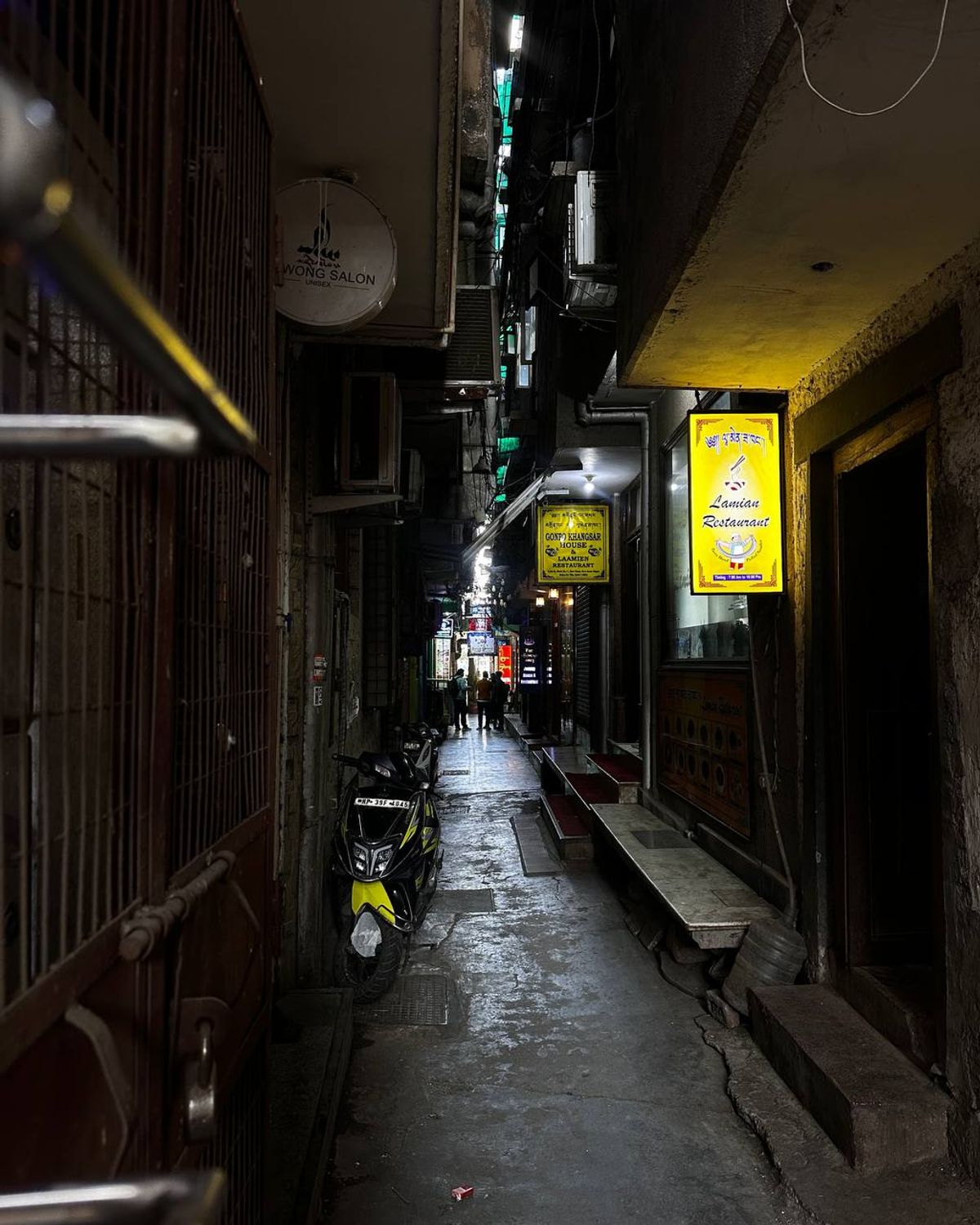
What makes Majnu Ka Tilla special isn't just its Tibetan heritage or its food scene — it's the unique atmosphere created by their intersection with contemporary Delhi youth culture.
The colony's proximity to Delhi University's North Campus has made it a magnet for students. Affordable prices, Instagram-worthy cafés, and the appeal of somewhere "different" draw crowds on weekends and evenings. The narrow lanes that once felt like a hidden refuge now bustle with the energy of a popular destination.
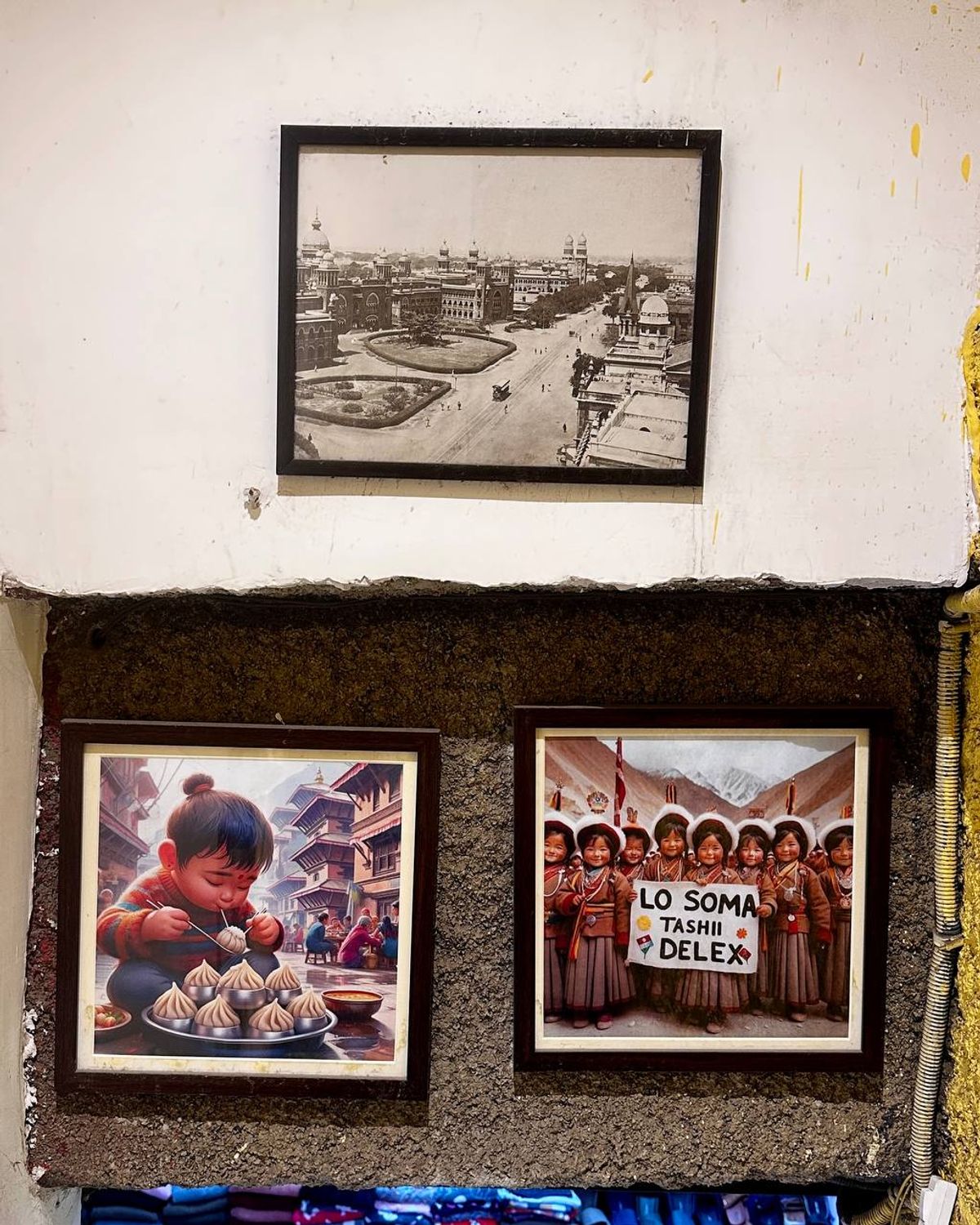
Yet the Tibetan community has also benefited from this commercial success. Tourism and student traffic provide livelihoods. The visibility helps preserve cultural identity and raises awareness of the Tibetan cause. The colony has become a platform for activism — peaceful protests, candlelight vigils and solidarity events for Tibetan freedom are regularly organized here.
Practical Information
Beyond Tourism: A Community in Transition
Majnu Ka Tilla represents something larger than a quirky Delhi neighborhood or a food destination. It's a living testament to the resilience of the Tibetan diaspora — a community that has maintained its cultural identity through six decades of exile while adapting to the realities of urban India.
The young Tibetans who grew up here navigate complex identities. In surveys, nearly all identify as "100% Tibetan," yet many have never seen Tibet. They speak Tibetan at home, Hindi in Delhi and increasingly English for economic opportunity. Some dream of returning to a free Tibet; others have built lives in India with no intention of leaving.
Yet Majnu Ka Tilla endures. The monastery bells still ring. The prayer flags still flutter. The momos still steam. And travelers who venture off Delhi's beaten path still discover a small piece of Tibet preserved in the heart of India — a reminder that culture can survive displacement, and that exile communities can create homes that honor both where they came from and where they are.
Next time you're in Delhi and craving something beyond the usual tourist circuit, make your way to Majnu Ka Tilla. Come for the momos. Stay for the monasteries. Leave with a new appreciation for the Tibetan community's remarkable journey.