The word "thali" simply means "plate" in Hindi. But order one and you'll get something far more complex than the name suggests: a complete meal assembled from a dozen or more small portions, each dish playing a specific role in a carefully orchestrated flavor symphony. Rice at the center. Lentils for protein. Vegetables for variety. Chutneys and pickles for brightness. Yogurt to cool the spice. Something sweet at the end.
Calling a thali a "dish" misses the point. It's a concept — an approach to eating that predates modern nutrition science by thousands of years and yet anticipates many of its conclusions about balanced meals and mindful eating.
I've eaten thalis from Gokarna to the Himalayas, from Vrindavan to Kerala. Nine different lunches. Nine different expressions of the same underlying philosophy. Each one recognizably a thali. Each one completely distinct.
The Six Taste Theory
Long before Western nutritionists landed on the idea of balanced meals built from proteins, carbohydrates, fats, and vitamins, Ayurvedic medicine had already developed a comprehensive framework for evaluating food. The system identifies six tastes — shadrasa in Sanskrit — that together make up a complete eating experience:
Sweet (madhura) — Rice, bread, most grains, ripe fruits. The foundation that builds tissue and provides energy.
Sour (amla) — Tamarind, lime, yogurt, tomato, fermented items. Stimulates digestion and enhances mineral absorption.
Salty (lavana) — Salt, obviously, but also seaweed and naturally mineral-rich foods. Lubricates tissues and maintains electrolyte balance.
Pungent (katu) — Chilies, black pepper, ginger, garlic, onion. Stimulates digestion, clears congestion, promotes circulation.
Bitter (tikta) — Leafy greens, turmeric, fenugreek, bitter melon. Detoxifying, anti-inflammatory, aids liver function.
Astringent (kashaya) — Lentils, beans, unripe banana, pomegranate, tea. Promotes absorption, firms tissue, aids wound healing.
A properly composed thali includes all six tastes in appropriate proportions. The practical upshot: when you finish a thali, you feel complete. Not overfull. Not still wanting more. Just satisfied.
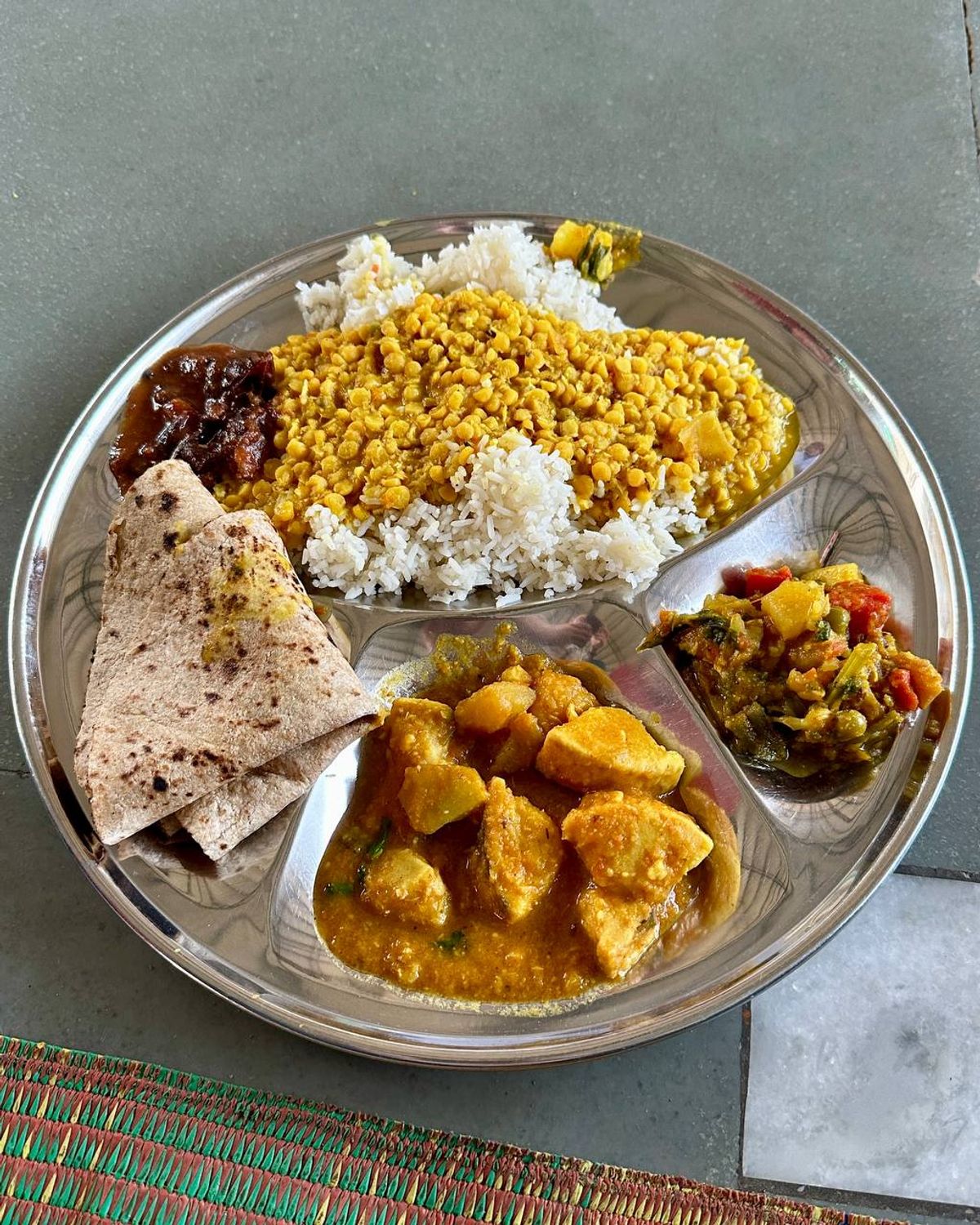
What's Actually on the Plate
A standard thali includes several mandatory components that appear across regional variations:
Rice — The central position, literally. White rice in the north, often red or parboiled in the south.
Bread — Roti, chapati, naan, puri, paratha. Northern thalis emphasize bread; southern thalis may omit it entirely, relying on rice alone.
Dal — Lentil preparation of some kind. Yellow dal, black dal, sambar, rasam. The protein foundation.
Sabzi — Vegetable dishes, usually several. One or two dry (sukhi), one or two with gravy (rasedar).
Raita or dahi — Yogurt in some form. The cooling element that balances spice.
Pickles (achar) — Intensely flavored preserved vegetables or fruits in oil and spices.
Chutney — Fresh or cooked condiments, usually spicy or sour.
Papad — Crispy lentil or rice wafers. The textural contrast.
Sweet — Something to end the meal.
Traveling India Through Thalis
Punjabi Thali: The Creamy North
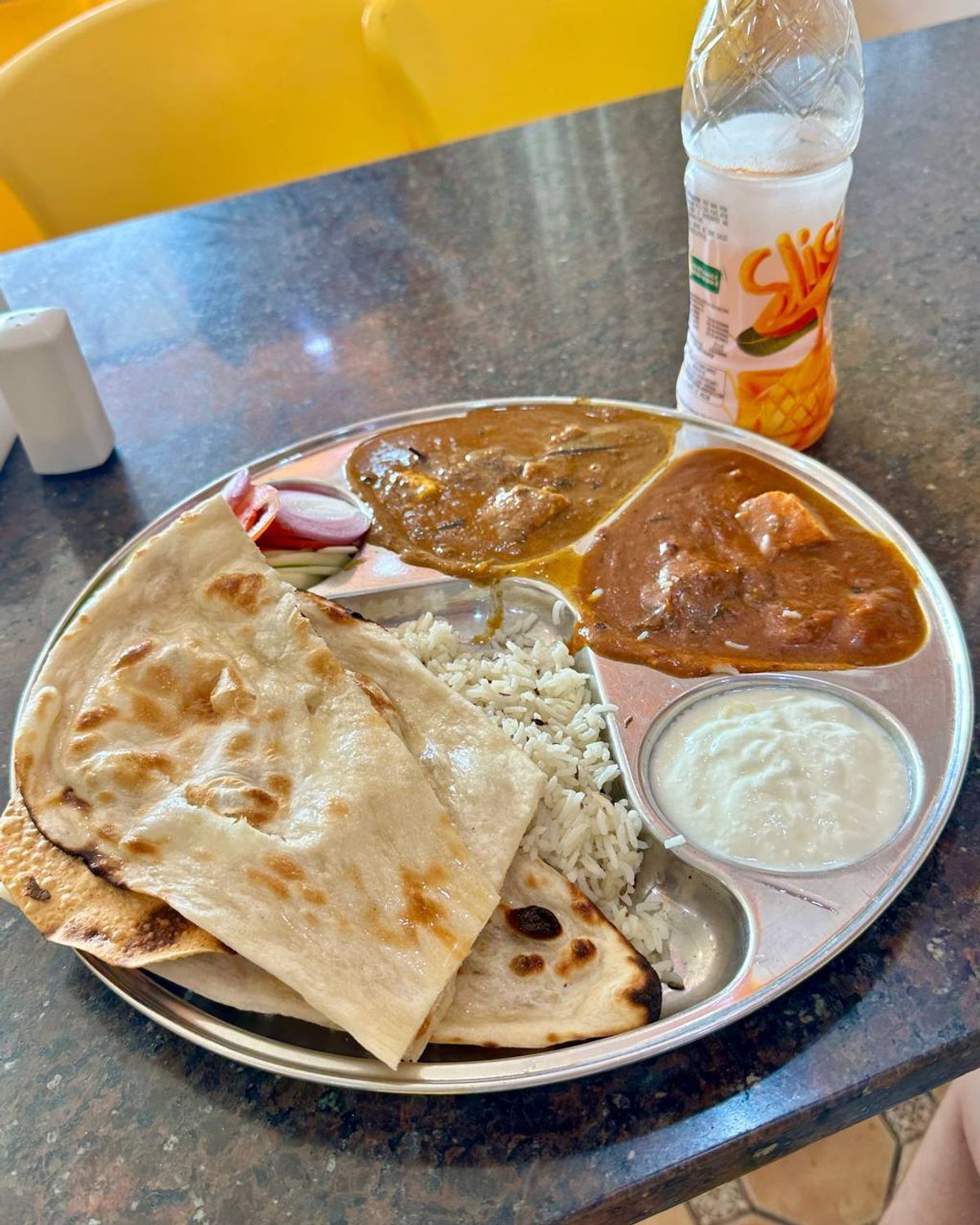
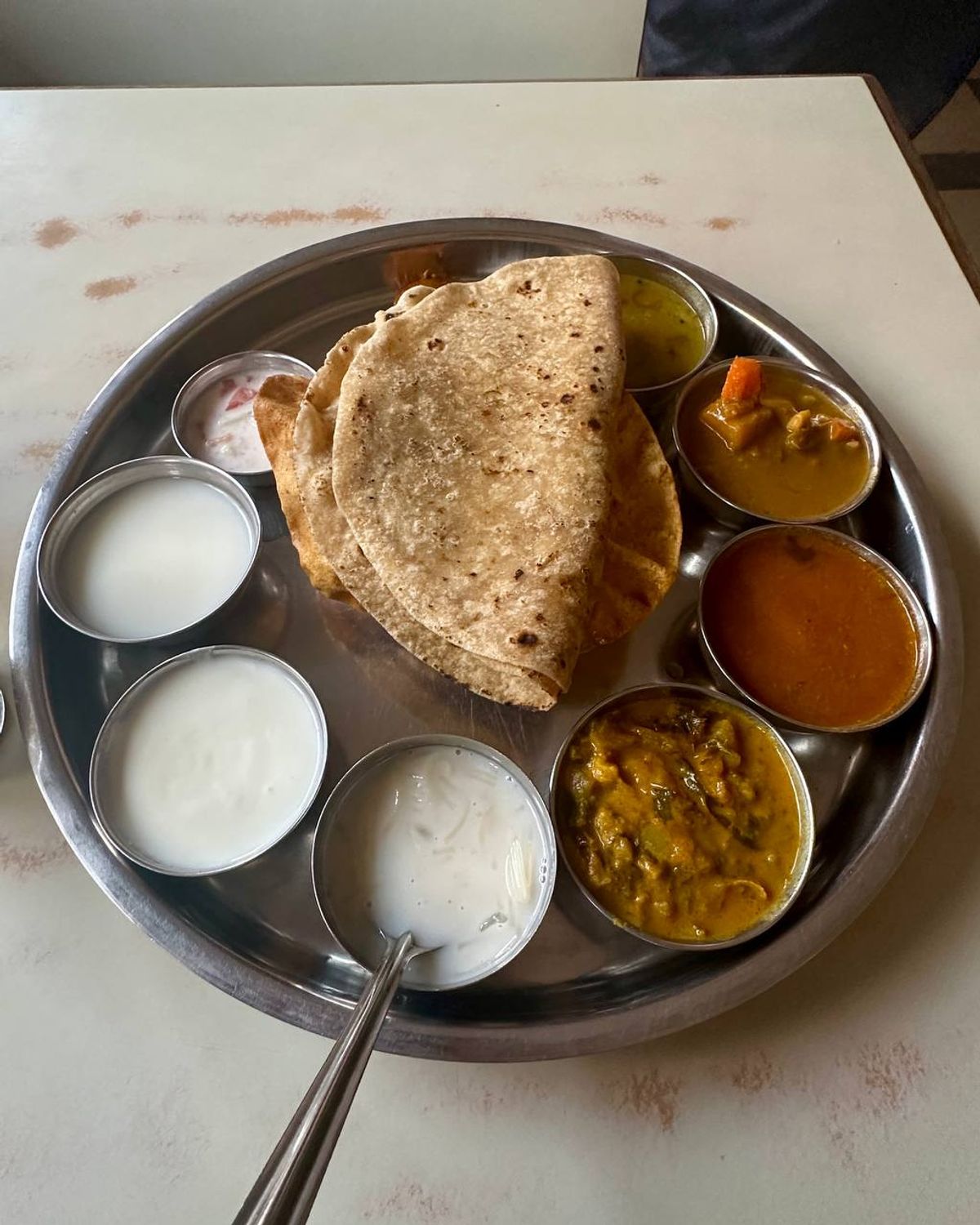
The wheat plains of Punjab produce a cuisine where bread dominates over rice. Naan, roti, paratha, and kulcha take center stage. Curries are thick, rich, often cream-based. Dairy is everywhere — paneer, cream, butter, ghee.
Gujarati Thali: Sweetness in Savory
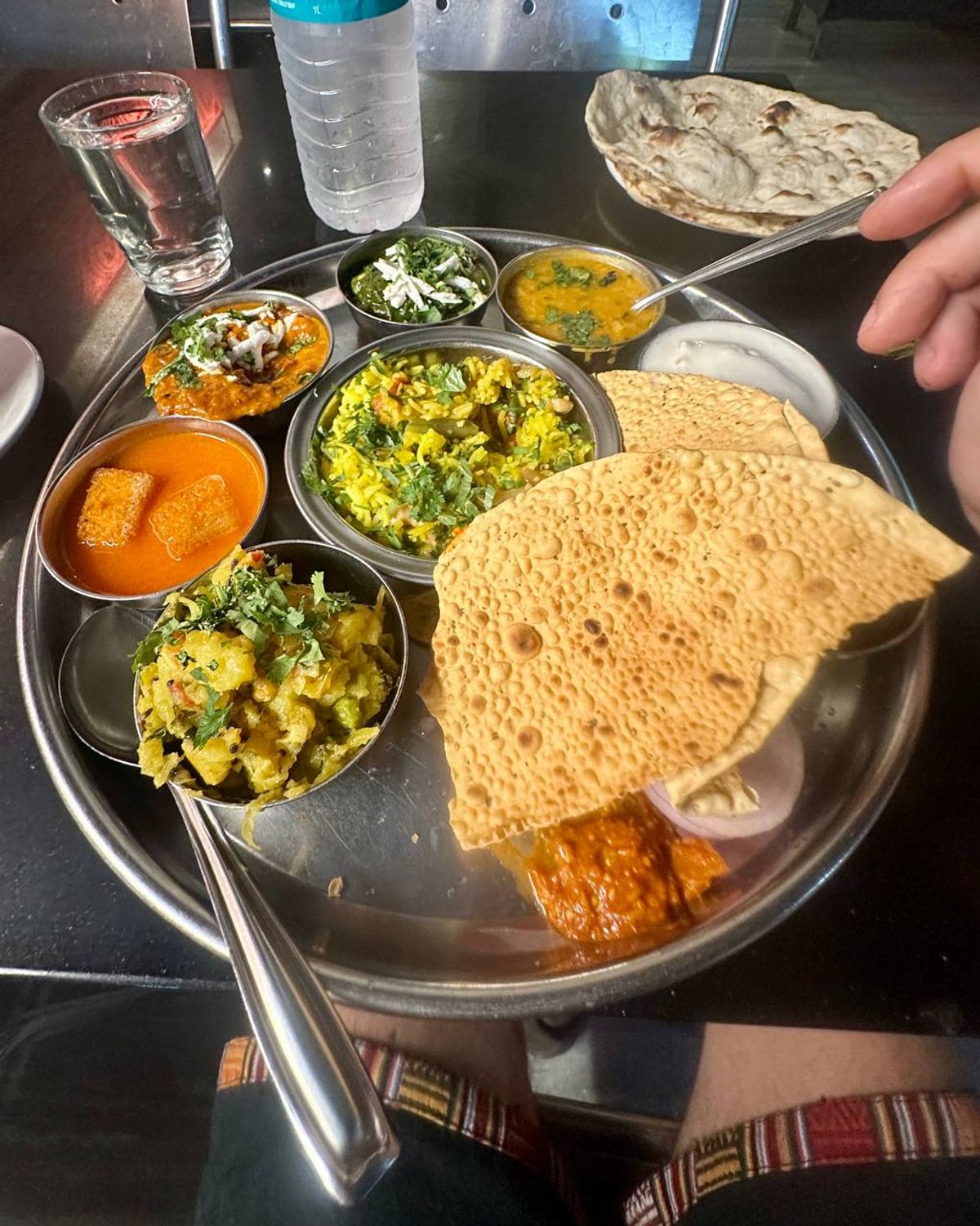
Gujarati thali breaks a rule most cuisines hold sacred: it deliberately adds sweetness to savory dishes. The dal contains jaggery. The kadhi (yogurt-based curry) has a sweet undertone.
Simple Highway Thali
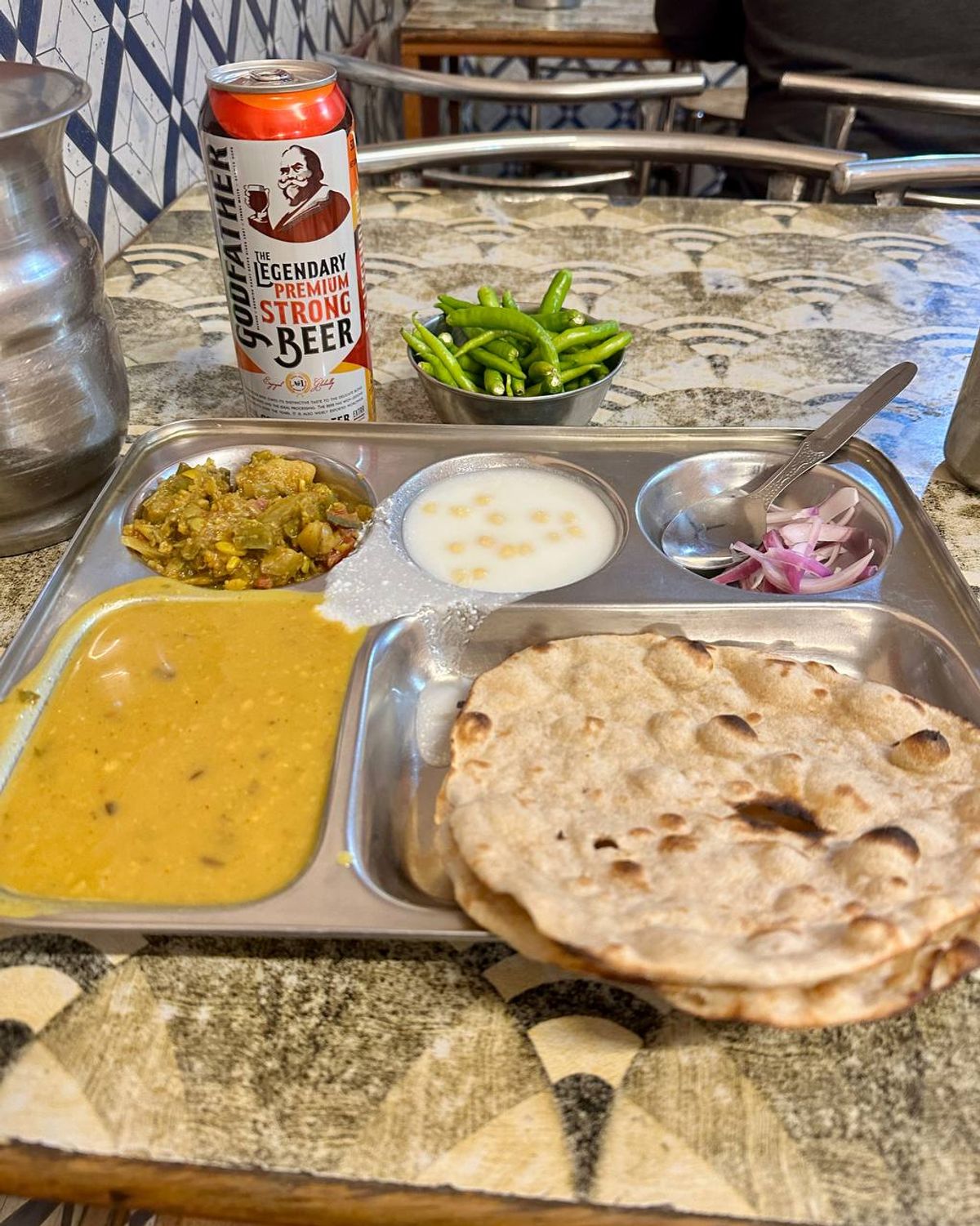
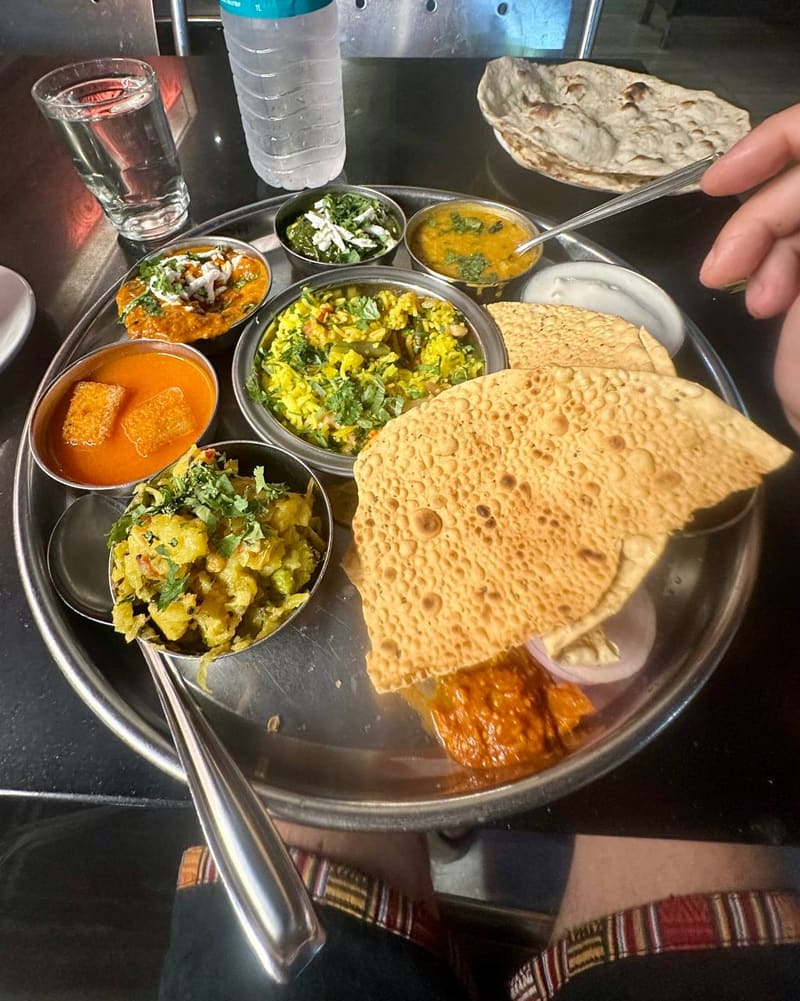
For travelers, thalis are the single best value in Indian dining. A good thali at a highway dhaba might cost 80–150 rupees (roughly $1–2) and deliver more variety and quantity than most Western restaurant meals at ten times the price.
Highway Dhaba Style
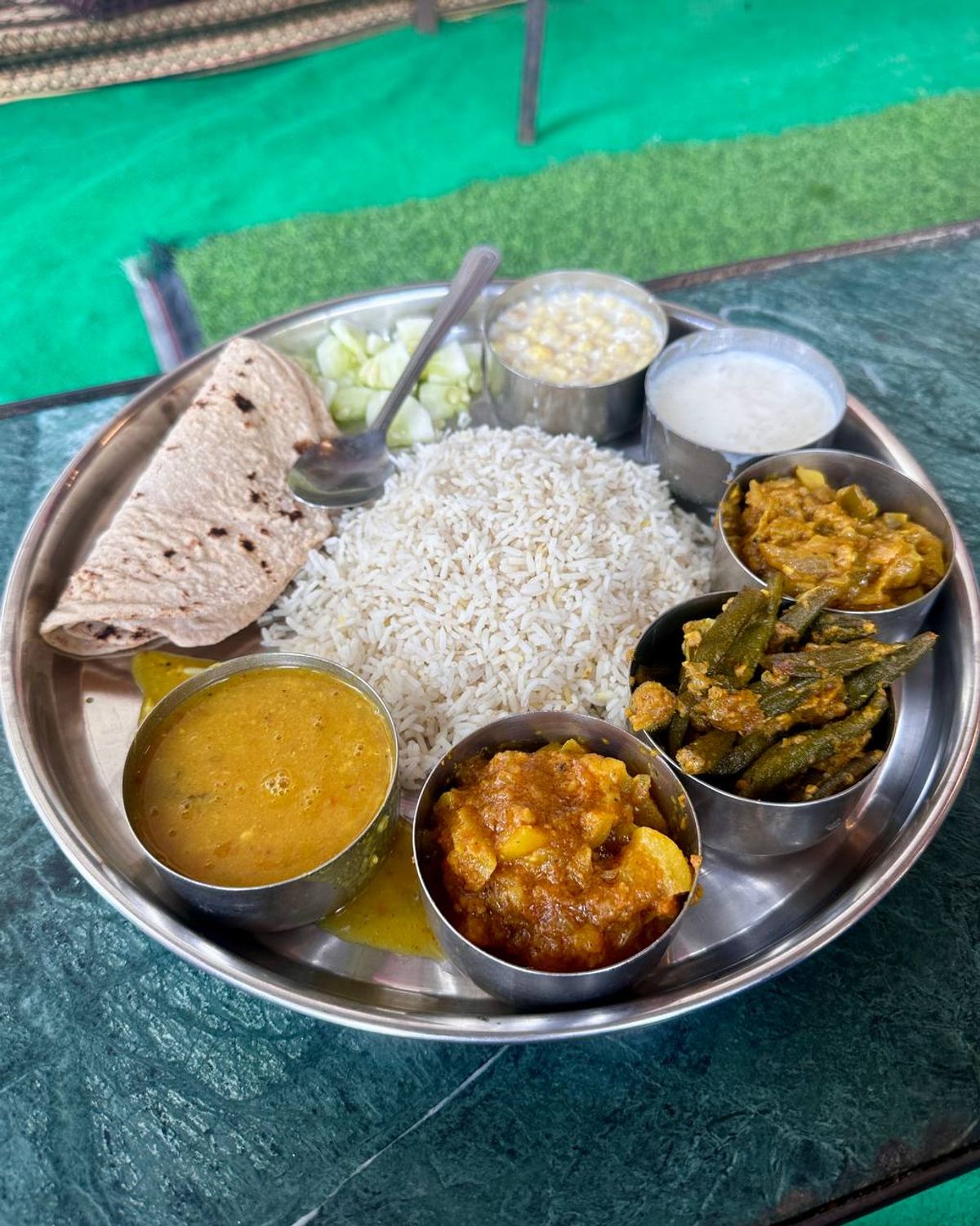
The system reveals something about Indian eating philosophy. Food is meant to satisfy completely. Leaving a restaurant hungry is a failure on both sides. The thali format, with its mandatory variety and optional seconds, ensures that anyone can find satisfaction.
South Indian Banana Leaf
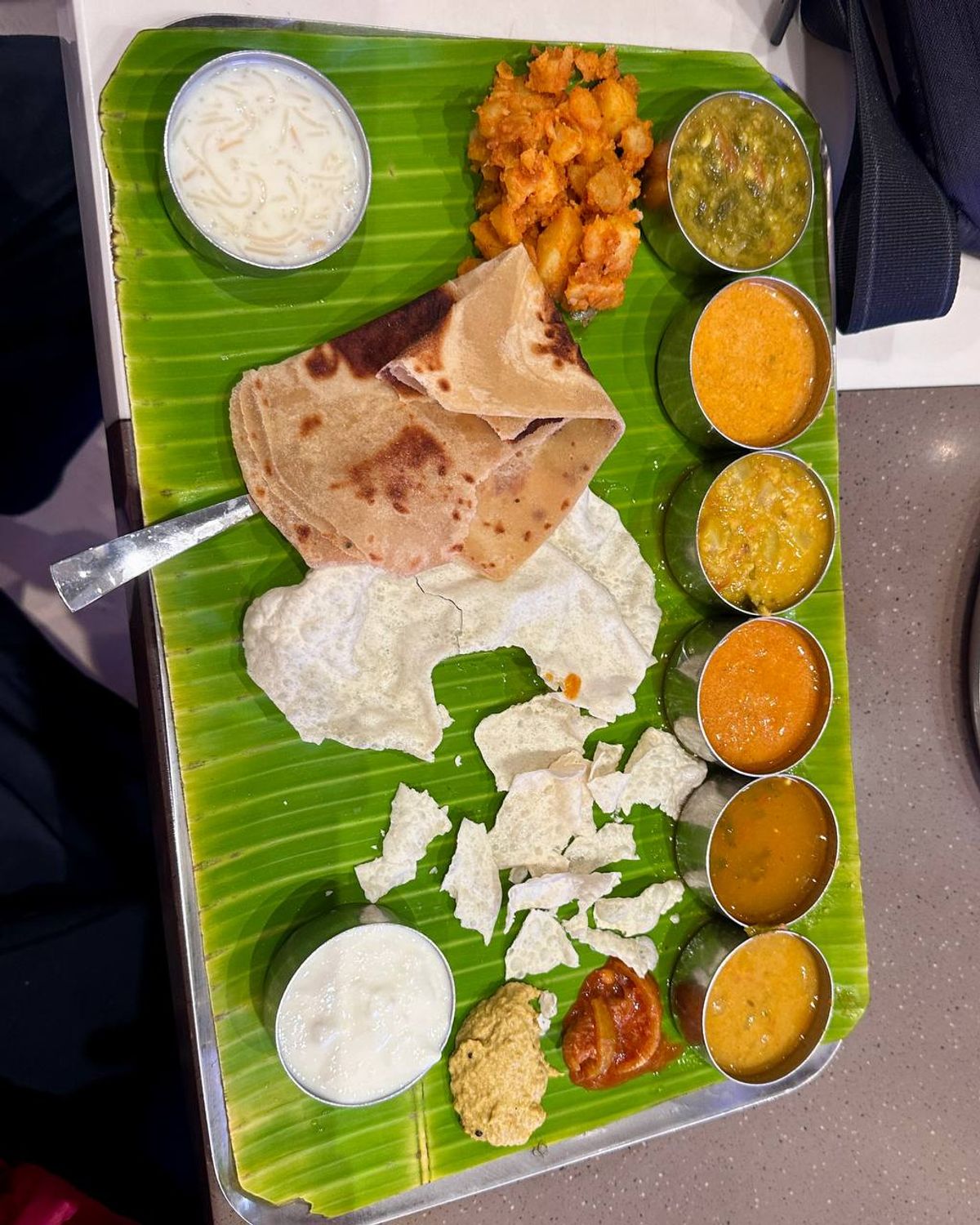
The banana leaf tradition, mostly southern, offers its own advantages. The leaf is mildly antimicrobial. It composts completely, with zero environmental impact. The subtle oils from the leaf infuse into the food.
In Kerala, the direction you fold your banana leaf when you've finished carries meaning: folded toward you signals satisfaction; folded away suggests the meal could have been better.
Kerala Elegance
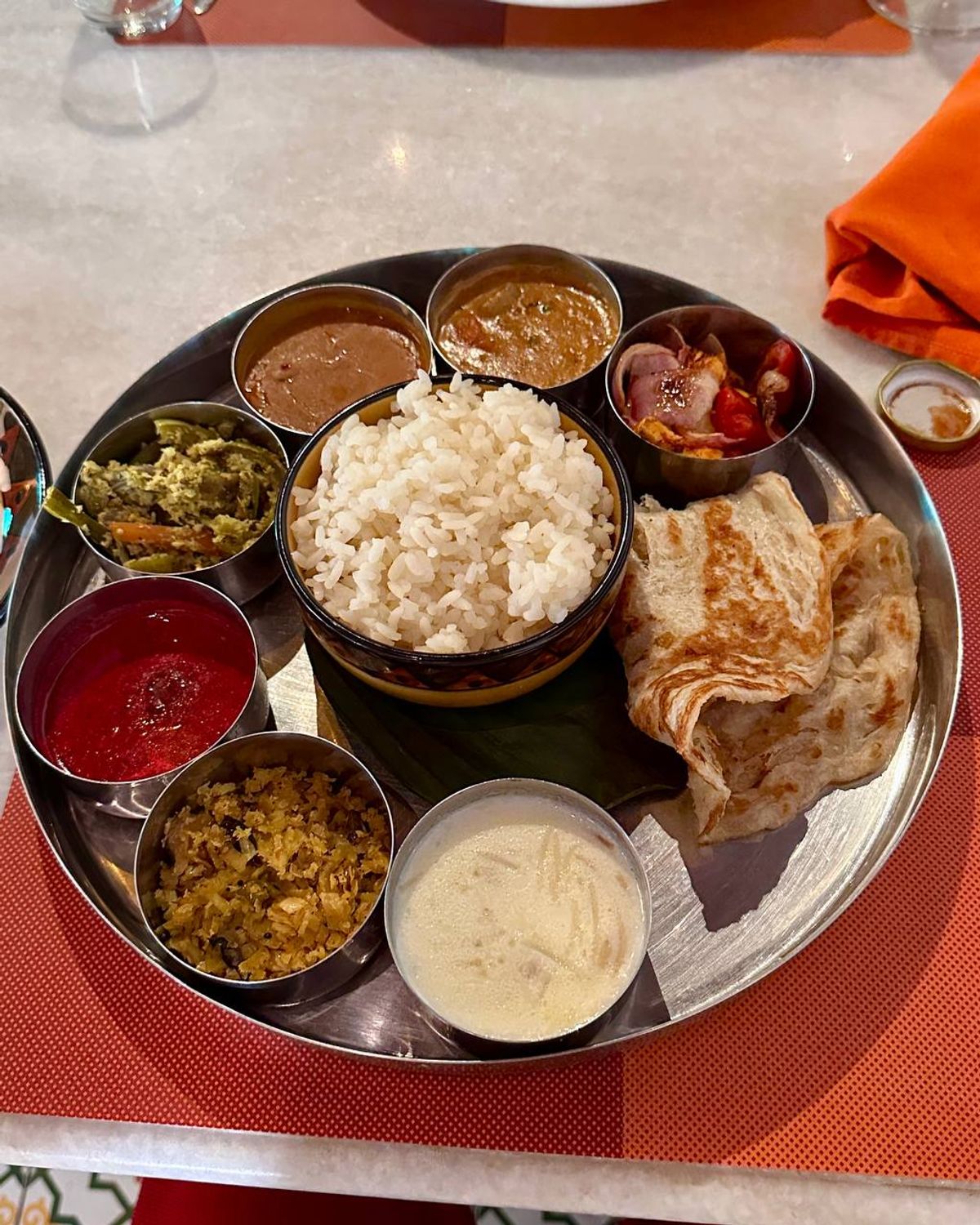
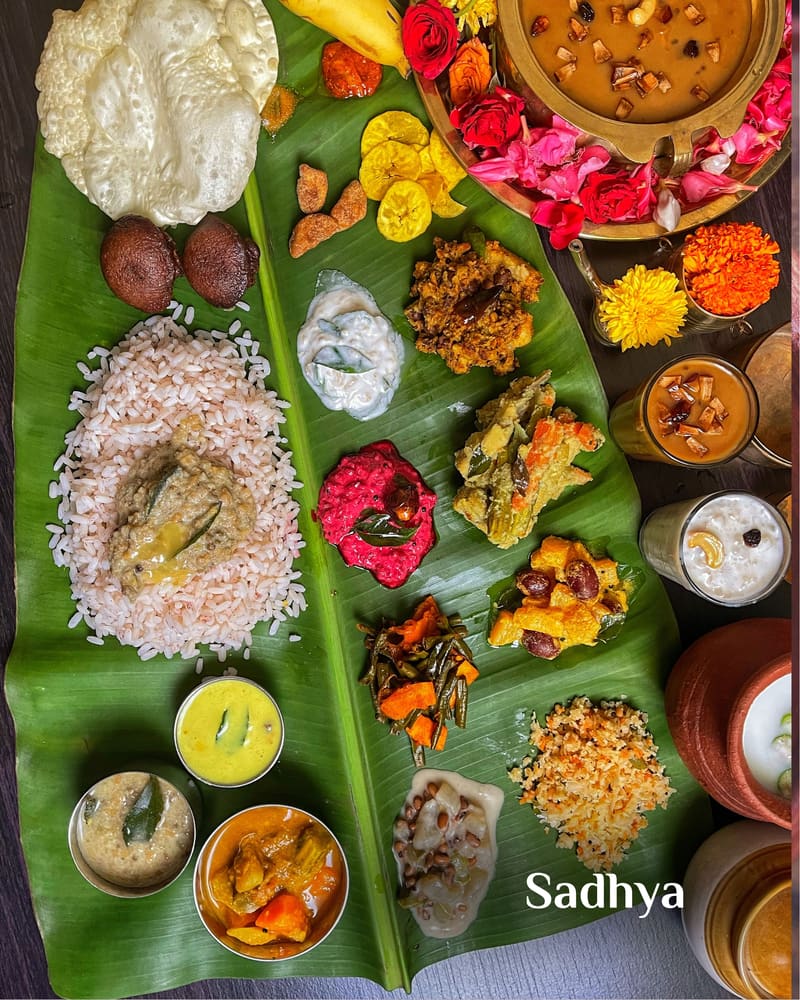
In Kerala, the thali concept reaches its most elaborate expression in the sadhya — a feast traditionally served on banana leaves during Onam festival. A full sadhya can include 24 to 28 dishes, sometimes more.
Key dishes: parippu (lentils with ghee), sambar, rasam, avial (mixed vegetables in coconut-yogurt sauce), olan (ash gourd in coconut milk), thoran (dry coconut stir-fry), payasam (multiple varieties of rice pudding).
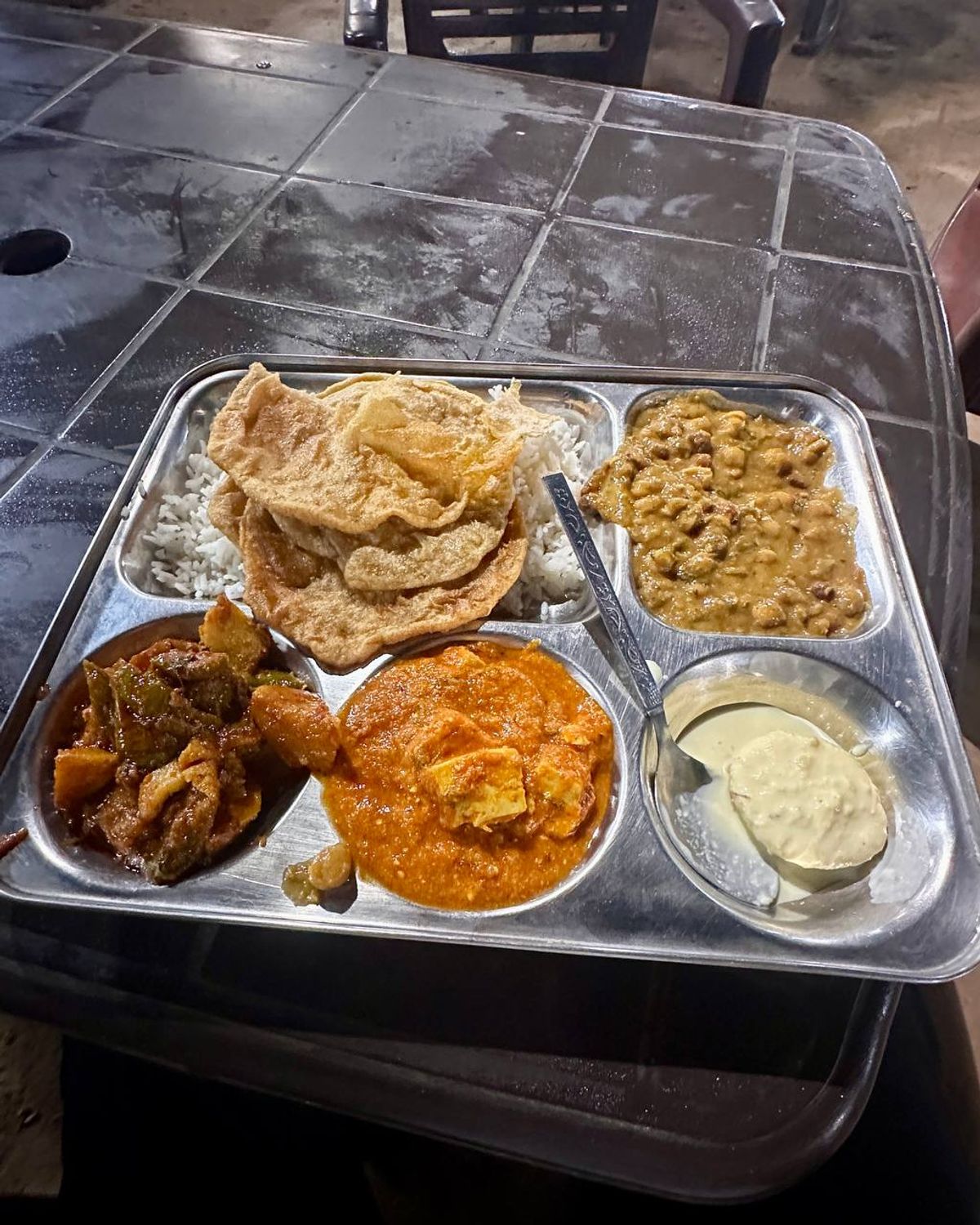
Beach Town Evening
The Raw Onion Ritual
Across most of India, thalis arrive with a small pile of raw onion slices, typically sprinkled with lemon juice and sometimes a little salt or spice. The first few times I encountered this, I pushed it aside. Then I tried eating it properly.
Indian onions are milder than the sharp yellow onions common in Western cooking. The lemon juice mellows them further. Eaten between bites of other dishes, the raw onion acts as a palate cleanser and digestive aid. Its sharp freshness cuts through the richness of curries and resets your taste buds for the next dish.
It became, unexpectedly, one of my favorite parts of any thali.
Nine Meals, One Concept
Look at photos of thalis from Gokarna, Vrindavan, Goa, Pune, the Himalayas, Rishikesh, Tamil Nadu, Kerala, and Delhi, and you see both consistency and diversity. The format repeats: rice at the center, small bowls around it, breads to the side. The contents vary wildly.
Each thali reflects its place. The locally available ingredients. The climate's demands on the body. The religious and cultural traditions that shape eating habits. A Vrindavan thali drops onion and garlic in line with Vaishnavite practice. A Goan thali might include fish. A Himalayan thali stays simpler, leaning on warming foods for the cold altitude.
And yet they all deliver the same underlying promise: a complete meal, balanced across all six tastes, designed to satisfy both body and mind. India on a plate — or, more precisely, India on nine different plates, each telling its regional story while speaking the same fundamental language of nourishment.
The thali isn't trying to impress. It's trying to feed you properly. Twenty-five centuries of accumulated wisdom about what humans need to feel satisfied after a meal, arranged in small bowls around a mound of rice. Simple concept. Infinite variations. Complete nutrition. Perfect satisfaction.
That's the thali.