Beneath the crumbling plaster and monsoon stains, Kolkata is hiding something extraordinary.
Most travelers see only the surface: blackened colonial facades, choked canals, streets that turn into rivers during the July rains, air so thick with humidity and exhaust you could cut it with a knife. It's not an easy city. It wasn't easy for me. And I won't pretend otherwise.
But underneath all that fatigue and decay lives the spirit of what was once the intellectual and spiritual capital of India — a city that gave the modern world some of its most profound thinkers and teachers. Not one. Four. And they all walked these same streets, breathed this same dense Bengal air, and drank tea in these same neighborhoods.
I spent three days following their traces through Kolkata, and what I found was a pattern so striking I couldn't ignore it: every one of these figures was born or raised here, and every one of them carried their message from this city out into the world.
Here are the four places that tell that story.
Belur Math: The Temple Where All Religions Meet
On the right bank of the Hooghly River, about 10 kilometers north of central Kolkata, sits the headquarters of the Ramakrishna Mission — a spacious, peaceful campus built around one of the most unusual temples in India.
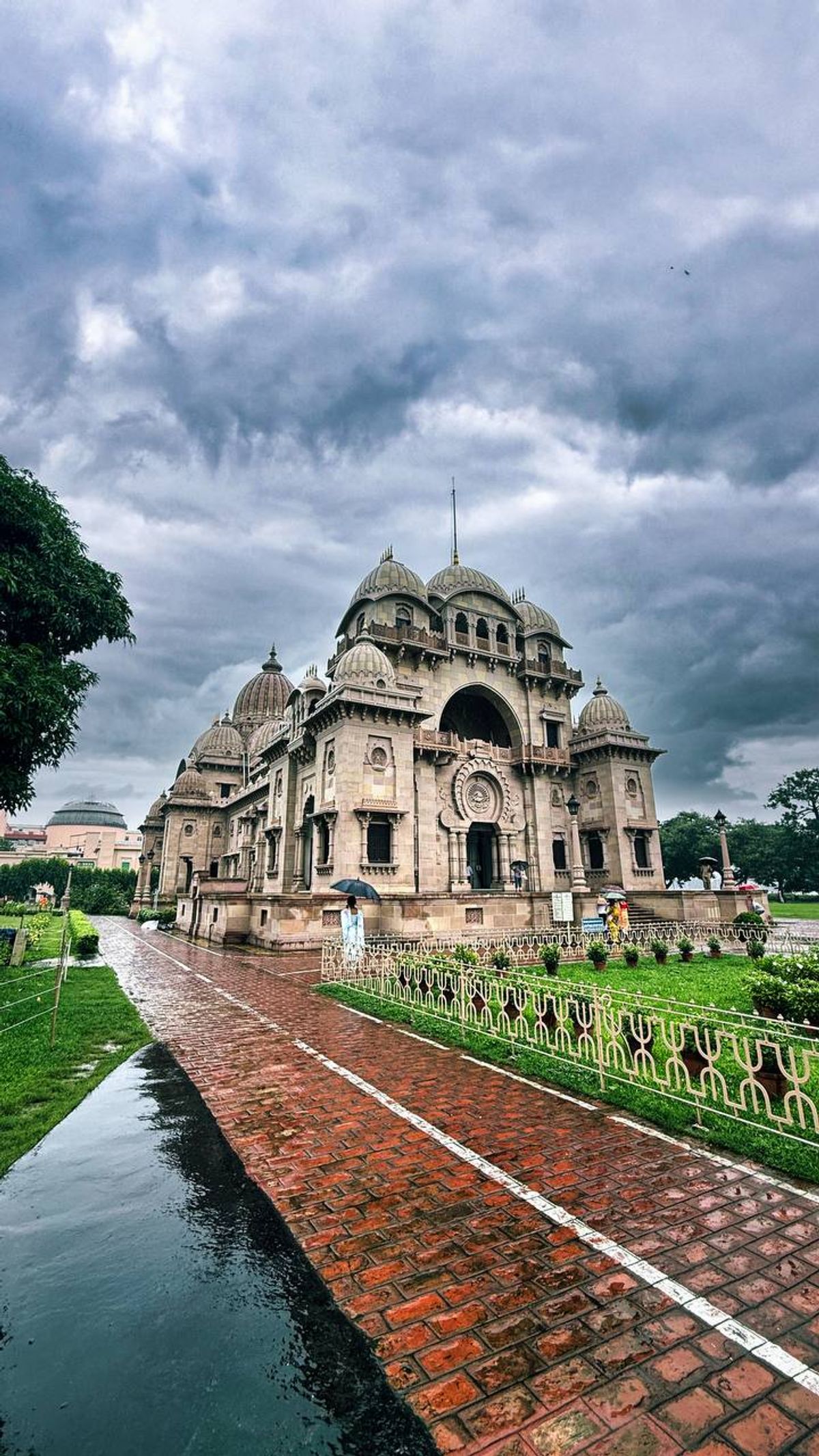
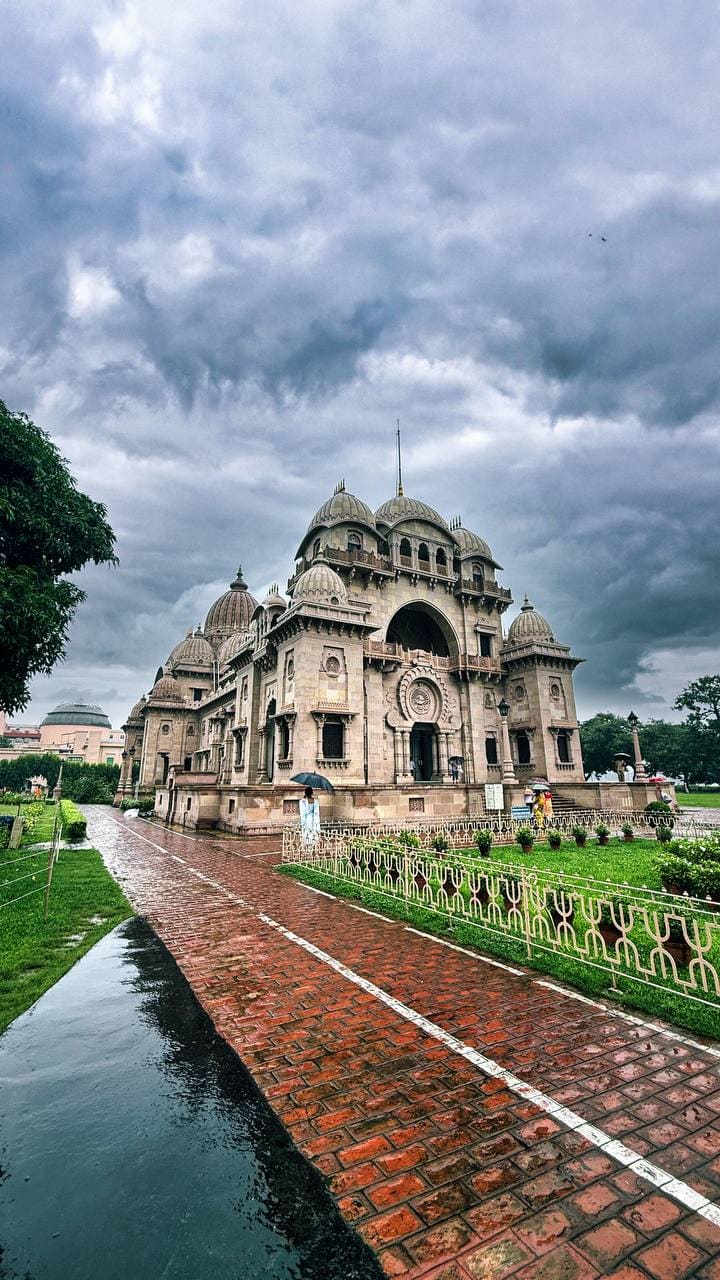
The main temple of Belur Math is an architectural thesis in stone. Look at it from one angle and you see a Hindu temple. From another — a Christian church. From a third — a mosque. The building deliberately fuses elements of all three traditions into a single structure. It's not an accident or aesthetic choice. It's a direct expression of the philosophy that was born here.
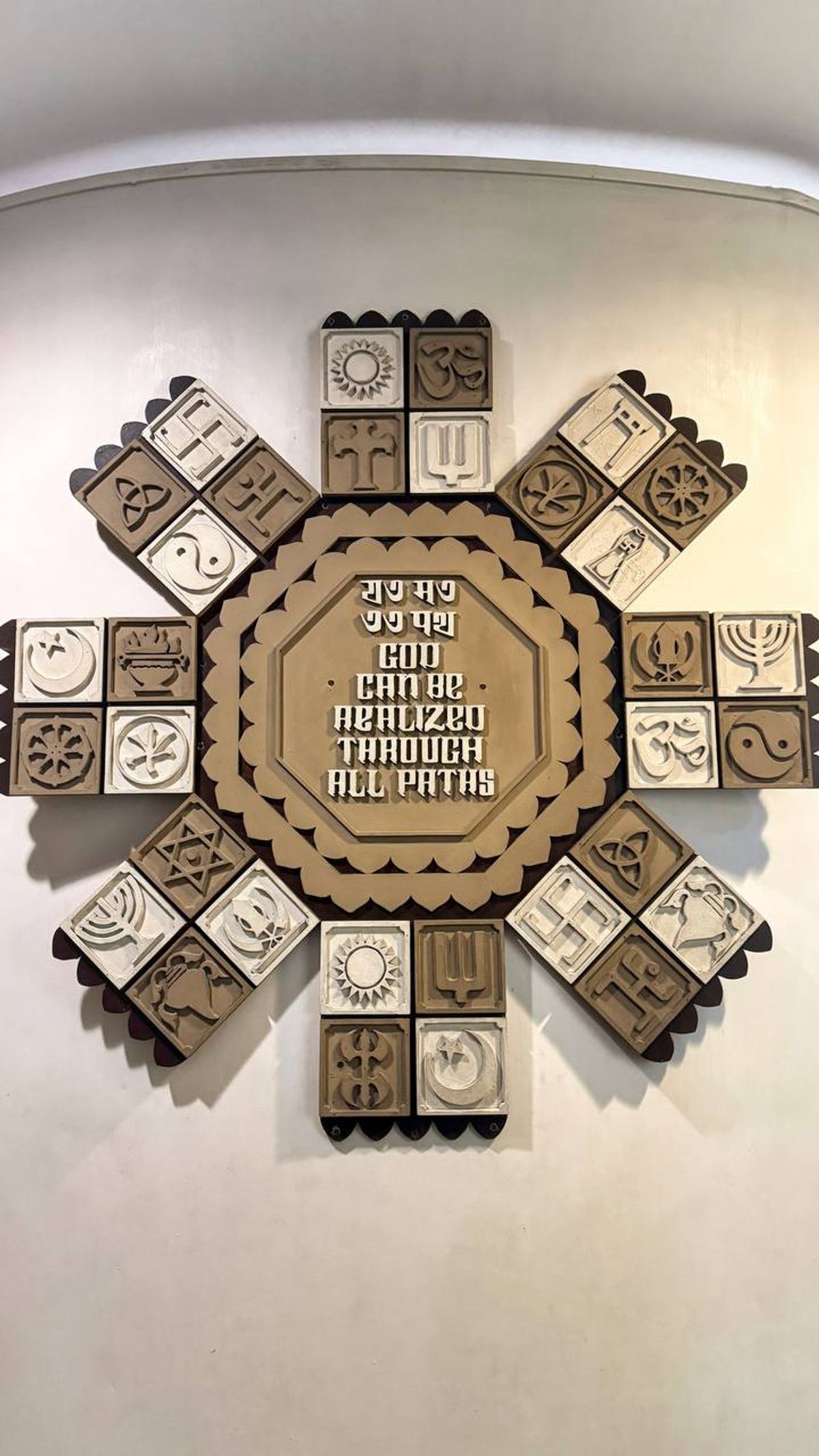
That philosophy belongs to Sri Ramakrishna Paramahamsa and his most famous disciple, Swami Vivekananda — two figures who fundamentally reshaped how the world understands Indian spirituality.
Ramakrishna was a mystic who preached the universality of all religions. He didn't merely theorize about it — he personally practiced Hinduism, Islam, and Christianity, and claimed to have reached God through each path. His teaching was disarmingly simple: all roads lead to the same summit.
Vivekananda took that message global. In 1893, he traveled to Chicago and addressed the Parliament of the World's Religions — the first time a Hindu teacher had spoken to such an audience in the West. His opening words became legendary. He went on to found the Ramakrishna Mission, with Belur Math as its center — an organization that combines spiritual practice with social service across 25 countries.
On the grounds today, you'll find the universal temple (go inside — it's remarkably still), a separate shrine to Ramakrishna, Vivekananda's personal room with his bed and belongings, an informative museum on the upper floor, and the riverbank garden where Vivekananda once sat and meditated beneath bilva and mango trees.
It was here, in Kolkata, that Vivekananda grew up and first met Ramakrishna. And it was from here that their teaching spread across the planet.
Getting there: From Esplanade or Howrah, a taxi costs 300–400 INR (35–50 minutes). The cheapest option is a local train from Howrah to Belur Math station (10 INR, 15 minutes), then a 5-minute walk. Open 6:00–11:30 AM and 3:30–8:30 PM. Free entry, shoes off at the door, no photography inside the main temple. Budget 1–1.5 hours. Best time: early morning on a weekday or during evening aarti around 6:00 PM.
College Street & Indian Coffee House: Where Ideas Came to Boil
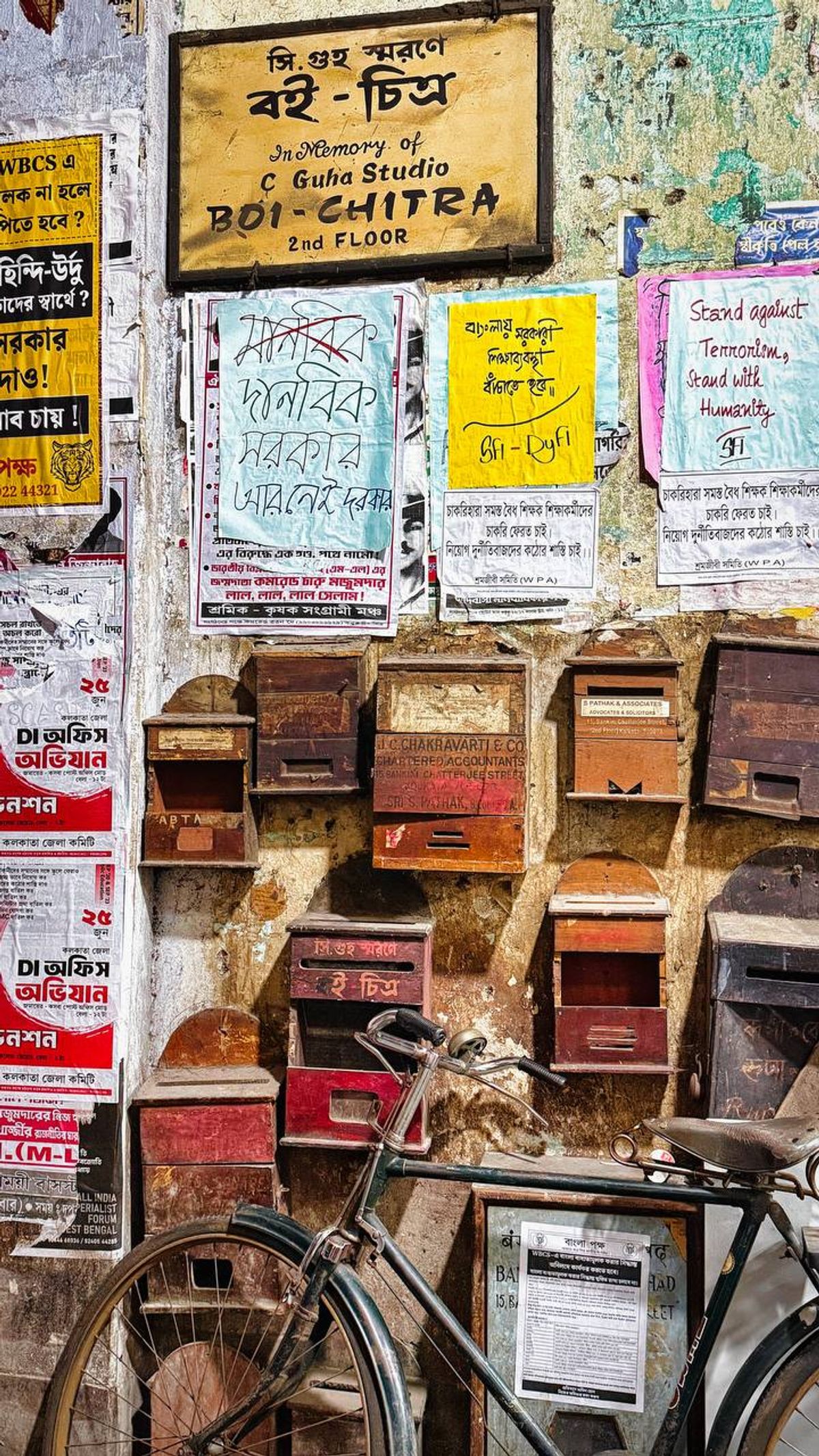
This is not a bookshop. It's an entire district of books — and the largest secondhand book market in the world.
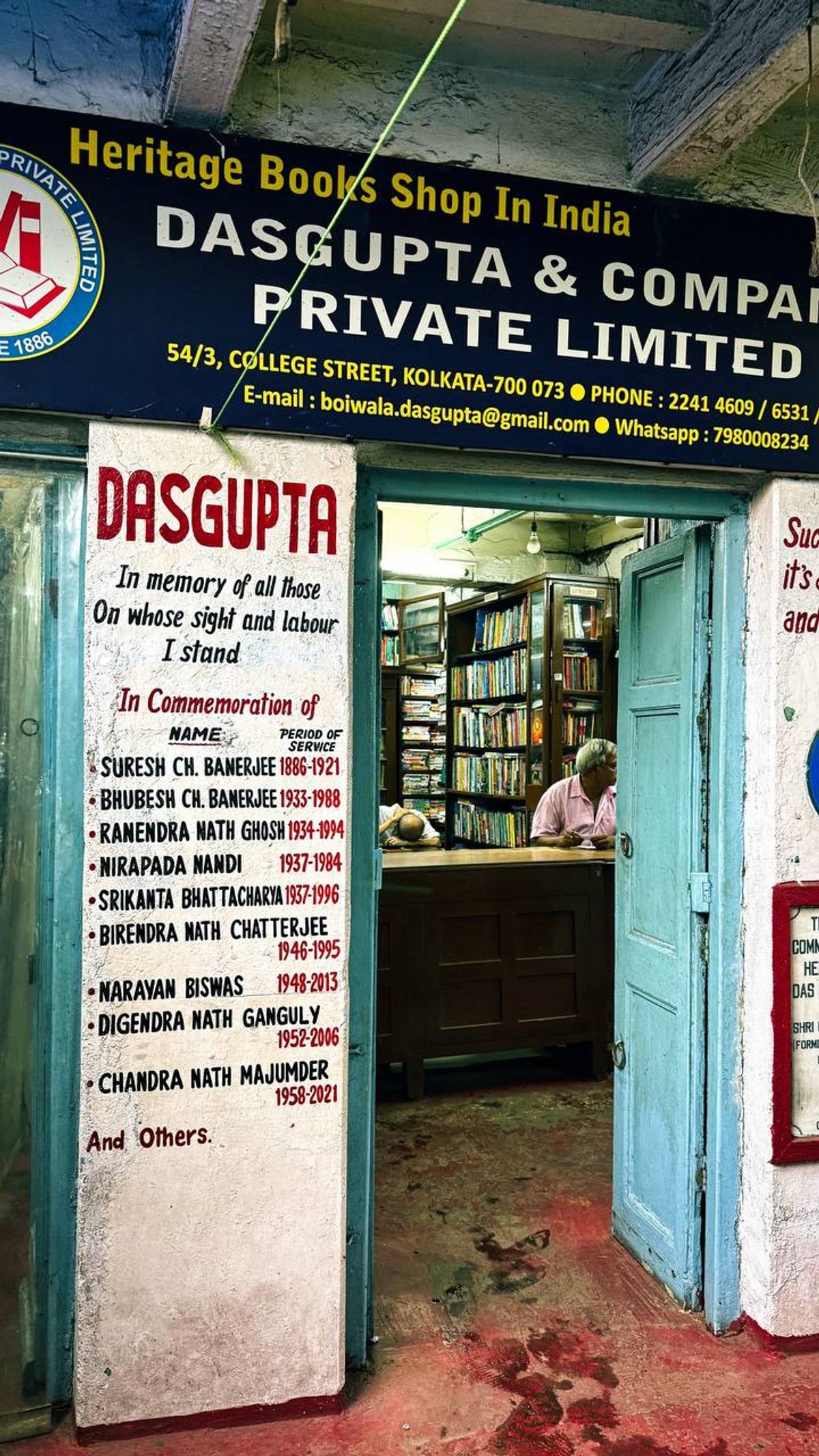
College Street, known locally as Boi Para ("Book Town" in Bengali), stretches for roughly a kilometer and a half of unbroken bookstalls, ancient shops, and entire buildings packed floor to ceiling with volumes. Some of these shops have been operating since the 1880s. The sellers remember every shelf — tell them what you're looking for, and within a minute someone appears from a neighboring alley with the exact book in hand.
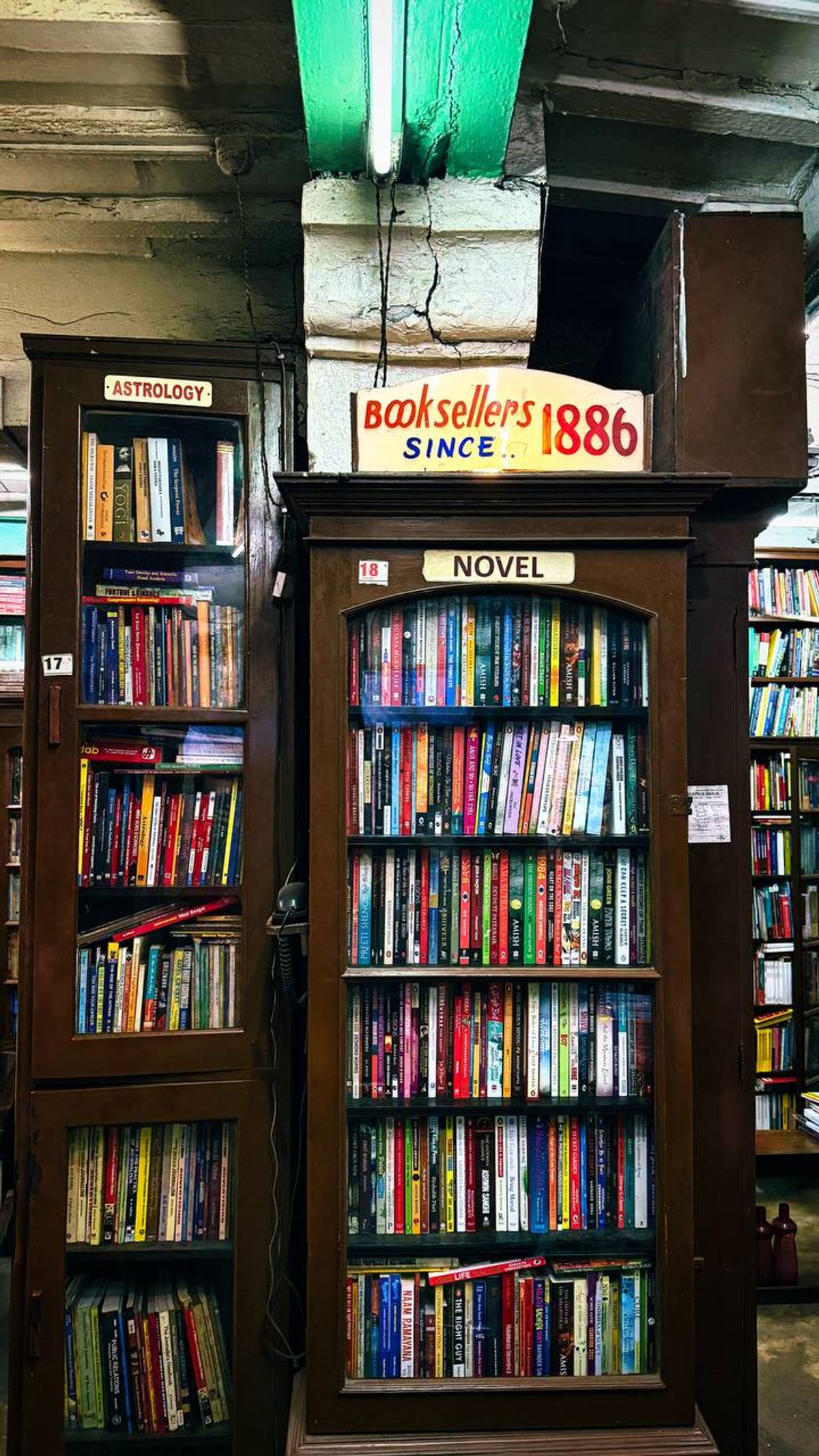
The range is staggering: worn first editions of Tagore, heavy C++ manuals, rare Sanskrit manuscripts, cheap Bengali romance novels, Marxist pamphlets, and everything in between. Roughly 50 million books change hands here each year.
And right in the middle of this paper kingdom sits Indian Coffee House — not a third-wave café with latte art and laptops. This is a legend.
A cavernous two-story hall. High ceilings. Ceiling fans turning lazily overhead. Waiters in white uniforms with red turbans. Coffee for 20 rupees, a sandwich for 50. The menu has barely changed since the 1940s. People come here not to eat but to sit — for hours.
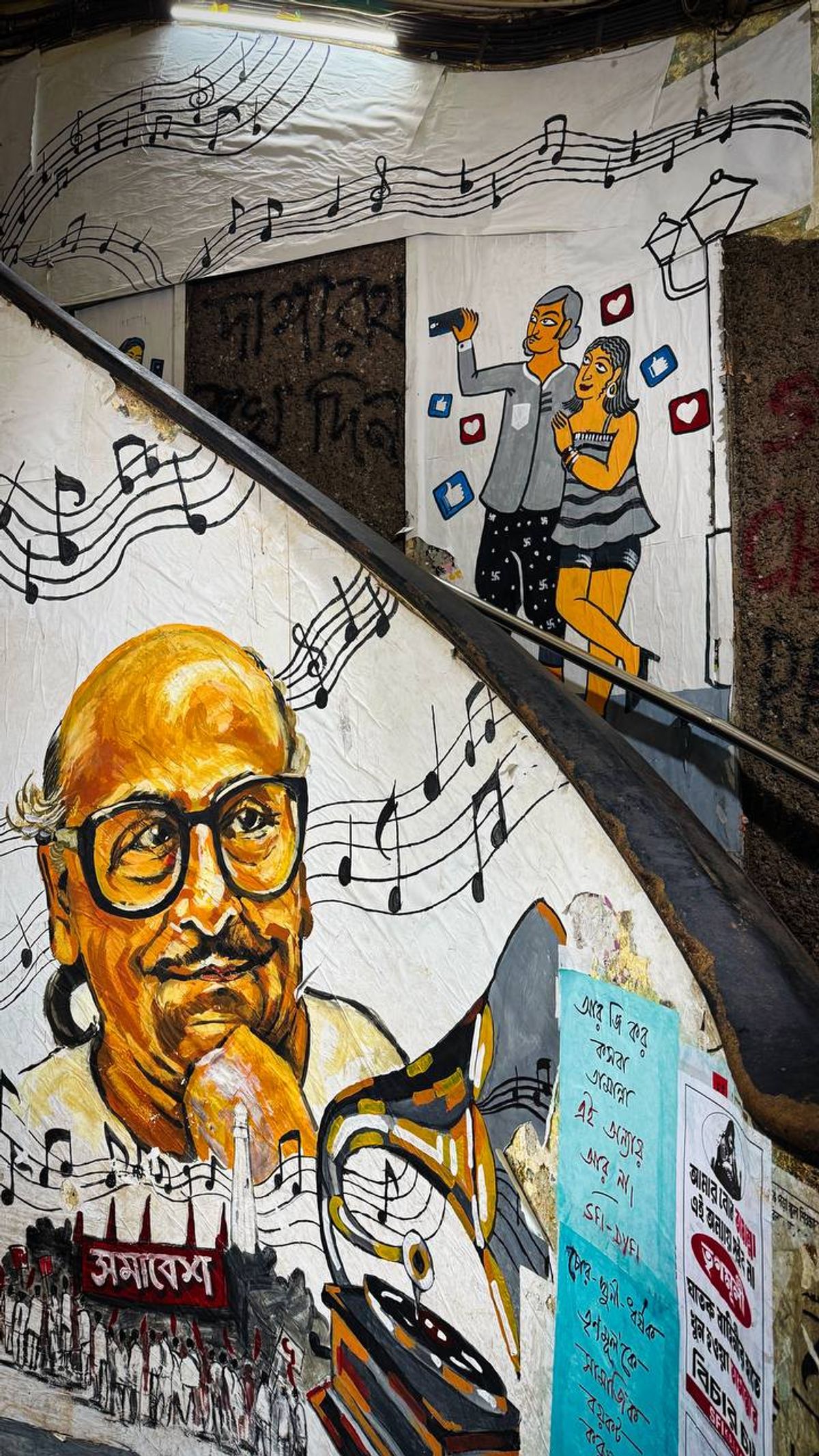
For decades, Indian Coffee House has been a gravitational center for Kolkata's intellectuals — a crucible for debates, ideas, and cultural movements. Filmmakers like Satyajit Ray and the Nobel laureate economist Amartya Sen drank coffee at these same tables. Political movements were planned here. Literary journals were conceived between bites of toast.
Getting there: Take the metro to Central or Mahatma Gandhi Road, then walk a few minutes. Come on a weekday morning for fewer crowds and better browsing. Bring cash and a bag — leaving without at least a couple of books is nearly impossible.
Jorasanko Thakurbari: The House That Gave India Its Voice
Traveling through Kolkata's literary landscape, you can't avoid Rabindranath Tagore — arguably the most influential cultural figure India has ever produced.
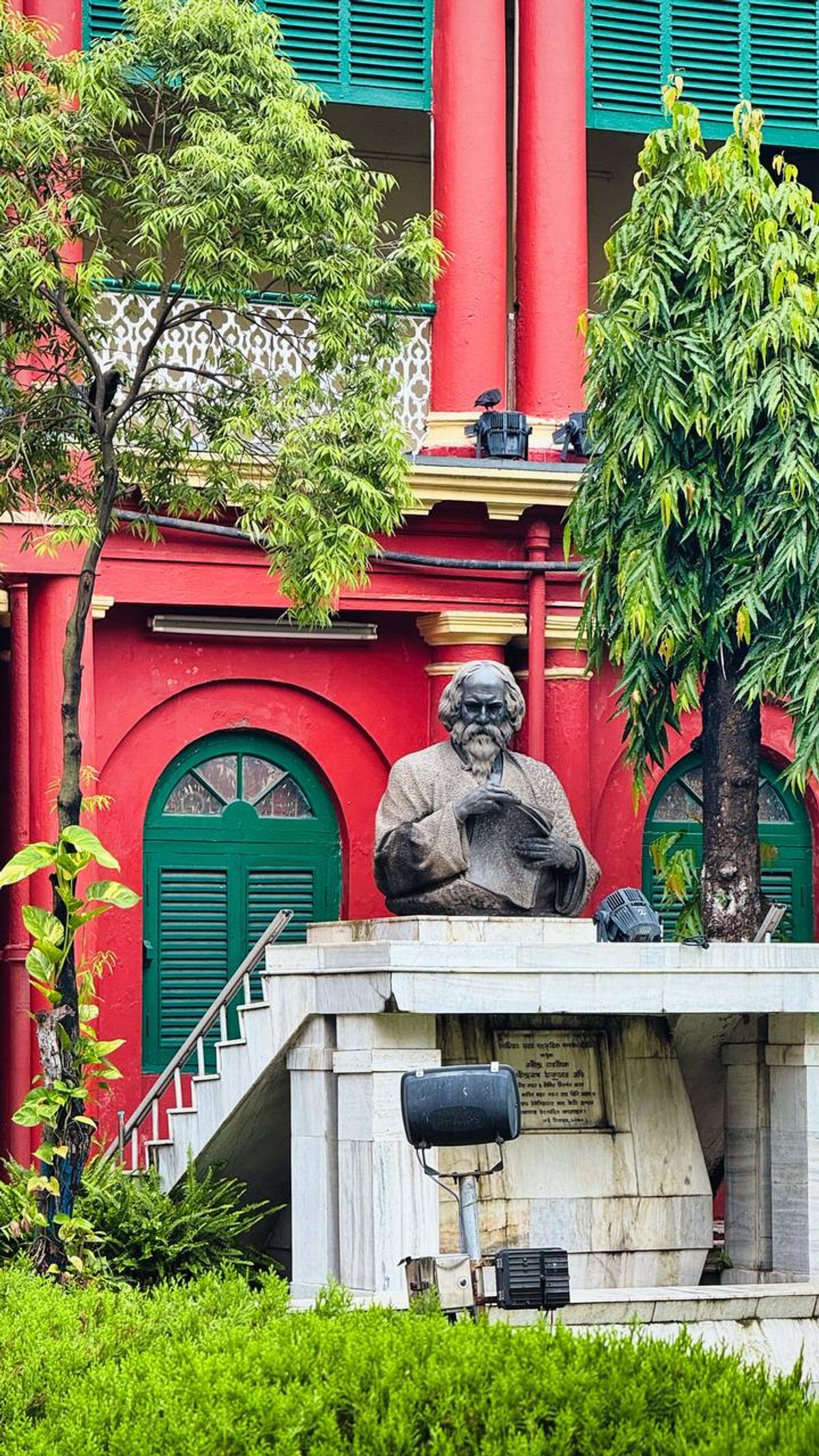
Tagore was the first non-European to win the Nobel Prize for Literature, in 1913, for Gitanjali — a collection of poems about the relationship between the human soul and the Divine that defies classification into any single religious tradition. His verses became the national anthems of not one but two countries: India's Jana Gana Mana and Bangladesh's Amar Shonar Bangla.
But Tagore was far more than a poet. He composed over 2,230 songs. He produced approximately 2,500 paintings and drawings. He founded Visva-Bharati University in Shantiniketan — a center for philosophical and artistic thought that continues to this day. He traveled to more than 30 countries on five continents, becoming what we might now call a cultural ambassador of planetary scale.
His ancestral mansion, Jorasanko Thakurbari, has been converted into a museum dedicated to his art, life, and legacy. Inside you'll find the room where he was born and where he died, his original paintings and manuscripts, first editions, personal belongings, and — most compelling — a detailed exhibition tracing his journeys around the world.
My own souvenir from Kolkata was a copy of Gitanjali purchased on College Street — in the original Bengali alongside the English translation. Poems about the human and the divine that belong to no single religion and speak to something older and wider than doctrine.
Yogoda Satsanga: The Ashram of Paramahansa Yogananda
The fourth stop is quieter, more private, and more concentrated than the others.
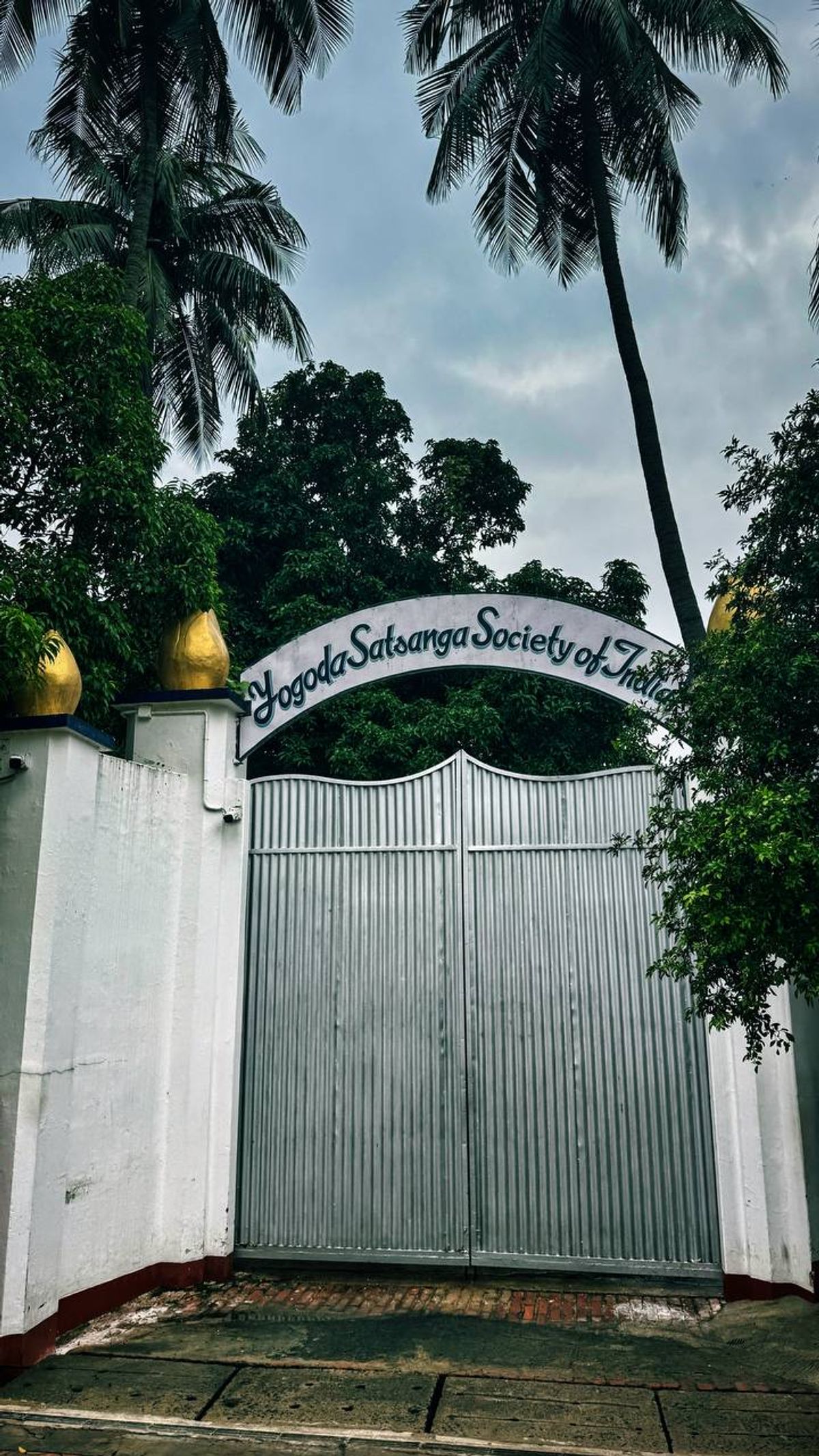
Yogoda Satsanga is the ashram of Paramahansa Yogananda — the legendary yogi, father of yoga in the West, and founder of the kriya yoga tradition. You may know him through his book Autobiography of a Yogi — a global bestseller translated into 28 languages that has remained in continuous print since 1946.
In all my years of traveling through India and meeting spiritual practitioners, this is the single most recommended book I've encountered — always with the same footnote: "This book changed my life." Steve Jobs reread it every year, and copies were handed out at his memorial service.
Yogananda emigrated to the United States at 27, and his arrival became a turning point in the popularization of Hindu philosophy and yoga practice in the West. Today, his organization maintains over 500 temples and meditation centers worldwide.
The ashram itself is located in Serampore, outside central Kolkata. Inside: a meditation hall, a museum with photographs and letters, and a bookshop focused on kriya yoga literature. This is not a tourist attraction — it's a place for practitioners. The atmosphere matches: quiet, focused, inward.
Choosing between Belur Math and Yogoda Satsanga: If you only have time for one spiritual site, choose Belur Math for its scope and atmosphere. If yoga and Autobiography of a Yogi are especially meaningful to you, make the trip out to Serampore.
The Discovery: What Connects Them All
And then there's one more name — Srila Prabhupada, founder of the International Society for Krishna Consciousness (ISKCON), who was also born and raised in Kolkata.
Standing in these places, I made a discovery that stopped me in my tracks. Every one of these spiritual and intellectual giants came from the same city. And every one of them carried their message not just beyond Bengal, not just beyond India — but across the entire world:
- Swami Vivekananda brought Vedanta and yoga to the West. His 1893 speech in Chicago was the first major introduction of Hinduism to a global audience. His schools and centers now span 25 countries.
- Rabindranath Tagore became the first Nobel laureate outside Europe, visited more than 30 countries on five continents, and became a cultural bridge between East and West through poetry, music, and education.
- Paramahansa Yogananda became the father of yoga in the West. His organization now operates more than 500 temples and meditation centers worldwide.
- Srila Prabhupada, in just 12 years, traveled around the world 14 times and founded over 800 ISKCON temples and centers on every continent.
All of them — from Kolkata.
There's something in this city that forges people with a planetary mission. Beneath the peeling paint and monsoon floods, beneath the dense traffic and the unrenovated grandeur, Kolkata carries an energy that isn't immediately visible — but once you've traced these four paths through its streets, you feel it.
A quiet, stubborn insistence on depth over spectacle. On substance over comfort. On ideas that outlast the buildings they were born in.
Kolkata doesn't try to be beautiful. It doesn't court tourists. It simply exists in its own rhythm of decline and greatness, melancholy and intellect, movement and meditation.
Somewhere between darshan at Kali Temple, reading Tagore in Indian Coffee House, and riding a tram that felt like a time machine, the city opened up for me. Not as a destination to enjoy — but as a teacher to listen to.
And its message is clear: the most powerful ideas don't come from comfortable places.