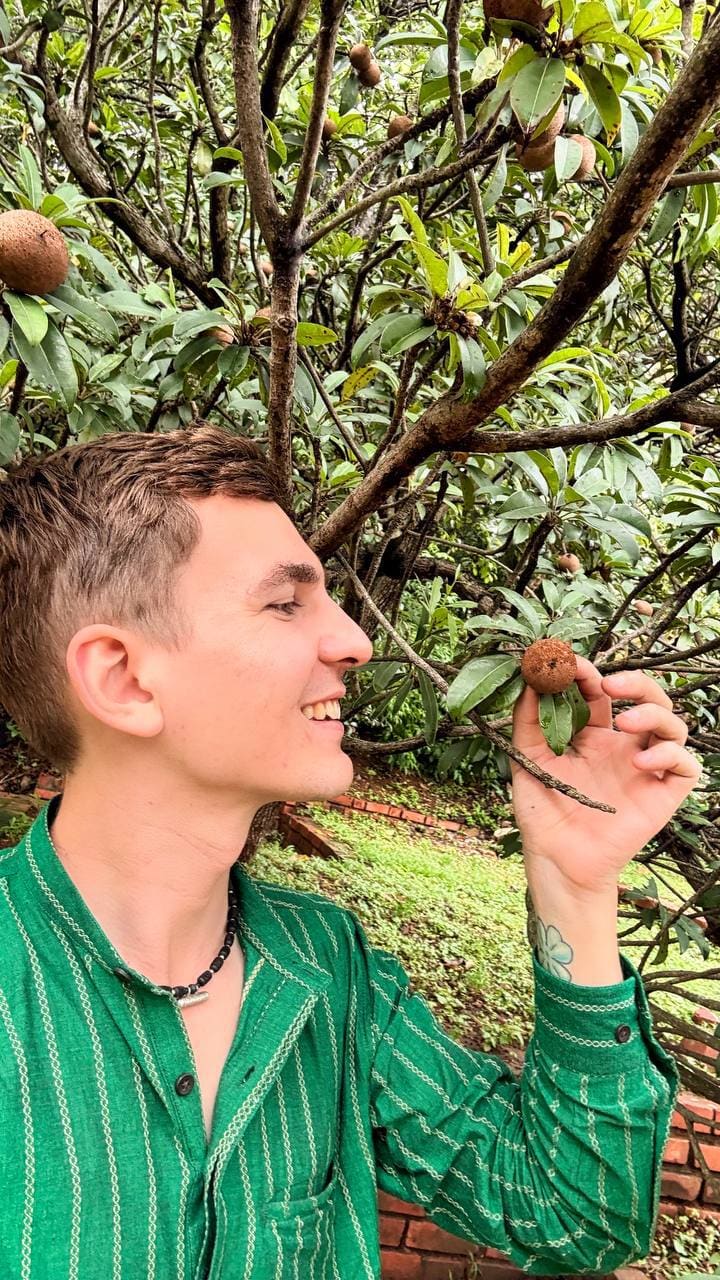
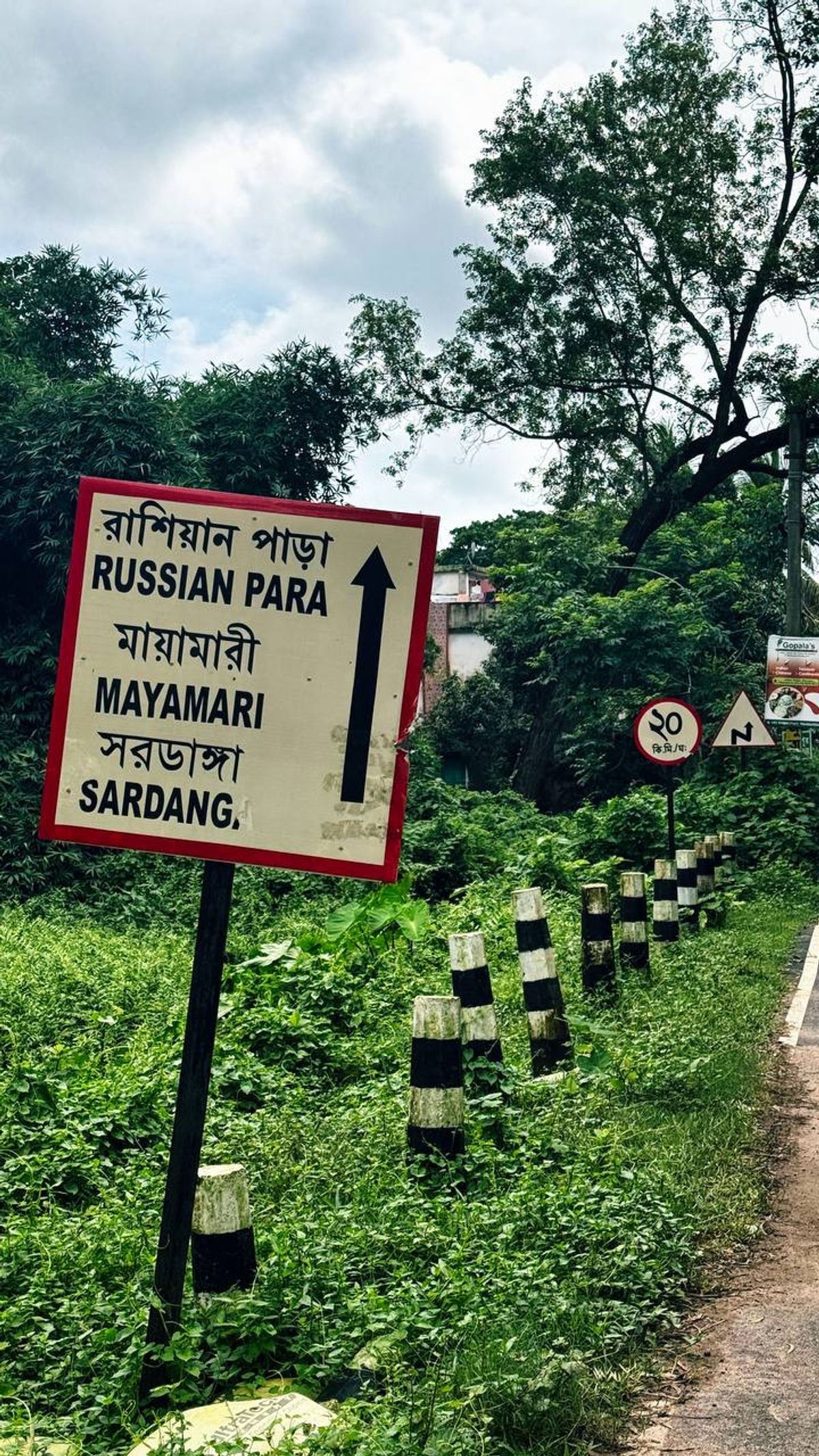
Three hours north of Kolkata's dense, layered sprawl, the world changes completely. Rice paddies stretch to the horizon. The Ganges splits into quiet channels winding between groves and villages. And then, on a dusty Bengali road, a sign appears — written in Bengali script: Russian Para. The Russian Neighborhood.
Who would expect that?
But Mayapur is not just a Russian enclave. It's an international spiritual settlement in the heart of West Bengal — a place where people from the CIS, the United States, Latin America, Europe, and Africa have come together around a single purpose: devotion to Lord Krishna in the Gaudiya Vaishnava tradition.
Among fields, palm groves, and the arms of the Ganges, life here turns on a single axis — service and tradition. Some are building what will be the largest temple in the world (more on that below). Some wake at 4:00 AM for Mangala Aarti — the first morning ceremony. Some stir enormous pots of prasad — food offered to God and returned as a blessing. Some tend cows in the goshala (temple cowshed). And some simply sit with prayer beads, chanting the Hare Krishna mantra — 1,728 times a day.
Every day here echoes with kirtan — collective chanting in which dozens, sometimes hundreds of people sing mantras together to the rhythm of mridanga drums, the clinking of karatal cymbals, and the drone of a harmonium.
Children study at the Gurukula — a school where mathematics and English run alongside Sanskrit, Vedic scripture, mantra recitation, yoga, and service. A school that educates not only the mind but the soul.
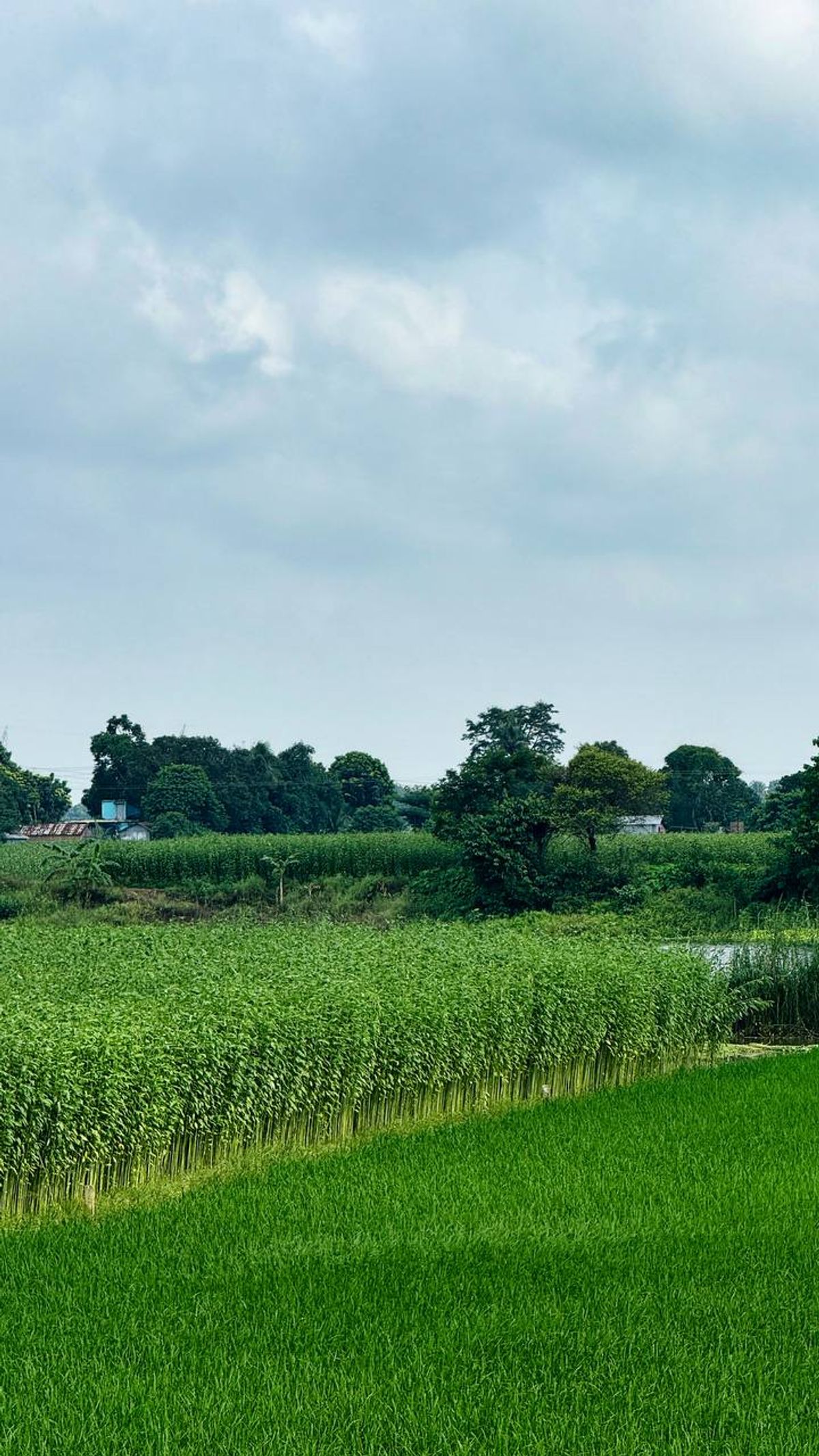
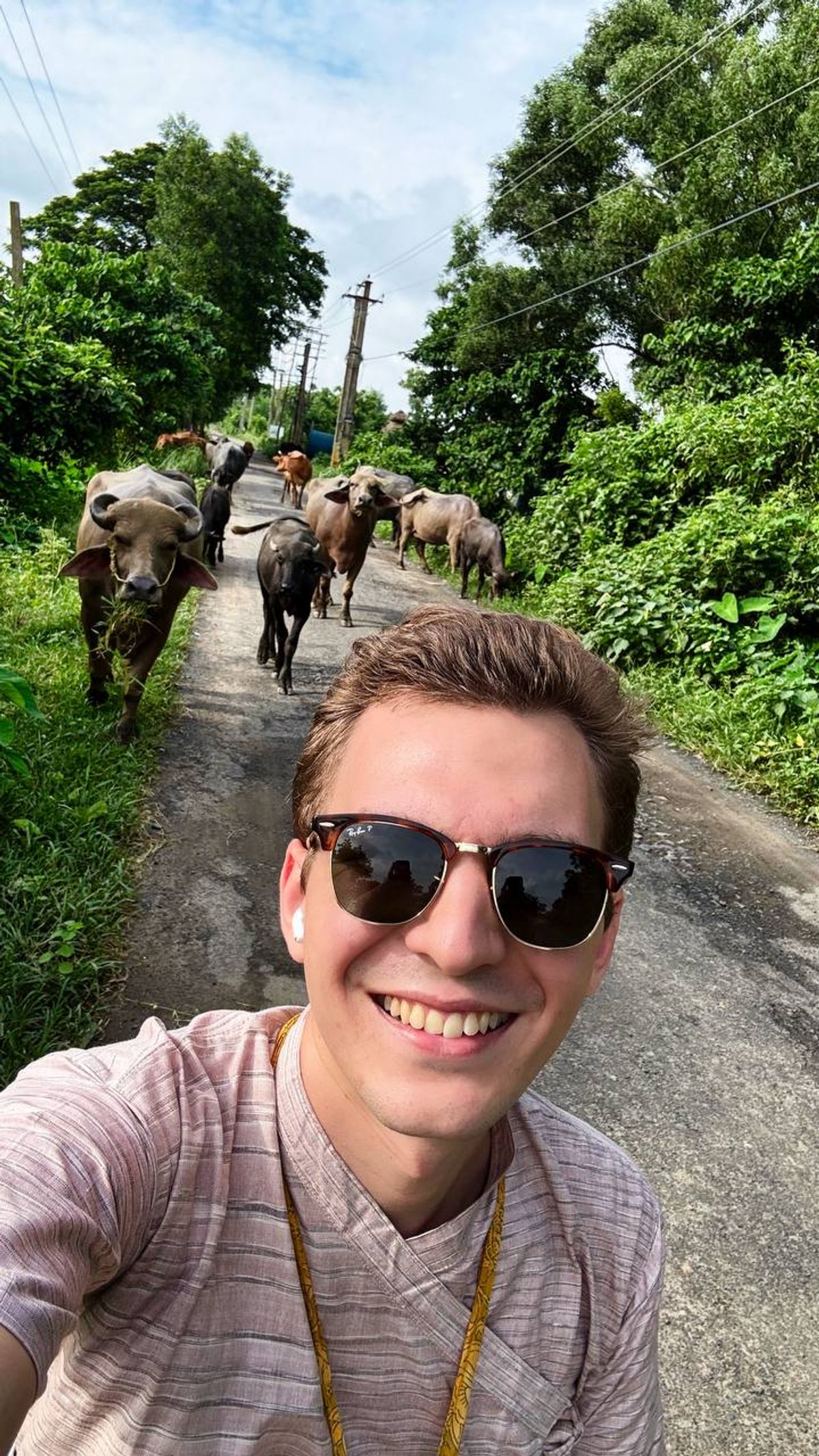
And here's the paradox: you're technically in the deepest rural India, yet it feels more like a village from the future. A place where everyone has purpose. Where there's no alcohol, no meat, no smoking, no rush. Where time itself seems to dissolve. In the evening, the sounds are kirtan, the rustle of the Ganges, the booming chorus of frogs, and the occasional lazy moo of a cow.
The City Found in a Dream: How Mayapur Was Rediscovered
Why does this international spiritual community exist in a Bengali village? Why is the world's largest temple being built here? It all goes back to one person — Chaitanya Mahaprabhu.
Chaitanya was born in Mayapur in 1486. To some, he's a great Indian saint and reformer. To Gaudiya Vaishnavas, he's something far more: Krishna and Radharani together, appearing in the form of one golden-skinned person. He's called the Golden Avatar — his complexion was a luminous golden hue, in contrast to the blue-skinned Krishna of the ancient epics.
Chaitanya didn't wage wars or write philosophical treatises. Instead, he taught something radically simple: sing the names of God, dance, and live with a pure heart. That's it. In India, he's considered the founder of sankirtana — the practice of collective devotional chanting that you can still witness every day in Mayapur.
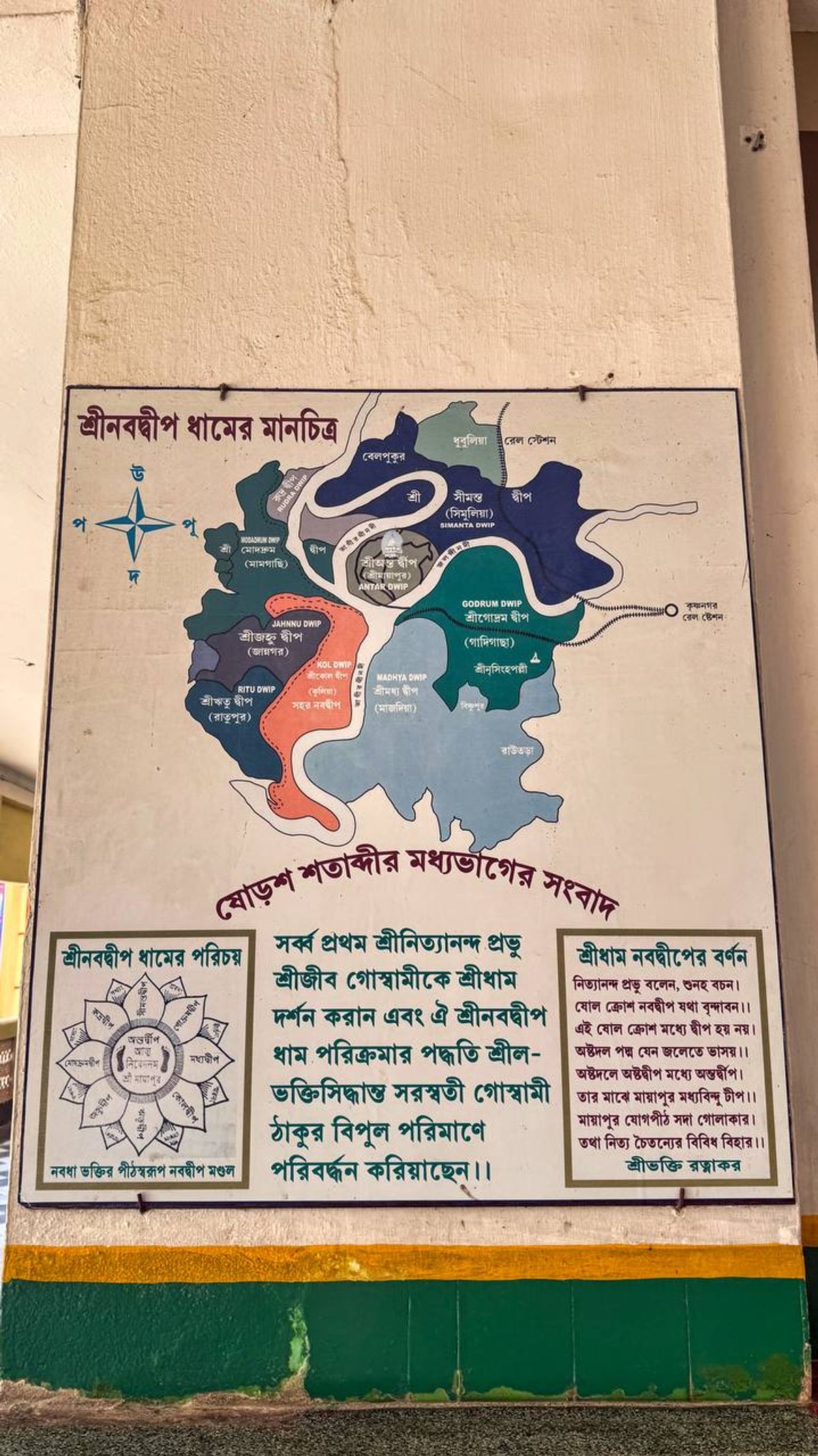
Mayapur itself is part of the ancient region of Navadvipa, which means "nine islands." According to tradition, each island represents a stage of the spiritual path — from listening, to chanting, to remembering, to service, to worship, to prayer, to friendship, and finally to complete self-surrender. If you look at a map, it resembles a mandala or a lotus flower, each petal a separate island among the branching channels of the Ganges.
But Mayapur's glory was lost for centuries. After waves of conquest and shifts in the river's course, the site of Chaitanya's birth was simply forgotten. It wasn't until the 19th century that a remarkable Indian judge and saint named Bhaktivinoda Thakur saw the exact location of the birthplace in a dream. He found confirmation in ancient scriptures and brought the elderly saint Jagannatha dasa Babaji to verify the site. The old man, nearly blind, immediately began to dance and exclaimed: "This is it!"
"Anyone who journeys to Navadvipa is freed from all offenses."
— Bhaktivinoda Thakur
Nobody arrives in Mayapur by accident. If you find yourself here, tradition says, Lord Chaitanya himself has called you. And if that's the case, every step on this land is already sacred.
TOVP: The Largest Temple in the World
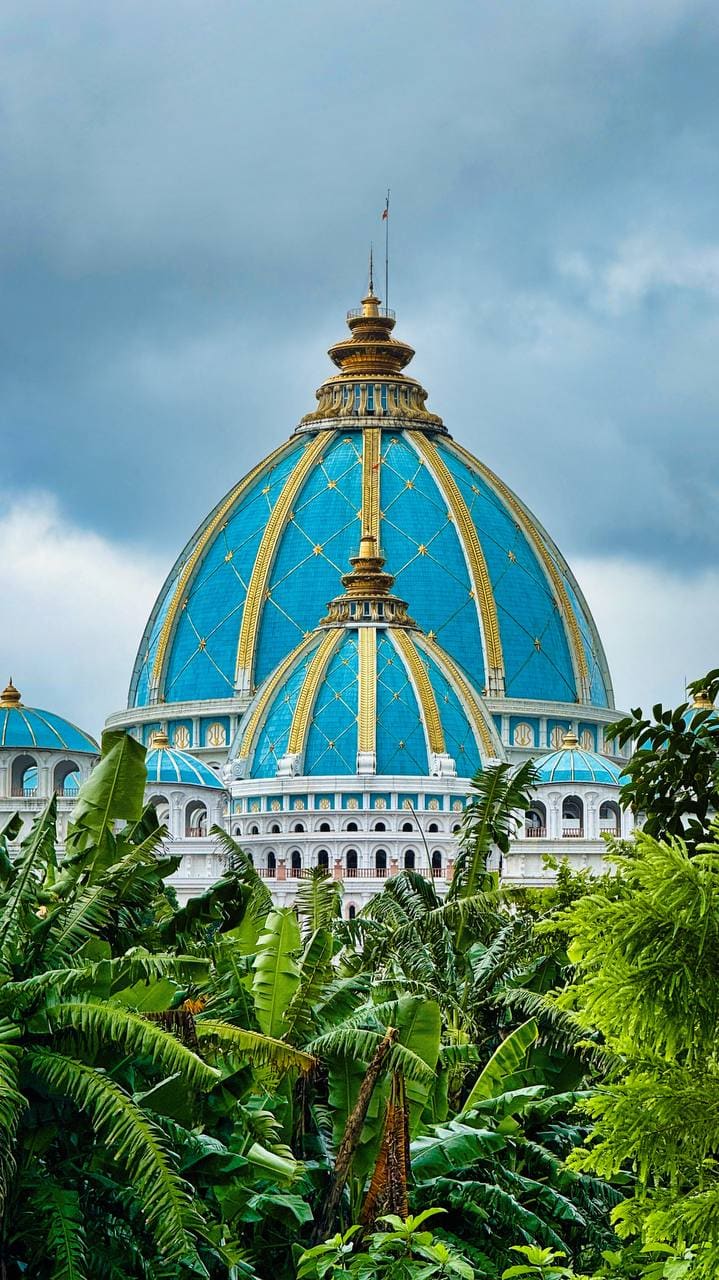
If tourists come to Mayapur, it's most likely for this. Under construction since 2010, the Temple of the Vedic Planetarium (TOVP) is a colossal complex with a blue dome, towering columns, and golden spires that dominates the Bengal skyline.
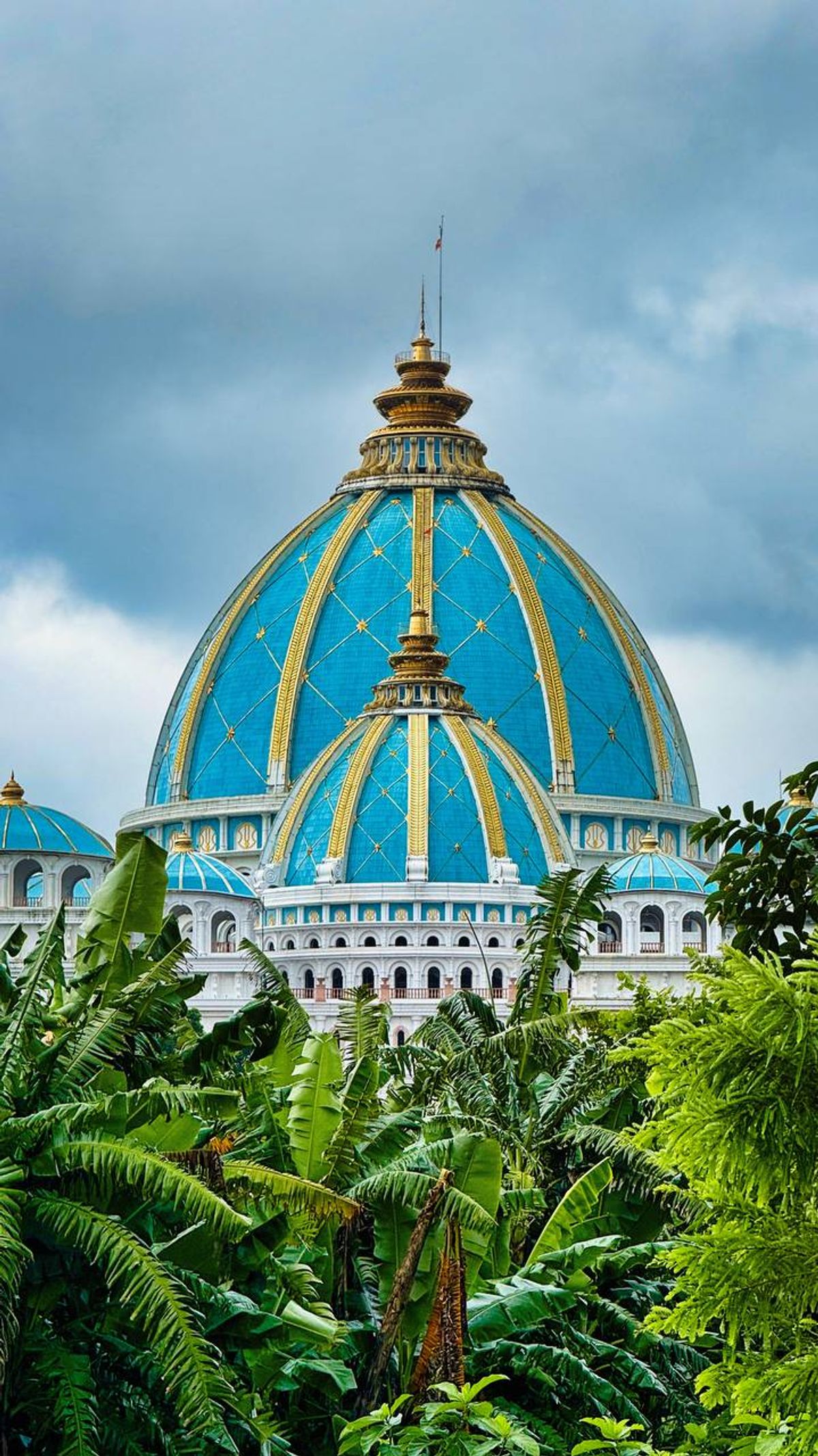
The numbers alone are staggering. The temple rises to more than 113 meters — taller than the Taj Mahal, which stands at 73 meters. You feel the scale instantly when you stand at its base and look up.
Inside, beyond the main worship hall, the temple will house a planetarium dedicated to Vedic cosmology — a three-dimensional model of the universe as described in ancient scriptures, complete with its different planes, worlds, and spiritual spheres. It's theology made architectural.
The project's budget sits at roughly $100 million, funded entirely by donations from Krishna devotees worldwide. Among the prominent supporters is Alfred Ford, great-grandson of Henry Ford and a longtime follower of the Vaishnava tradition.
On the grounds, the Samadhi of Srila Prabhupada — the memorial to the founder of ISKCON (the International Society for Krishna Consciousness) — is already open. For Vaishnavas, a samadhi is not merely a monument; it's a place of the teacher's living presence. Inside, there's a museum with Prabhupada's personal belongings, photographs, and the story of how he brought Krishna consciousness to the West.
One detail stays with me more than anything else. Inside the samadhi, on the inner dome, there's an enormous mosaic depicting Prabhupada's arrival in Moscow in 1971. You're standing in an Indian temple in rural Bengal, you look up — and there is St. Basil's Cathedral. Unexpected, and deeply moving.
While the main temple is still under construction, daily services are held in a smaller, temporary temple nearby. But the devotion is no less deep. Every morning, mantras and kirtans fill the space, and devotees from around the world gather as they have for decades.
Local devotees believe that once the TOVP is completed, Mayapur will become the spiritual capital of the world. If Vrindavan is the heart of Krishna, then Mayapur is the heart of Chaitanya — the God who came to this world to sing and dance.
Sacred Places of Mayapur You Shouldn't Miss
Beyond the TOVP, Mayapur is filled with temples and sacred sites, each with its own character and energy.
The Birthplace of Chaitanya Mahaprabhu
This is the holiest spot in all of Mayapur. A small, quiet temple stands where Chaitanya was born in 1486, beneath a neem tree that still grows in the courtyard today. On the altar are the murtis of baby Nimai (Chaitanya's childhood name) in his cradle, alongside his mother Shachi and father Jagannath Mishra — as if you'd stepped into a Bengali home from five centuries ago.
People come here not to pray loudly, but simply to sit. Many say that even 10–15 minutes here gives more than hours of ordinary meditation. Come early morning after Mangala Aarti or near sunset, when it's nearly empty and the atmosphere is strongest.
Shri Shri Jagannath Baldev Subhadra Temple
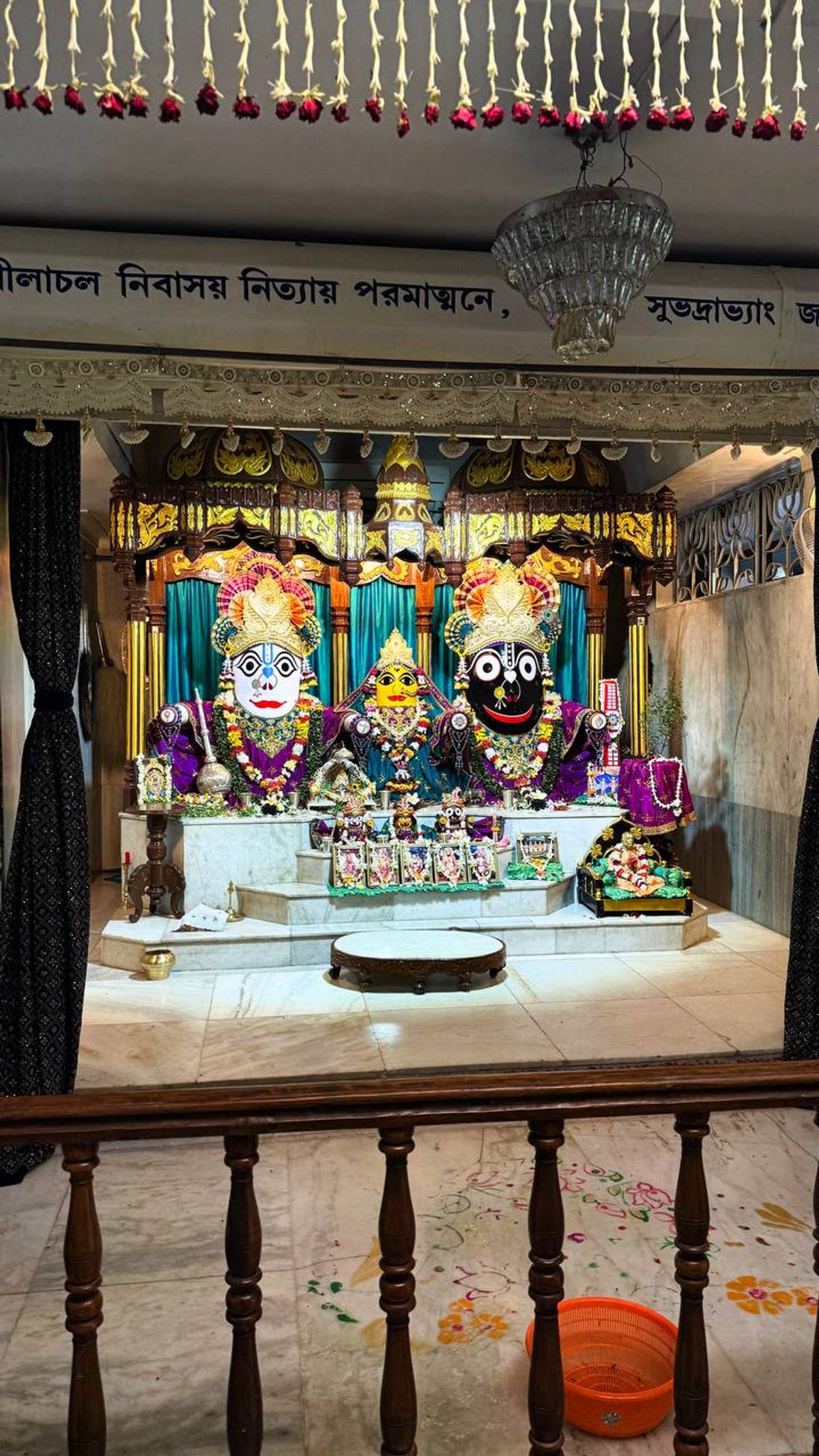
A small, intimate space that most casual tourists never find. If you come at 4:30 AM for Mangala Aarti, prepare for one of Mayapur's most powerful experiences: a quiet hall, soft lamplight, maybe 20–30 people, all of them regulars. When the curtain opens, Lord Jagannath gazes out with his enormous eyes. Complete silence, pure bhakti, no outsiders.
During the day, you can visit anytime — the priests (pujari) will offer you prasad without being asked.
Ganga Temple
Sits right on the riverbank, a few minutes' walk from the main ISKCON campus. A beautiful murti of Mother Ganga seated on a cow stands inside, and stone steps lead down to the water for bathing. The most beautiful time is the evening Ganga Aarti at 6:00–6:30 PM, when devotees gather, sing "Jai Jai Gange," and set small lamps drifting downstream. The sound of drums and cymbals echoes off the water as the sun sinks behind the palm trees — simple and powerful.
Shree Chaitanya Gaudiya Math
Belongs to a different branch of Gaudiya Vaishnavism — the lineage of Bhaktisiddhanta Sarasvati (Srila Prabhupada's own teacher). The atmosphere is slightly more austere and contemplative than ISKCON's main campus. The kirtans are slow and drawn out, the deities are exquisite, and the feeling is one of deep, almost familial spiritual continuity.
Radharani Temple
Dedicated to Shrimati Radharani — Krishna's beloved and the embodiment of unconditional devotion. In Vaishnava tradition, Radharani is revered even above Krishna herself — she represents the highest love, the kind that asks for nothing in return. The architecture reflects this tenderness: light tones, floral ornaments, graceful columns. The murti of Radharani is dressed in luxurious saris and adorned with fresh roses and jasmine.
Navadvipa
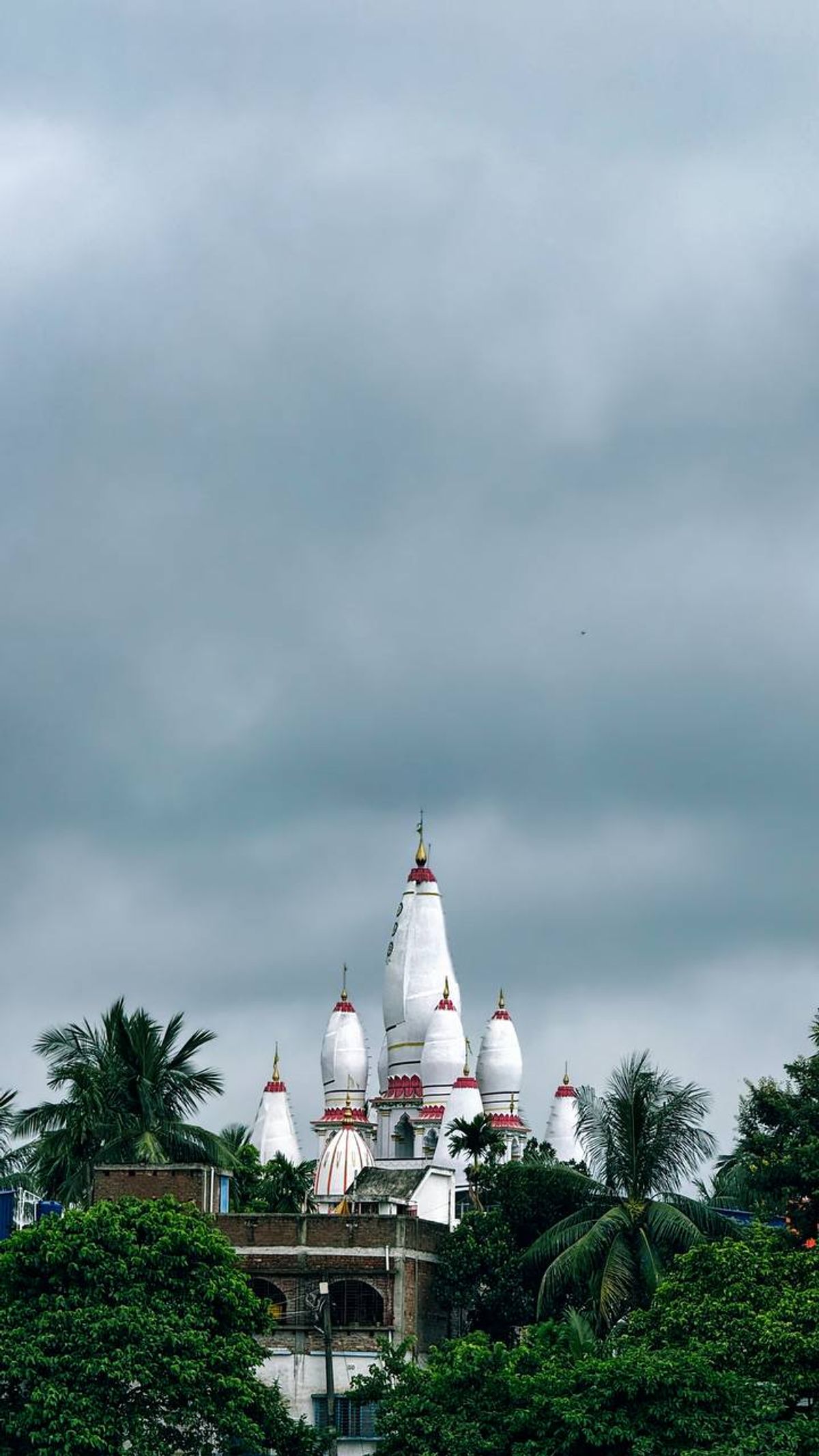
Across the Ganges is just a short ferry ride away (they take scooters too, and it costs next to nothing). From the ferry at dawn, the view is almost mystical: the enormous dome of the TOVP reflected in still water, floating between sky and river.
Navadvipa itself is a Bengali time capsule — narrow lanes, old clay houses with carved doors, cows, children, grandmothers in saris. Nobody tries to sell you anything here; people just smile and keep going about their day.
In Navadvipa, look for Sri Chaitanya Saraswat Math (Jal Mandir) — a small temple standing in the middle of a sacred pond. Walk the narrow path around the water (parikrama), reciting a mantra with each step. Lotus flowers float on the surface, the temple's reflection ripples below. One circuit takes about 10–12 minutes; most people do three or seven. A simple and deeply moving practice.
Daily Life in the International Community
Life in Mayapur follows a rhythm, but not a forced one:
- 4:30 AM — Mangala Aarti (morning temple service)
- 12:00 PM — Prasad (communal lunch)
- 6:30 PM — Evening Aarti
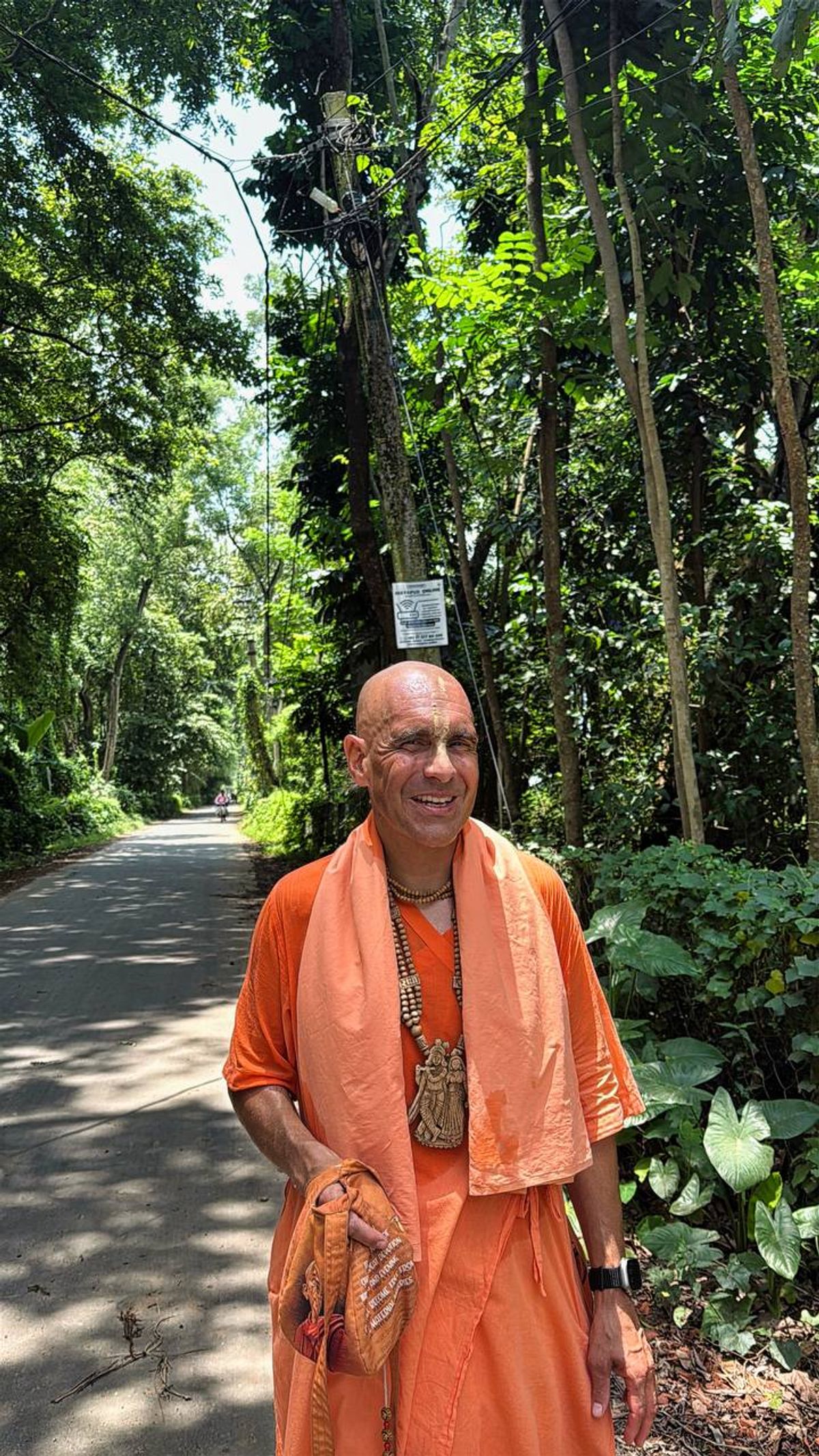
Throughout the day, lectures on sacred texts and kirtans take place across the community. Some residents work remotely. Some serve full-time in the temple. Some are artists, musicians, teachers. Some raise children.
But what strikes you most is the atmosphere itself. There's no rush, no aggression, no competition. People are sincerely glad to see one another. They help newcomers. They share knowledge freely. Children move freely among adults — it's safe here in a way that feels almost anachronistic.
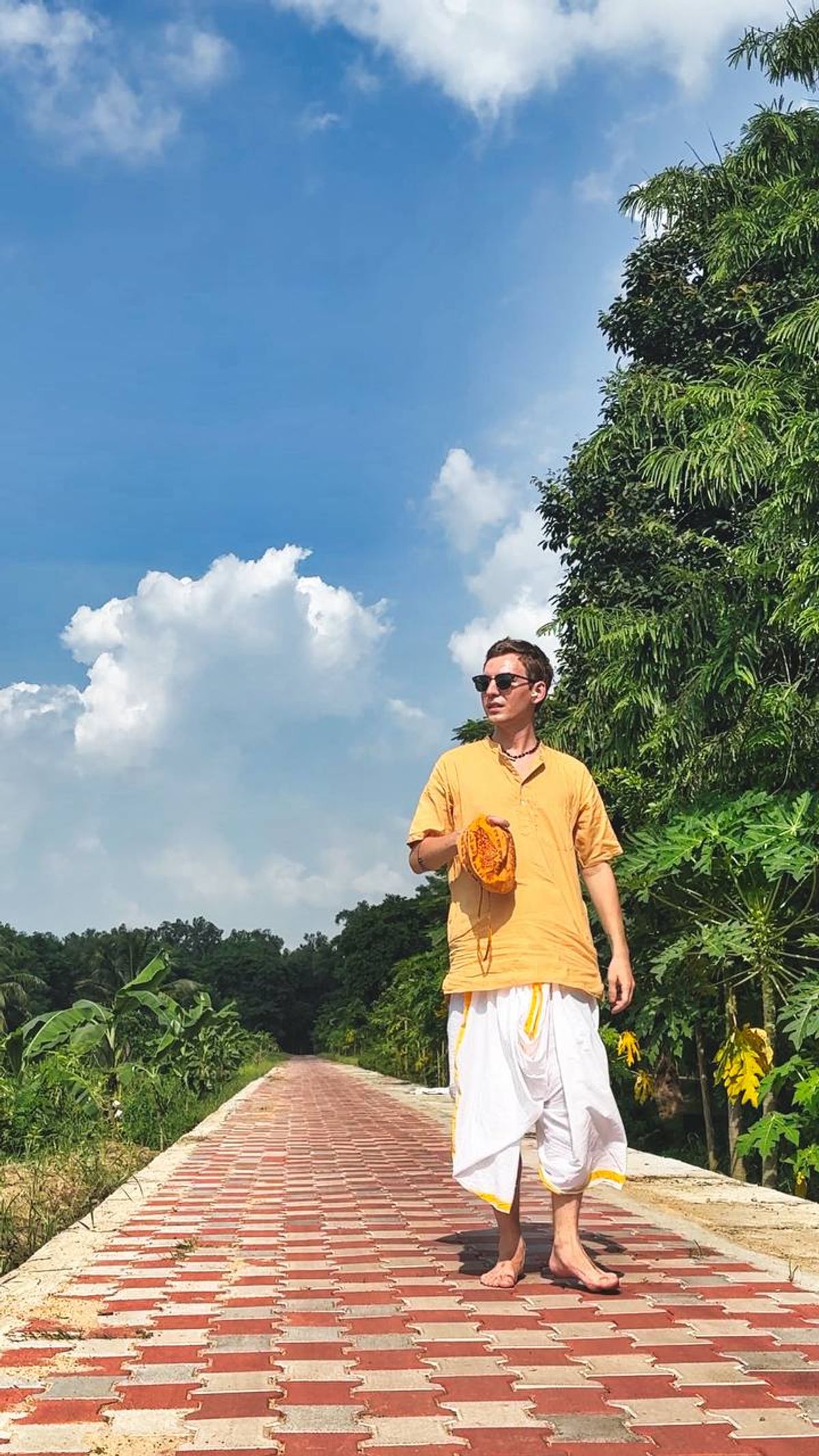
In the evening, the sounds are kirtans, the rustling Ganges, frogs, and cows. Time stops. And you begin to understand why some people came here for a week and stayed for a lifetime.
Where to Stay
Rasamrita Kunj
A small residential complex five minutes' walk from the main temple. Many foreign devotees stay here, especially Russian-speaking ones. Rooms are simple and clean (bed, fan or AC, private bathroom), no frills — but quiet and homey. People know each other, sing together, walk to Mangala Aarti at 4:30, and discuss books over prasad.
Price: 800–1,500 INR per night depending on season and AC.
Booking: Airbnb, community chats, or through contacts in the devotee network.
Prabhupada Village
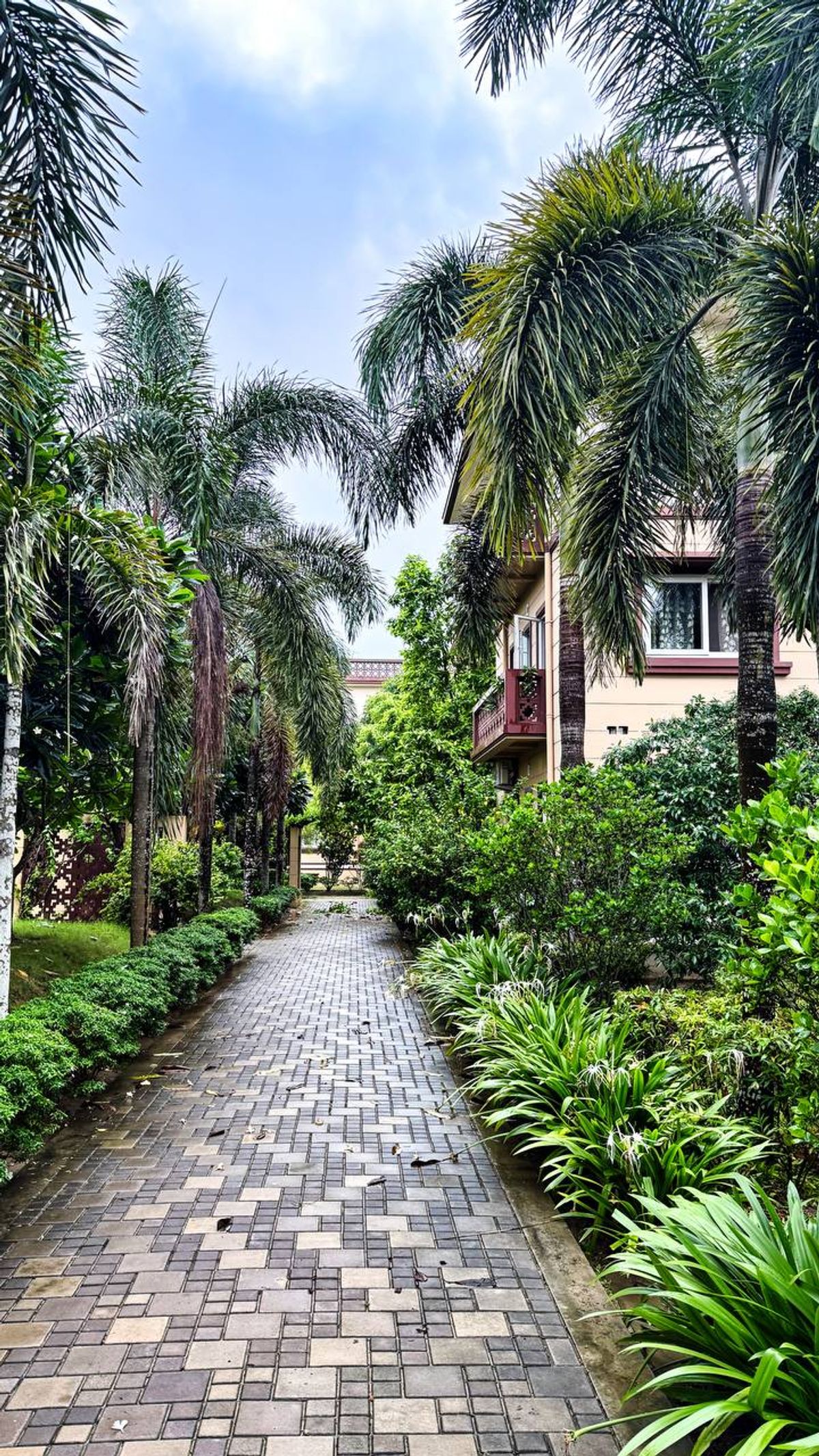
Guesthouses right on the ISKCON grounds, steps from the main temple and Prabhupada's samadhi. The same simple-but-clean standard, with AC options.
Price: 1,000–2,000 INR per night.
Booking: The official ISKCON Mayapur website, or the guest office on arrival (rooms are usually available).
Neither option is a hotel in the conventional sense — they're an invitation to live inside the community. Nobody makes noise after 10 PM, everyone rises early, and the whole day follows the temple's rhythm. If that's what you came for, there's nowhere better.
Where to Eat: Sattvic Cuisine
Every restaurant in Mayapur serves sattvic food — pure, vegetarian, prepared with prayer. No onion, no garlic, no eggs, no meat.
- Govindas — on the main temple grounds offers steady, simple Vaishnava and Ayurvedic meals. Canteen-style, no frills, but safe and satisfying.
- Momo Prabhu — a small stall on the campus famous for its cheese dosa — rich, filling, and delicious.
- Vrinda's Pizzeria — serves vegetarian pizza without onion or garlic — great when you need a break from Indian cuisine without leaving the spiritual context.
- Seven Grain Bakery — a cozy spot with fresh bread, pastries, and desserts — all egg-free and vegan-friendly. Good for breakfast or a quiet afternoon pause.
- Prasadam Box Mayapur — has a wider menu mixing Indian and European options — useful if you're traveling with a group with varied tastes.
- Aaniyor Restaurant — offers the broadest menu in town, including traditional Bengali dishes and milder, adapted Indian cuisine.
How to Get to Mayapur from Kolkata
Mayapur is 130 km north of Kolkata. All roads lead through the city.
By Taxi
The easiest option. 2.5–3 hours on a good highway, 2,000–3,000 INR for the car. The drive itself is beautiful: villages, fields, the Ganges — you start to feel the shift before you even arrive.
By Bus
Budget-friendly. From Esplanade in Kolkata, buses run every 30–60 minutes to Krishnanagar or Nabadwip (2–3 hours, 100–150 INR). From there, a rickshaw or tuk-tuk takes 30–40 minutes to Mayapur.
By Train
From Howrah or Sealdah station to Nabadwip Dham station (2–2.5 hours, 50–200 INR). From the station, it's 15–20 minutes by rickshaw.
If it's your first time, take a taxi and don't think twice.
A Place Where Life Is Organized Differently
Even if karma cleansing isn't on your itinerary, Mayapur is worth visiting just to see how life can be organized around meaning rather than consumption. A place with no alcohol, no meat, no violence. Where children grow up in safety, and adults believe deeply in what they do.
Tradition says it simply: Mayapur is not an ordinary place. It's a spiritual realm — a hidden Vrindavan. They say that even a single step on this land purifies the consequences of past mistakes.
And while most of the world doesn't yet know where Mayapur even is, here they're building a temple that may well become the new face of India.