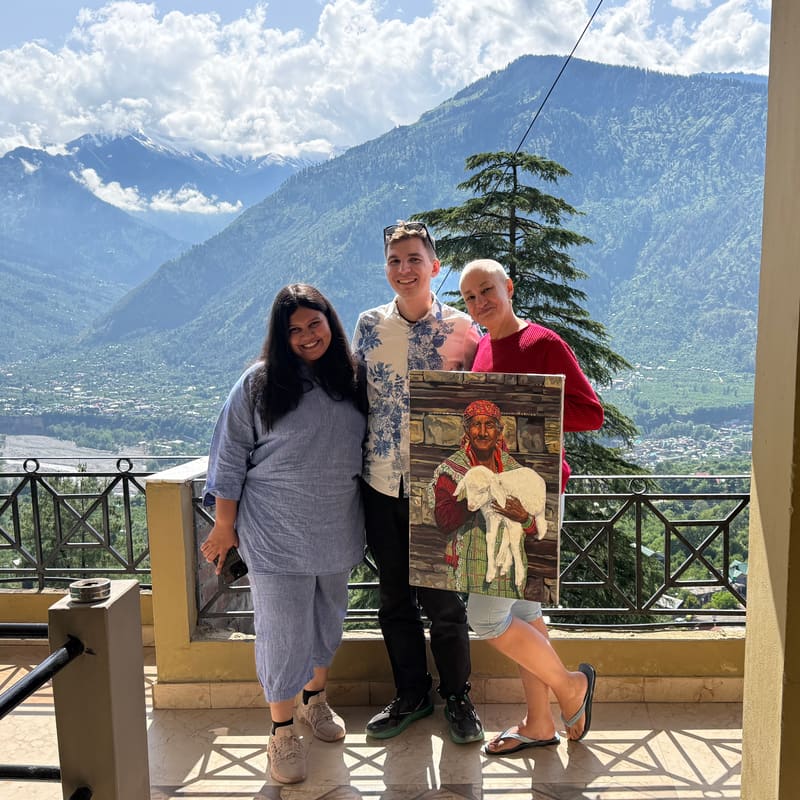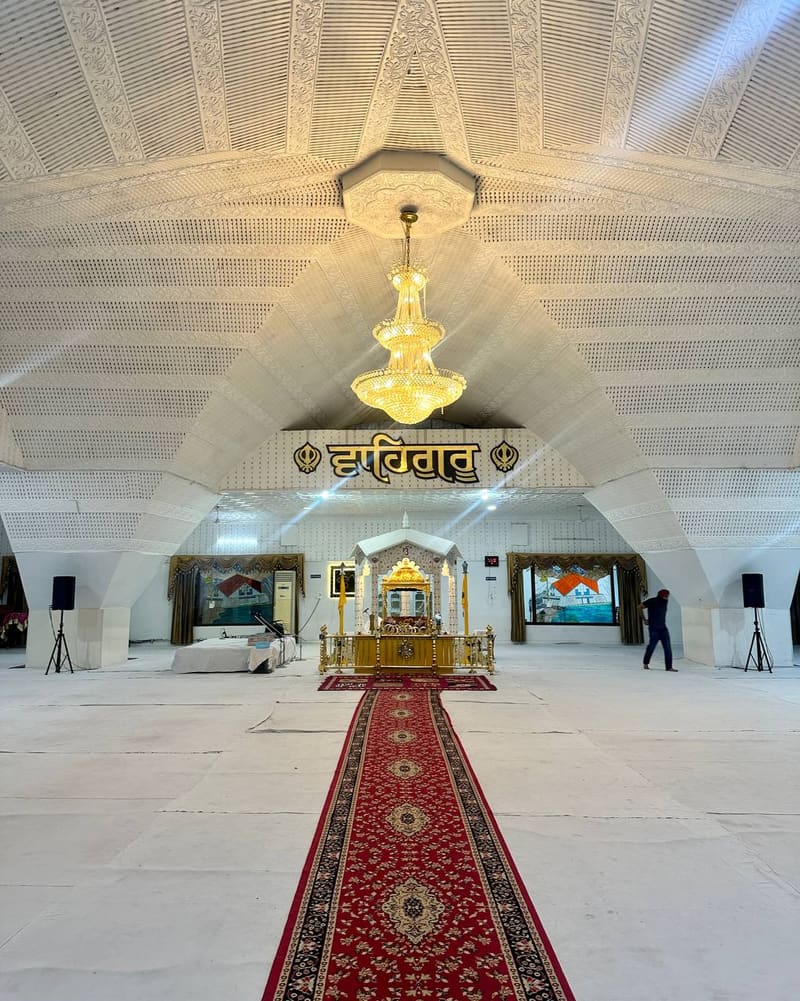
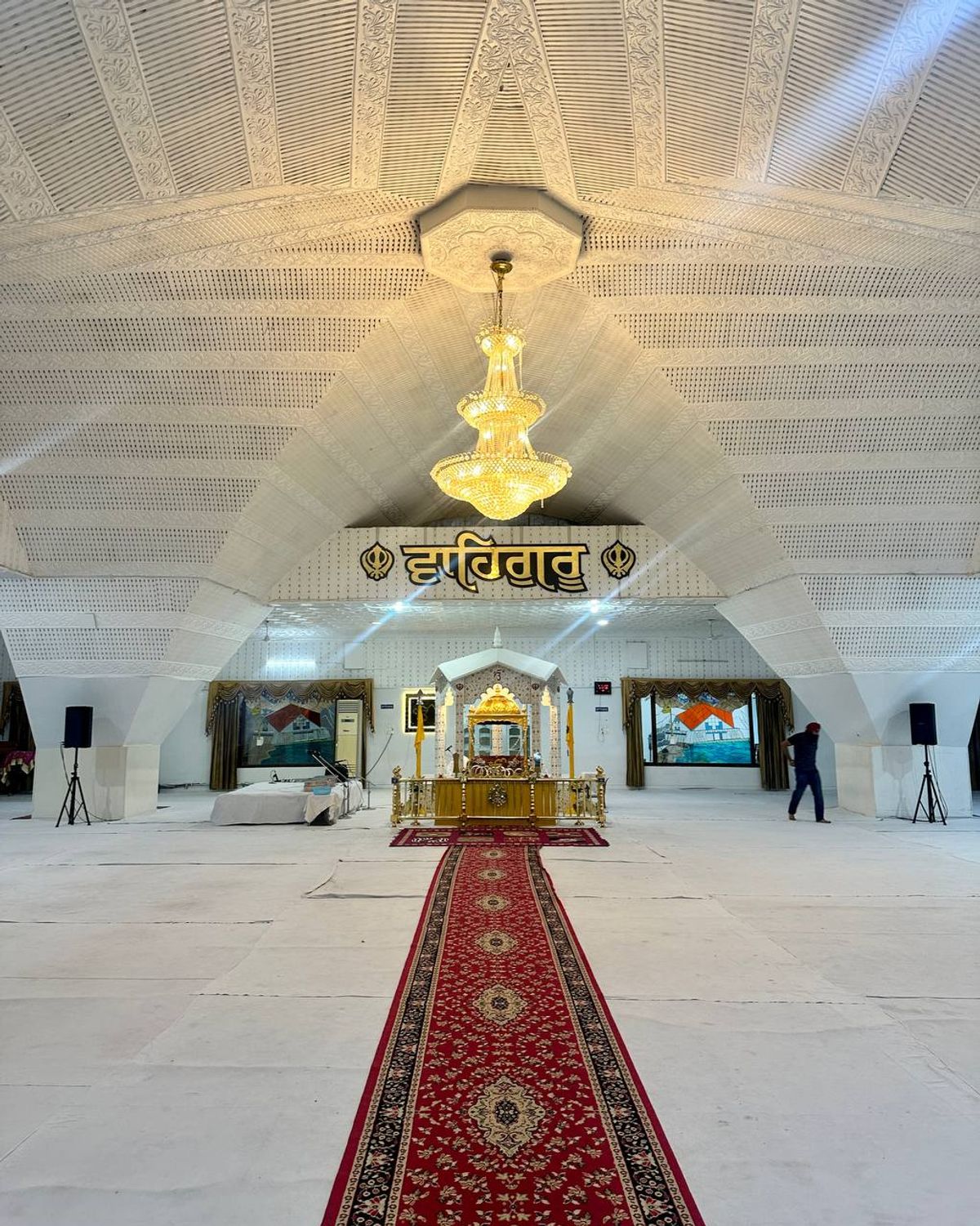
I wandered into the gurdwara in Rishikesh by accident. Just wanted to see what was inside.
I knew about the prayer hall. I'd heard about the langar — the communal kitchen where anyone, regardless of faith or status, can eat for free. What I didn't expect was the exhibition behind an unmarked door.
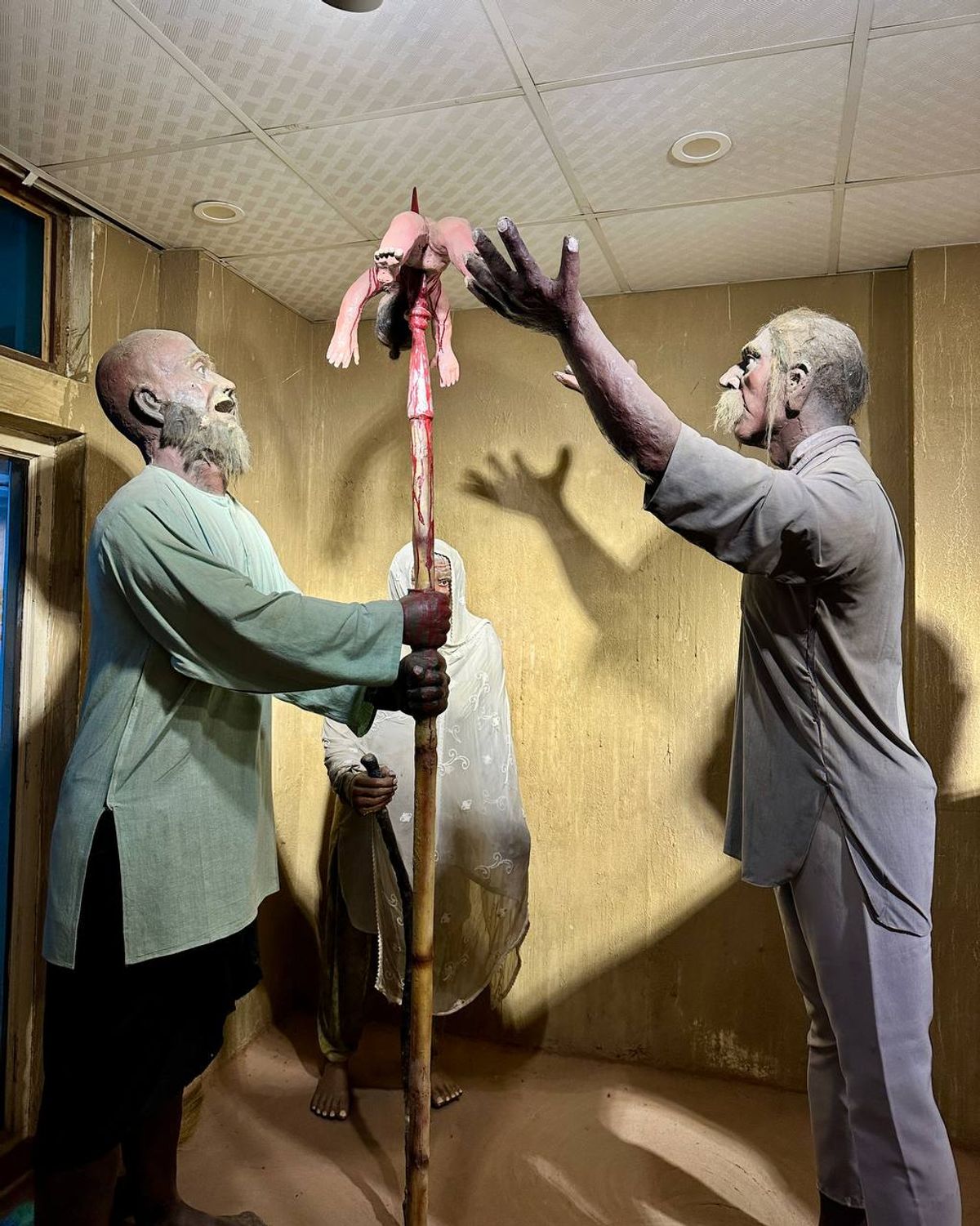
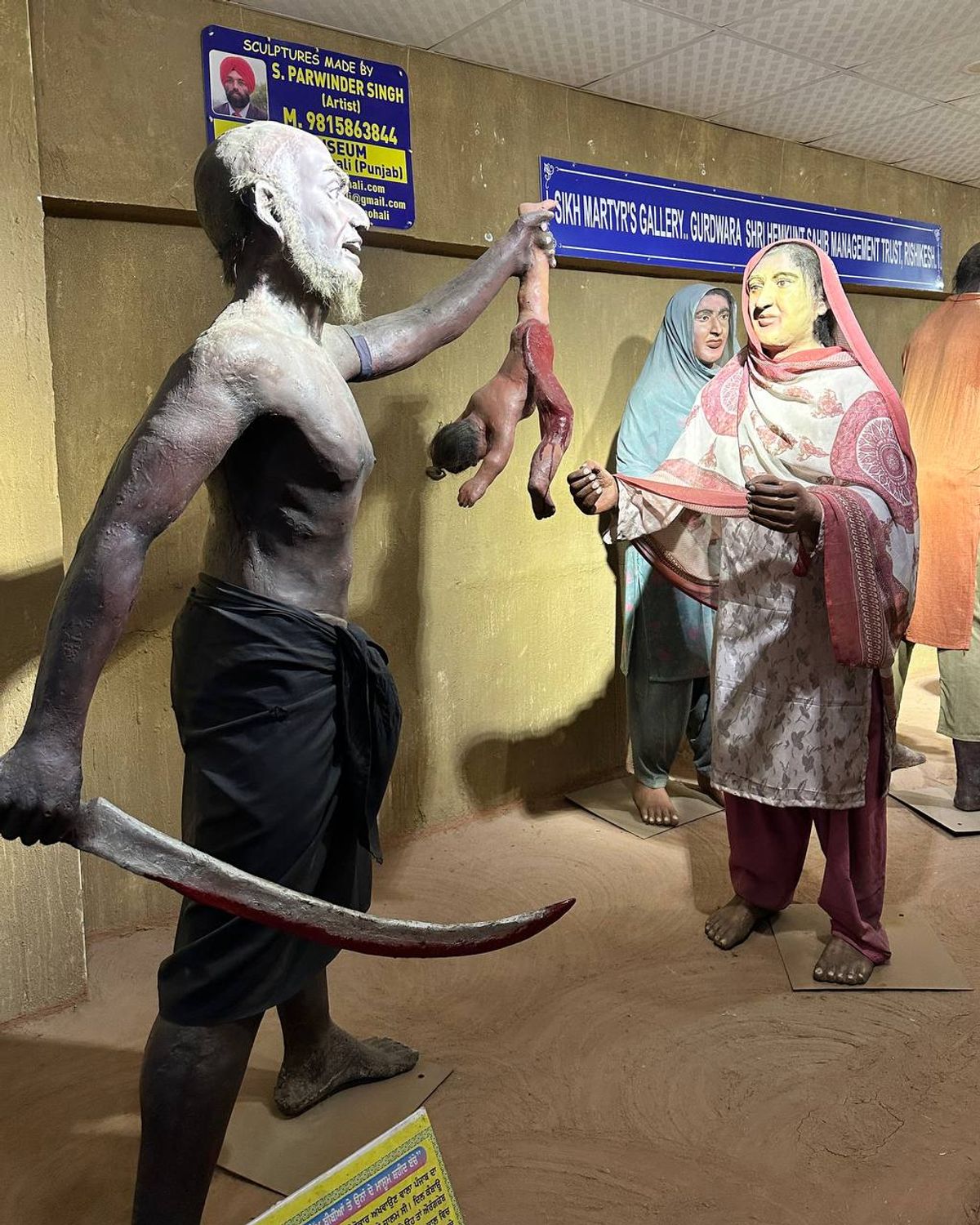
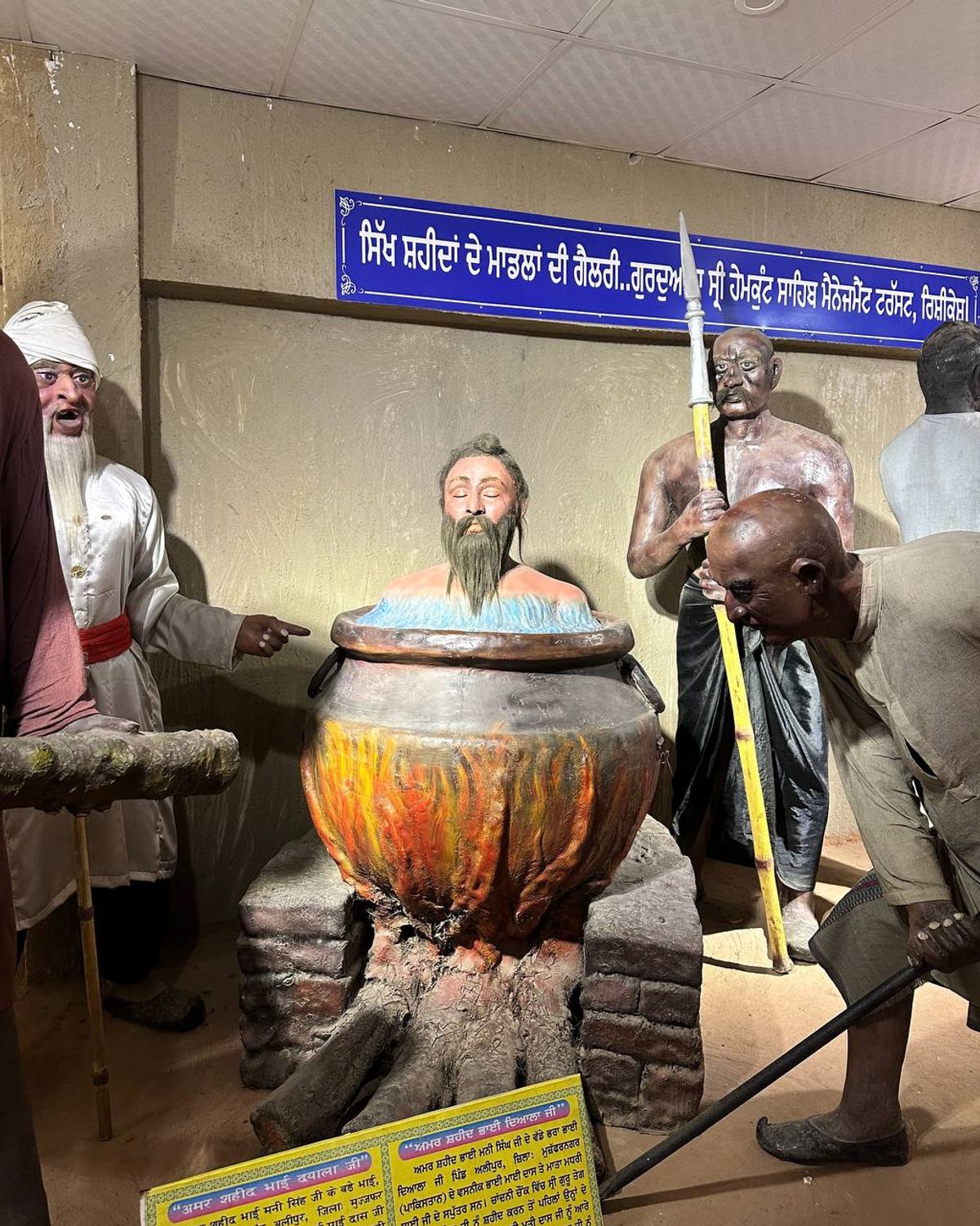
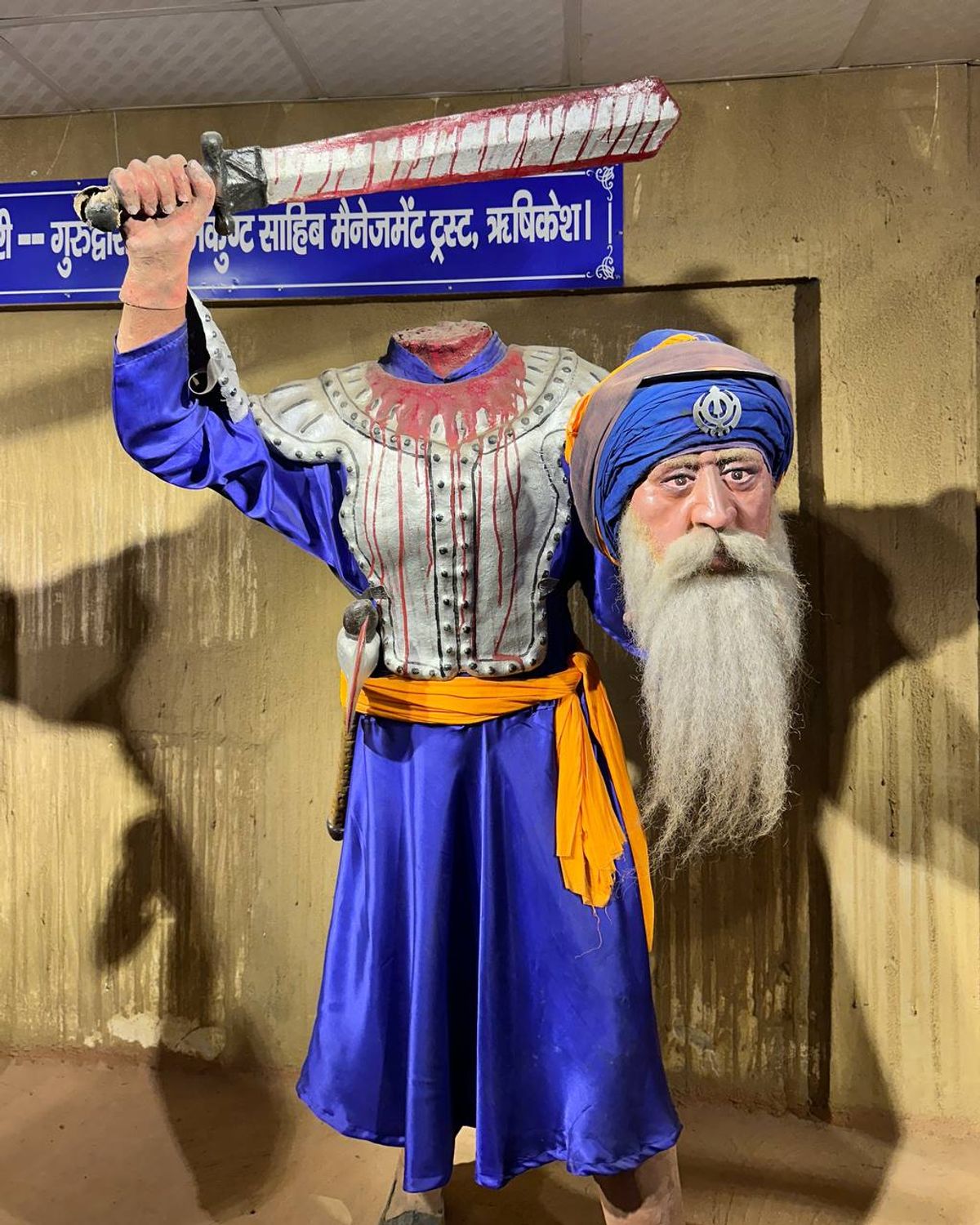
Life-sized figures. Scenes of execution. Severed heads. Cauldrons of boiling water. Children impaled on spears.
It looks more brutal than any horror film I've ever seen. Except this isn't fiction.
This is the Sikh Martyrs' Gallery. And every scene depicts a real historical event.
What You're Looking At
You'll find these exhibitions in gurdwaras across India, from small village temples to the grand museums of Punjab. They depict the persecutions Sikhs endured during the 17th and 18th centuries under Mughal rule.
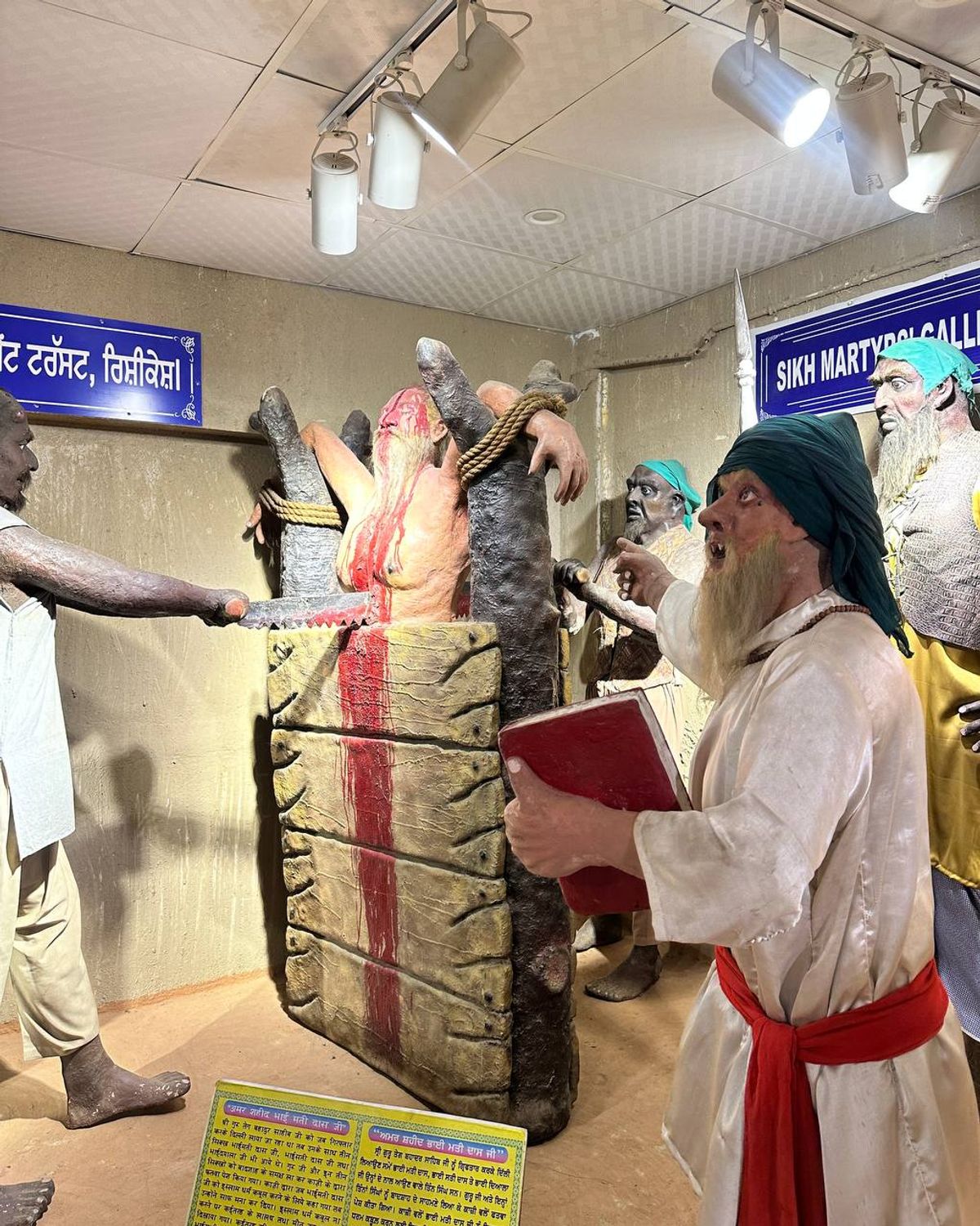
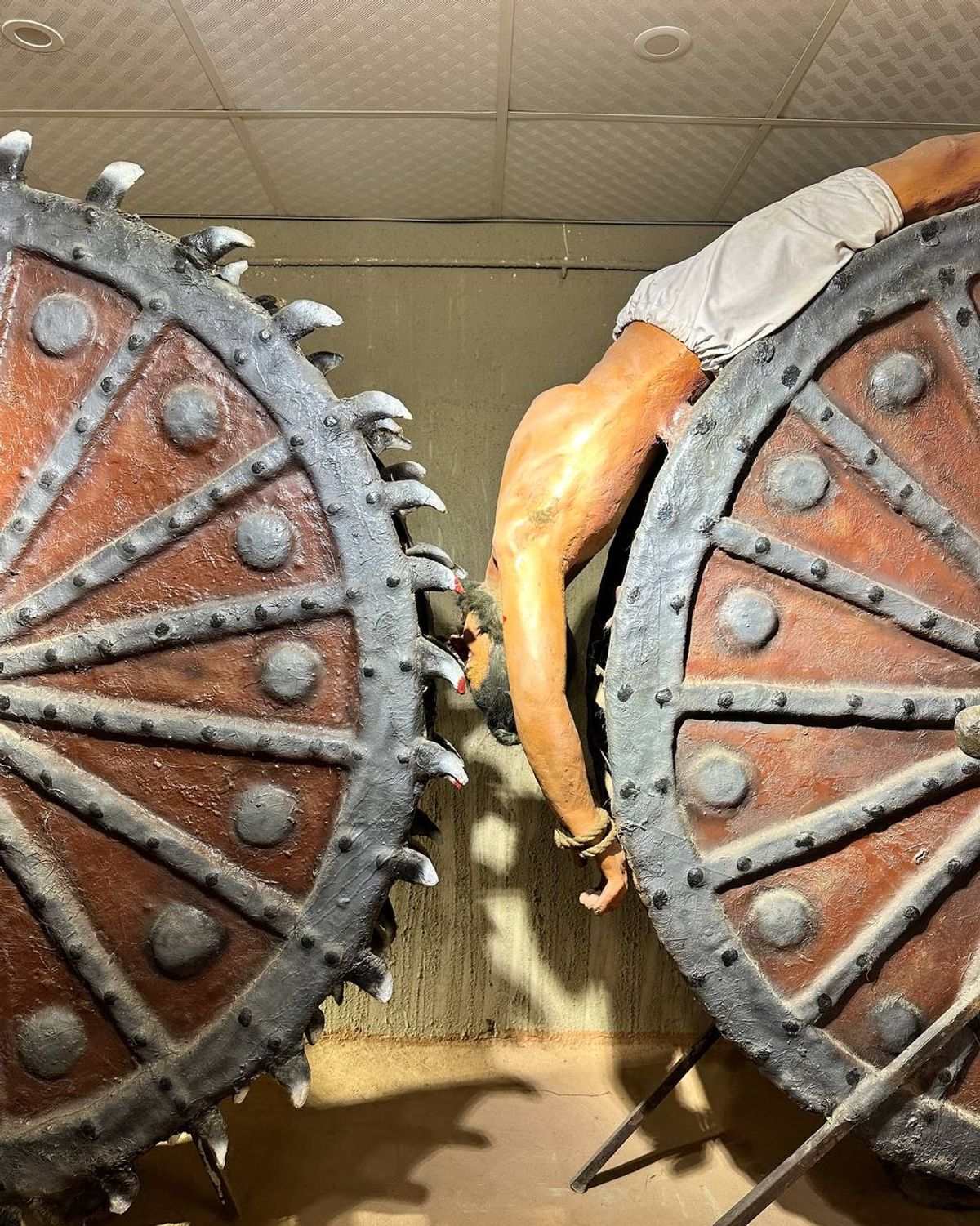
The images are deliberately graphic. They show Gurus tortured to death. Disciples sawn in half, boiled alive, burned at the stake. Children — some as young as six — choosing death over conversion.
The martyrs' faces are painted calm and serene, untouched by pain. This isn't accidental. Sikh artists traditionally depict martyrs as victorious even in death — their bravery transcending their suffering.
For visitors unfamiliar with Sikh history it's shocking. But for Sikhs, these galleries serve a specific purpose: to make sure no generation forgets what their ancestors endured, or why faith became something they were willing to die for.
The Religion That Was Forged in Fire
To understand the galleries, you need to understand Sikhism itself — and why it developed such a profound relationship with martyrdom.
Sikhism was founded in the Punjab region around 1469 by Guru Nanak, a spiritual teacher who rejected both the caste hierarchy of Hinduism and the rigid orthodoxy he saw in the Islam of his day. His message was revolutionary in its simplicity: there is one God, all humans are equal before that God, and the path to spiritual liberation lies through honest work, meditation on the divine name, and service to others.
"There is no Hindu, there is no Muslim," Guru Nanak famously declared after a transformative spiritual experience. "There is only humanity."
The community that gathered around his teachings — the word "Sikh" comes from the Punjabi word for "learner" or "disciple" — grew under ten successive Gurus over the next two centuries. They developed their own scripture (the Guru Granth Sahib), their own places of worship (gurdwaras), and their own distinctive institutions.
One of these was the langar — the free community kitchen that still operates in every gurdwara worldwide. Guru Nanak established it; his successors institutionalized it. The rule was simple and radical: before anyone could have an audience with the Guru, they had to first sit on the floor and eat with everyone else — peasant and emperor, Hindu and Muslim, rich and poor.
When the Persecution Began
For the first century of Sikhism's existence, relations with the Mughal Empire were relatively peaceful. Emperor Akbar, known for his religious tolerance, even donated land for Sikh institutions.
That changed after Akbar's death in 1605.
His successor, Jahangir, was a fundamentalist who saw the growing Sikh community as a threat. In 1606, Guru Arjan Dev — the fifth Sikh Guru, who had compiled the first official edition of the Sikh scripture — was arrested on charges of supporting a rebellion.
Guru Arjan was given a choice: convert to Islam or face execution. He refused. For five days he was tortured — forced to sit on a red-hot iron sheet while boiling sand was poured over his body. On the fifth day he was taken to the river to bathe. He entered the water and was never seen again.
Guru Arjan Dev became the first Sikh martyr. His execution transformed Sikhism from a peaceful devotional movement into something harder and more martial.
The Ninth Guru's Sacrifice
Seventy years later, Emperor Aurangzeb — the most religiously intolerant of all Mughal rulers — launched a campaign to convert non-Muslims across his empire by force.
A delegation of Kashmiri Pandits (Hindu Brahmin scholars) traveled to the Punjab to seek help from Guru Tegh Bahadur, the ninth Sikh Guru. They reported that Aurangzeb had given them a choice: convert to Islam or die.
The Guru's response has become one of the most celebrated moments in Sikh history. He told the Pandits to inform Aurangzeb that if the Guru could be converted, they would all convert. If not, they should be left alone.
It was a challenge he knew would cost him his life.
In November 1675, the Guru and three of his closest companions were publicly executed in Chandni Chowk, Delhi's main marketplace. The companions — Bhai Mati Das, Bhai Sati Das, and Bhai Dayala — were killed first, in front of the Guru, to break his resolve.
Bhai Mati Das was sawn in half vertically. Bhai Sati Das was wrapped in cotton wool and burned alive. Bhai Dayala was boiled in a cauldron of water.
The Guru watched, then faced his own beheading without wavering.
He died defending the religious freedom of Hindus — people who weren't even members of his own faith.
The Children Who Chose Death
The most heartbreaking images in the martyrs' galleries depict the four sons of Guru Gobind Singh, the tenth and final human Guru.
In December 1704, the Guru's family was separated during their retreat from the fortress at Anandpur. His two elder sons — Ajit Singh (18) and Jujhar Singh (14) — died fighting at the Battle of Chamkaur, holding off Mughal forces while their father escaped.
His two younger sons — Zorawar Singh (9) and Fateh Singh (6) — were captured along with their grandmother, Mata Gujri, betrayed by a servant who had given them shelter.
They were brought before Wazir Khan, the Mughal governor of Sirhind.
For two days, the boys were pressured to convert. They were offered riches, titles, a life of comfort. All they had to do was recite the Islamic declaration of faith.
According to Sikh tradition, they refused. The nine-year-old reportedly told the court: "We are fighting against tyranny and injustice. We are the sons of Guru Gobind Singh, the grandsons of Guru Tegh Bahadur, and descendants of Guru Arjan Dev. We shall follow in their footsteps."
The boys were sentenced to be bricked up alive in a wall. According to the traditional account, even as the bricks rose around them, they continued reciting prayers. When the wall was high enough, it was toppled, killing them. Their grandmother died of shock upon hearing the news.
The Five Ks: Living Memory
This history also explains the distinctive appearance of observant Sikhs — the turbans, the beards, the ceremonial daggers.
In 1699, Guru Gobind Singh — the father of the martyred children — founded the Khalsa, a community of initiated Sikhs bound by specific practices and a distinctive uniform. He commanded Khalsa Sikhs to wear five articles of faith at all times, all beginning with the letter K:
- Kesh — uncut hair, kept under a turban. A sign of accepting God's will and nature's design.
- Kangha — a wooden comb, worn in the hair. A symbol of cleanliness and discipline.
- Kara — an iron bracelet worn on the wrist. A reminder that whatever one does with one's hands should be in keeping with the Guru's teachings.
- Kachera — cotton undergarments. A symbol of self-restraint and readiness for action.
- Kirpan — a ceremonial sword or dagger. A sign of the duty to protect the weak and stand against injustice.
These aren't simply traditions or ethnic markers. They're a uniform — deliberately designed to make Sikhs instantly recognizable, unable to hide in a crowd, forced to stand visibly for their faith even when that visibility could get them killed.
The Langar: Equality in Practice
Perhaps the most striking thing about visiting a gurdwara isn't the martyrs' gallery at all. It's what happens afterward.
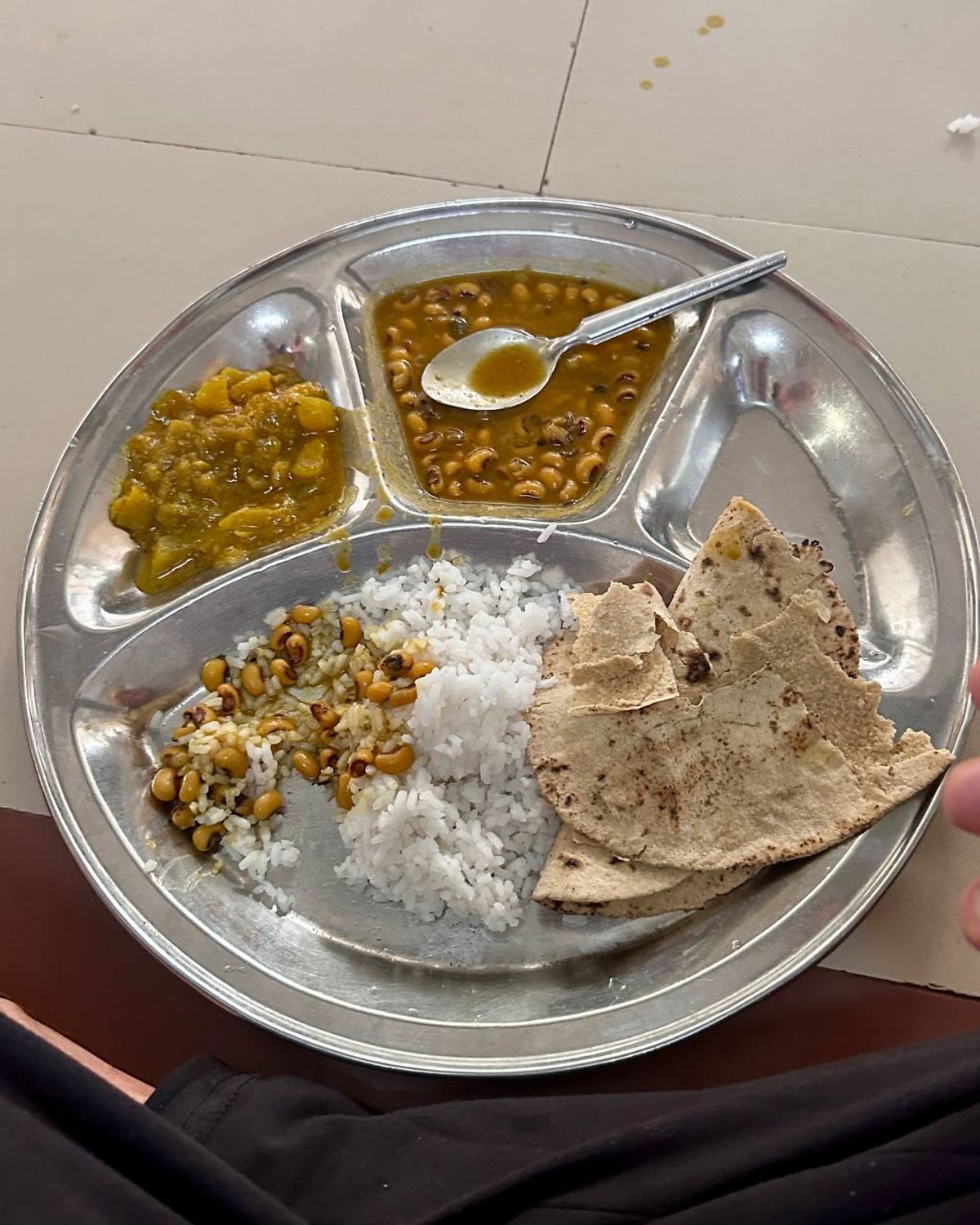
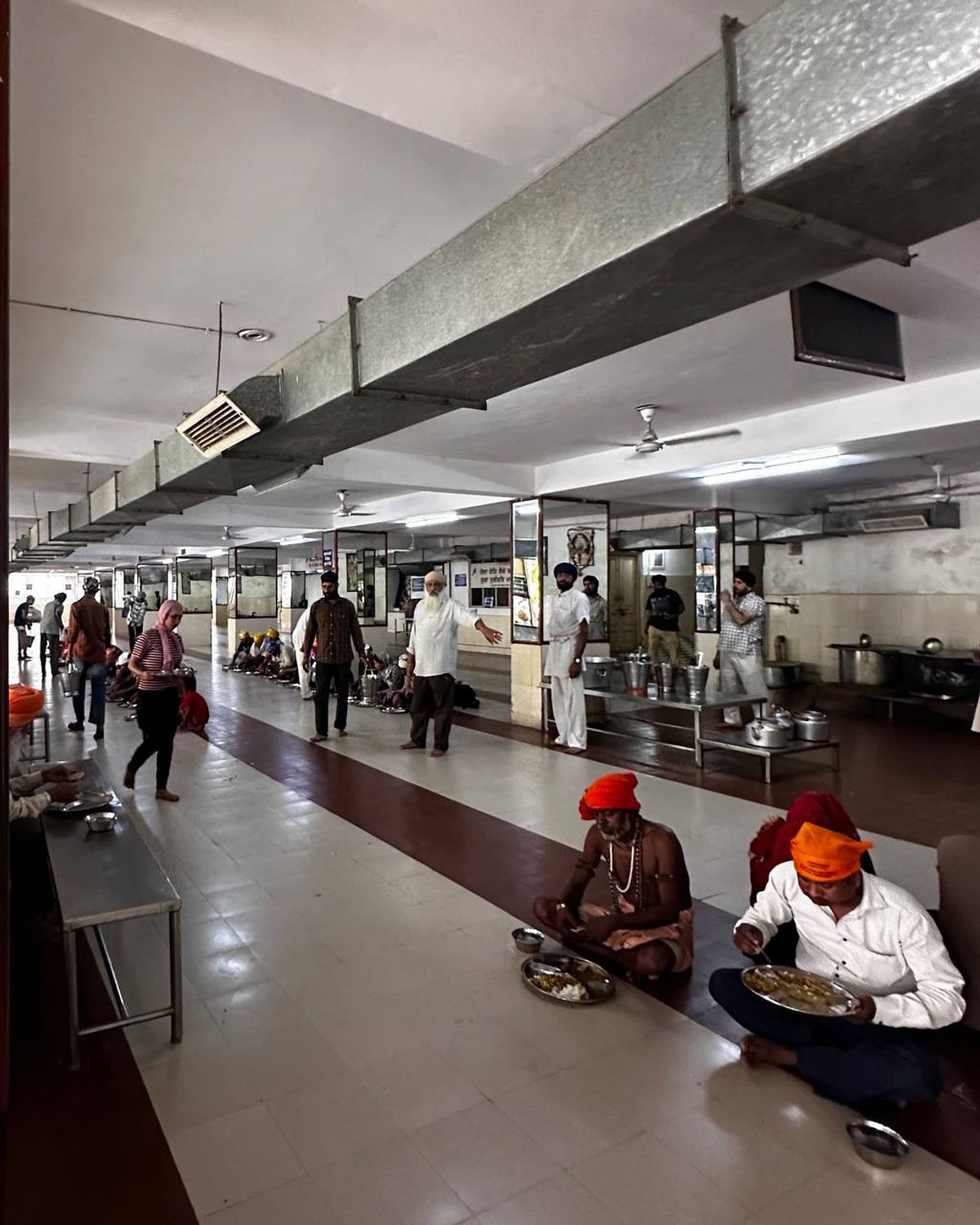
Every gurdwara in the world — from the smallest village temple to the Golden Temple in Amritsar, which feeds 80,000–100,000 people every day — runs a langar. The food is free. Everyone sits on the floor. Everyone eats the same simple vegetarian meal.
There are no VIP sections. No separate seating for donors. No distinction between the family that funded the kitchen that day and the homeless person who wandered in off the street.
This isn't charity in the conventional sense. In Sikh understanding, charity implies hierarchy — someone giving, someone receiving. Langar is sharing. The food belongs to everyone because everyone is equal before God.
Walk into any gurdwara, anywhere in the world, and you will be fed. You don't need to be Sikh. You don't need to believe anything. You don't need to prove need. The only requirement is that you sit on the floor alongside everyone else.
It's been this way for 500 years.
What the Gallery Taught Me
I stood in that Rishikesh gurdwara for a long time, looking at scenes I wished I could unsee.
Children walled up alive. Men sawn in half. Women watching their families destroyed.
It's uncomfortable. It should be.
But the Sikhs who maintain these galleries don't want visitors to leave merely horrified. They want visitors to understand something specific: that faith, for Sikhs, isn't inherited tradition or cultural habit. It's a choice that people have died for — not in some distant mythological past, but in documented historical events, the records of which are preserved in Mughal archives and contemporary accounts.
Every Sikh man or woman who wears the turban and keeps the Five Ks is making a visual statement: I stand where my ancestors stood. I accept the visibility they accepted. I carry the responsibility they carried.
And every gurdwara that operates a langar is continuing something that the persecutors tried to destroy — a community built on radical equality, where the response to centuries of violence is to feed anyone who walks through the door.
The exhibitions are hard to look at. They're supposed to be. Memory that costs nothing tends to fade.
But what stays with me isn't the violence. It's what the Sikhs built despite the violence: temples that welcome everyone, kitchens that feed everyone, a faith tradition that survived attempted extermination to become one of the most distinctive and resilient communities on earth.
Sikhism doesn't ask you to forget what happened. It asks you to understand why it matters — and then to sit down, share a meal, and remember that everyone eating beside you is equal.
There are roughly 25–30 million Sikhs worldwide, the majority in the Indian state of Punjab. Major gurdwaras can be found in most large cities globally. Visitors of all faiths are welcome; the only requirements are to cover your head, remove your shoes, and — if you stay for langar — sit on the floor with everyone else.