For millions of Indian families, a trip to an ashram is essentially what a trip to Disneyland is for Americans — the annual pilgrimage everyone looks forward to. Only instead of roller coasters, there are sunrise meditations. Instead of cotton candy, sattvic meals cooked by volunteers. Instead of fireworks, evening satsangs under the open sky. And instead of going home exhausted, you somehow leave lighter than when you arrived.
The Art of Living International Center near Bangalore is one of the most unusual ashrams in India. Not because it's the largest or the oldest, but because it rewrites the script on what a spiritual community can look like in the 21st century.
An Ashram That Doesn't Ask You to Renounce Anything
Most people carry a mental image of an ashram: spartan rooms, strict silence, early-morning bells, and a general atmosphere that says suffering builds character. The Art of Living ashram on the Panchagiri Hills, about 28 kilometers south of Bangalore, breaks that expectation almost immediately.
The campus spans over 250 acres of landscaped hills, gardens, and paths. There are manicured gardens with lily ponds, waterfalls, and flower beds. There's an amphitheater. A Vedic school. A full-scale kitchen that feeds up to 20,000 people on a regular day and can scale to 60,000 during festivals and large gatherings — all of it run entirely by volunteers. There are evening concerts, lectures, and conversations. There are shops. There's even a travel desk that will arrange your airport transfer.
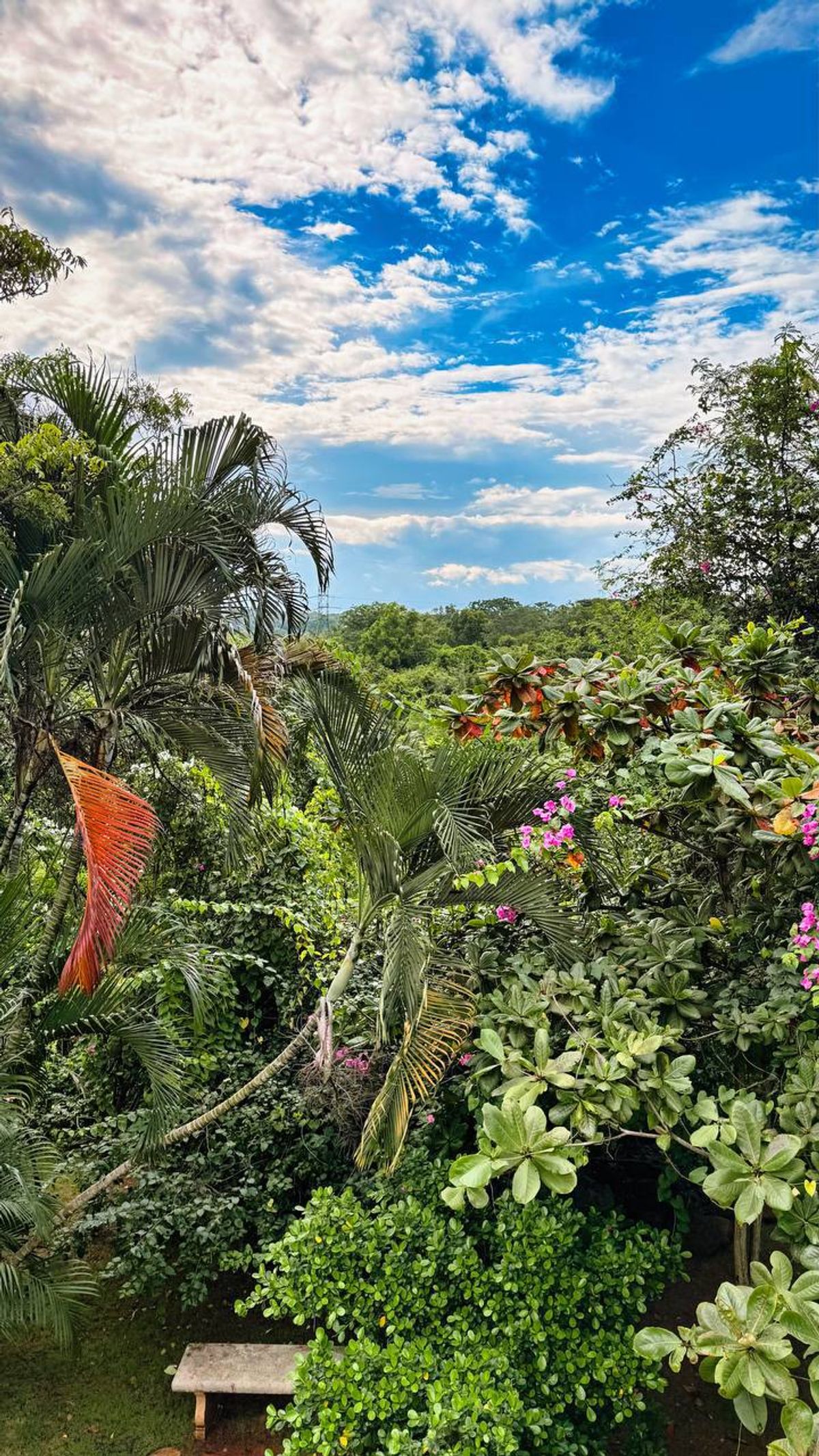
And everywhere you look, people are smiling. Someone is sitting under a tree writing in a notebook. Someone else is helping chop vegetables in the kitchen. A group is doing yoga on a hillside clearing. An elderly couple is walking slowly through the Radha Kunj Garden. And none of it feels forced or performative — it simply feels like people living a life that makes sense to them.
The message here is quiet but unmistakable: spirituality doesn't have to mean austerity and renunciation. Sometimes it means being fully engaged with the richness of life — good food, beautiful surroundings, meaningful work, human connection — but doing it all from a place of inner stillness.
The Man Behind the Smile
The Art of Living Foundation was established in 1981 by Sri Sri Ravi Shankar — a spiritual leader whose mission distills into a single, deceptively ambitious sentence: "A smile on every face."
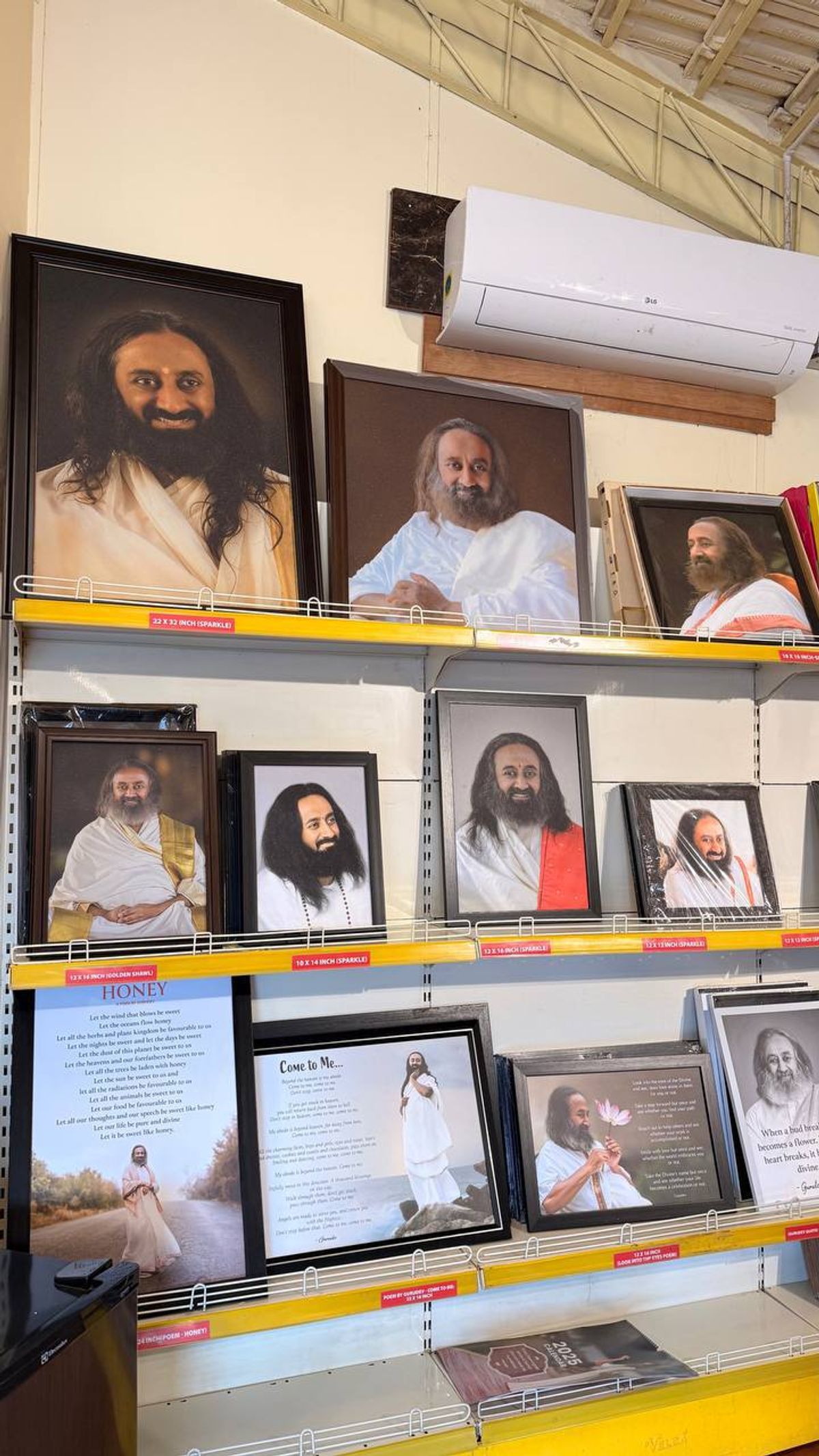
From that simple idea, something enormous grew. The Foundation now operates in over 180 countries. It holds special consultative status with the United Nations Economic and Social Council. Its volunteers have taught breathing and meditation techniques in prisons, disaster zones, conflict areas, and refugee camps — not as religious instruction, but as practical tools for managing stress, trauma, and the ordinary difficulty of being human. In India alone, the organization's service projects have sent 70,000 tribal children to school, supported river rejuvenation efforts across 43 rivers, empowered over 200,000 rural youth with livelihood skills, and brought solar lighting to more than 700 villages.
The cornerstone of all Art of Living programs is a breathing technique called Sudarshan Kriya, which Sri Sri Ravi Shankar developed during a period of silence in 1982 in Shimoga, Karnataka. The name combines two Sanskrit words: Sudarshan (right vision — seeing who you truly are) and Kriya (purifying action). It's a rhythmic breathing practice that, according to peer-reviewed research published at institutions including Yale and Harvard, measurably reduces cortisol levels, improves sleep quality, and increases overall life satisfaction. Millions practice it daily worldwide.
But here's what makes the Art of Living model different from many spiritual organizations: the vast majority of its officers, teachers, and operational staff are volunteers. This isn't a guru-economy built on transactions. It's a community built on seva — the Sanskrit concept of selfless service.
The Heart of the Campus: Vishalakshi Mantap
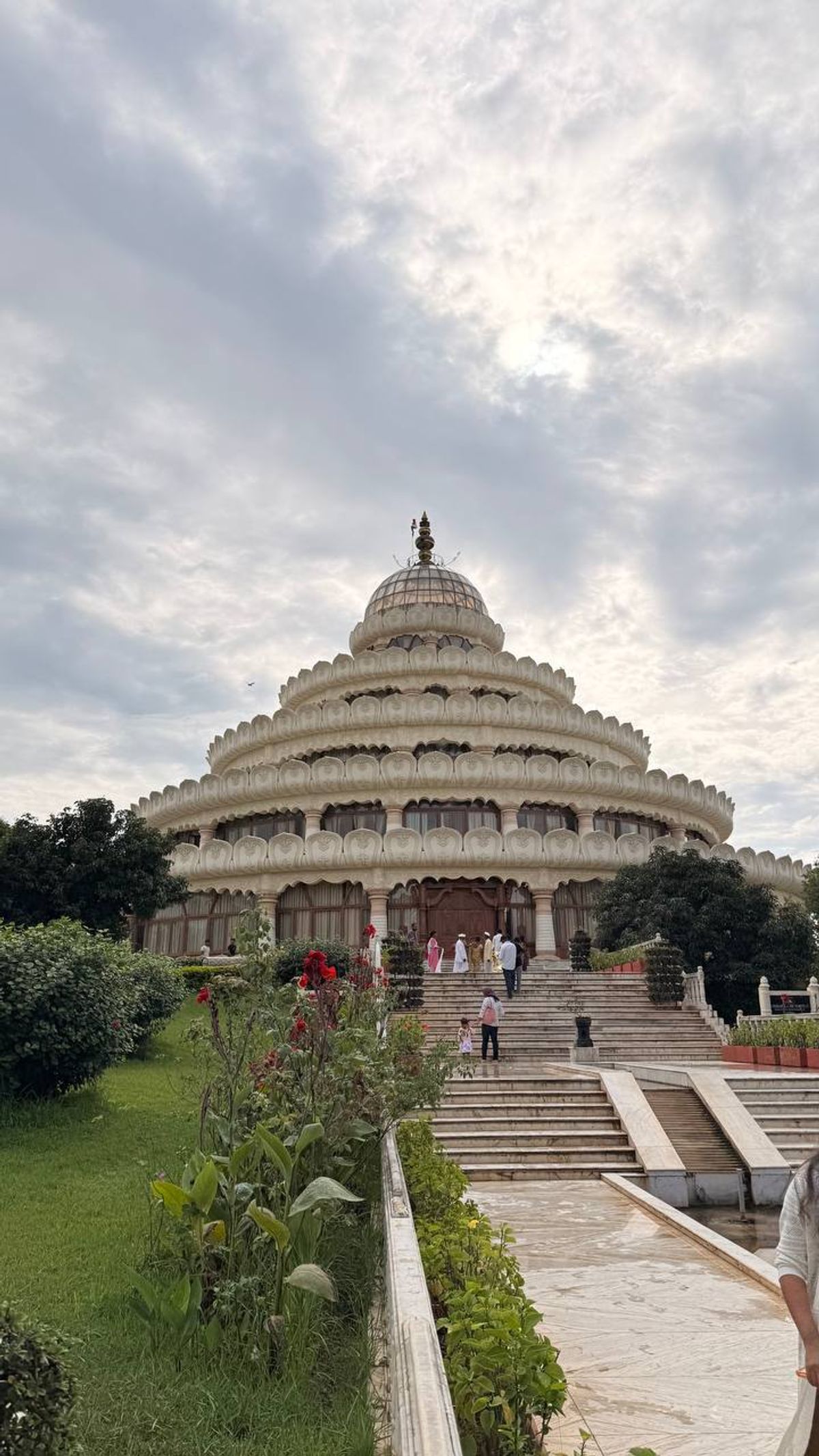
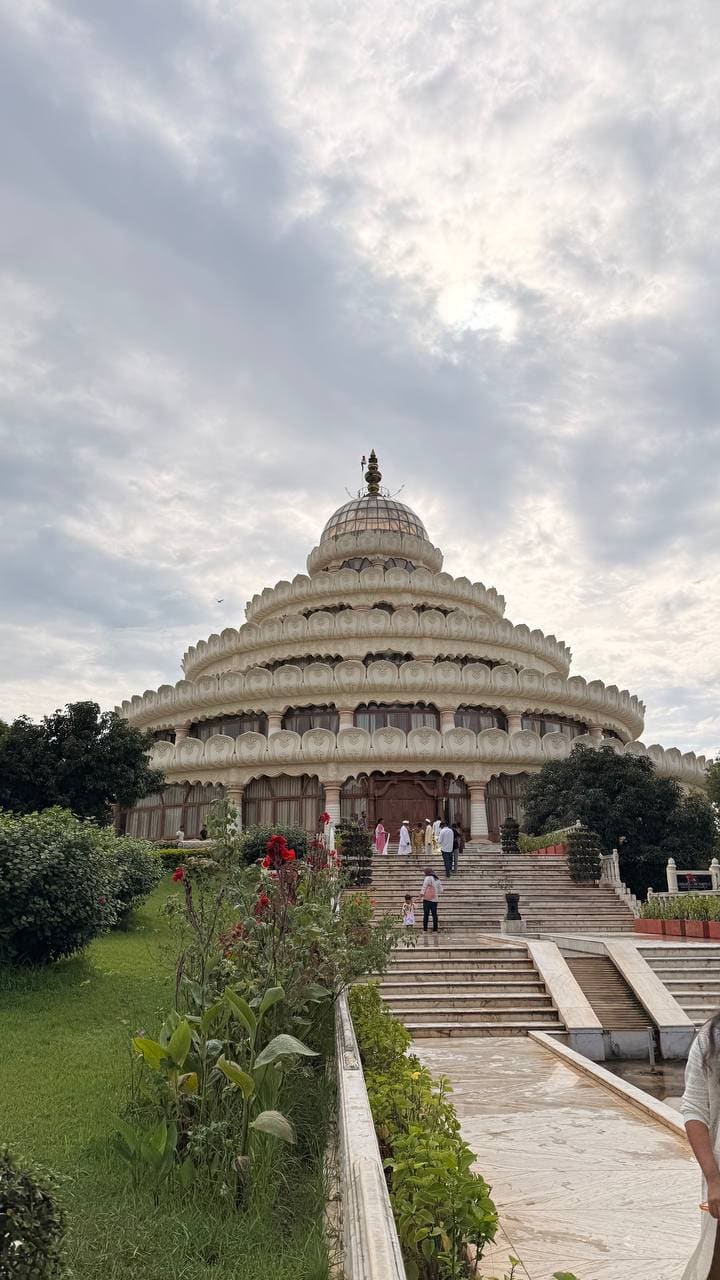
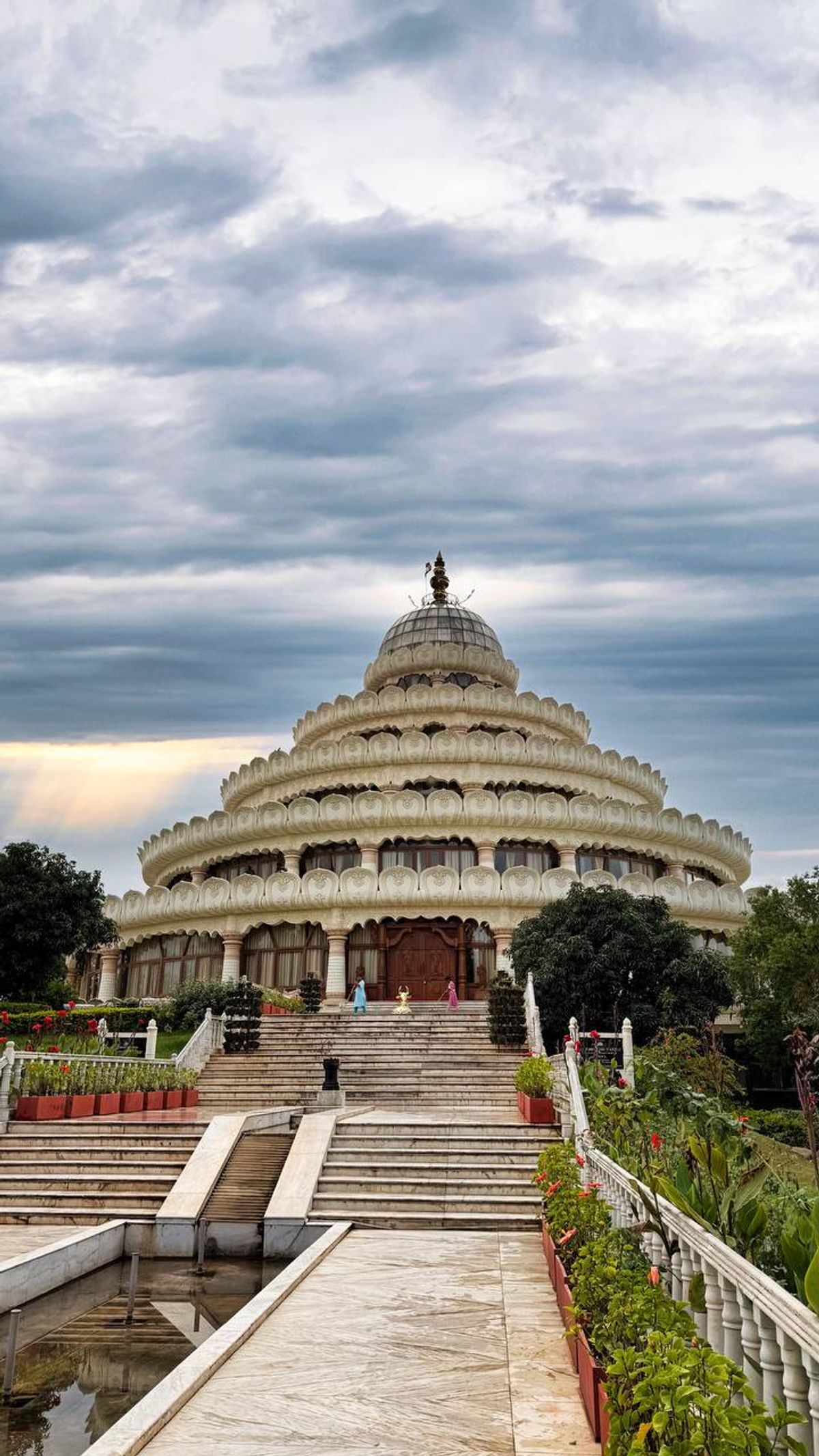
The architectural centerpiece of the ashram is the Vishalakshi Mantap — a five-tiered meditation hall personally designed by Sri Sri Ravi Shankar and named after his mother. It's a structure that somehow merges ancient Vedic architectural principles with contemporary engineering, and the result is genuinely striking: a lotus-shaped edifice with an entirely white marble floor, topped by a glass dome crowned with a 15-foot kalash — reported to be the largest of its kind in Asia. The hall was built with the collective effort of 7,000 workers and volunteers.
Inside, the experience is one of spaciousness and quiet — a place designed not to impress but to dissolve the noise you brought in from outside. Sitting on the cool marble floor, surrounded by soft light filtering through the dome, you understand why people describe it as "coming into the lap of the Mother Goddess," as the founder himself once put it.
What a Day Looks Like
The ashram runs on a rhythm designed to make every part of the day a kind of practice. A typical daily schedule flows like this: group spiritual practices — yoga, Sudarshan Kriya, and meditation — from 6:00 to 8:00 AM. Breakfast at the Annapoorna dining hall. A period of seva (volunteering) from 9:00 to 10:00 AM. Then programs, courses, and deeper practice sessions through the middle of the day. Lunch and rest. More programs or personal time in the afternoon. Evening satsang — communal singing, talks, meditation — often under the open sky or in the Mantap. Dinner. Sleep.
Guests are encouraged to volunteer for two to three hours daily. Volunteering can mean anything: helping in the kitchen, gardening, setting up the meditation hall, assisting with program logistics, translating for international visitors. There's a seva desk that helps newcomers find their place. The idea is not that you're providing free labor — it's that through serving others without expectation, something shifts inside you. The ego loosens its grip. You notice you're less self-focused. And in that space, something quieter and more real becomes available.
The ashram is entirely substance-free: no alcohol, tobacco, or non-vegetarian food on campus. And all electronic devices work fine — there's no rule about surrendering your phone. The renunciation here, if any, is purely internal.
"The Ashram Became My Home" — Adela's Story
To understand what the Art of Living community actually feels like from the inside, I spoke with Adela — a Russian woman who came for a two-week meditation course and never quite left.
"I first came to the ashram in September 2022," she told me. "Just for two weeks — an advanced meditation course. I had a full life back in Moscow: friends, work, everything was good. India wasn't really pulling me. I had a return ticket."
But at a gathering with Gurudev, people around her started saying she should stay and do seva. She resisted — the ticket was booked, the plan was made. "Gurudev just looked at me and gave this knowing little smile. And from that smile, I understood — I need to stay."
She stayed for three months. When she returned to Russia, something had changed. "I realized I wanted to live in a warm country. And that warmth isn't just climate — it's energetic. In Russia, and in many other countries, the energy feels denser, heavier. Here, near the ashram, everything is softer. Breathing feels easier. Thoughts feel cleaner."
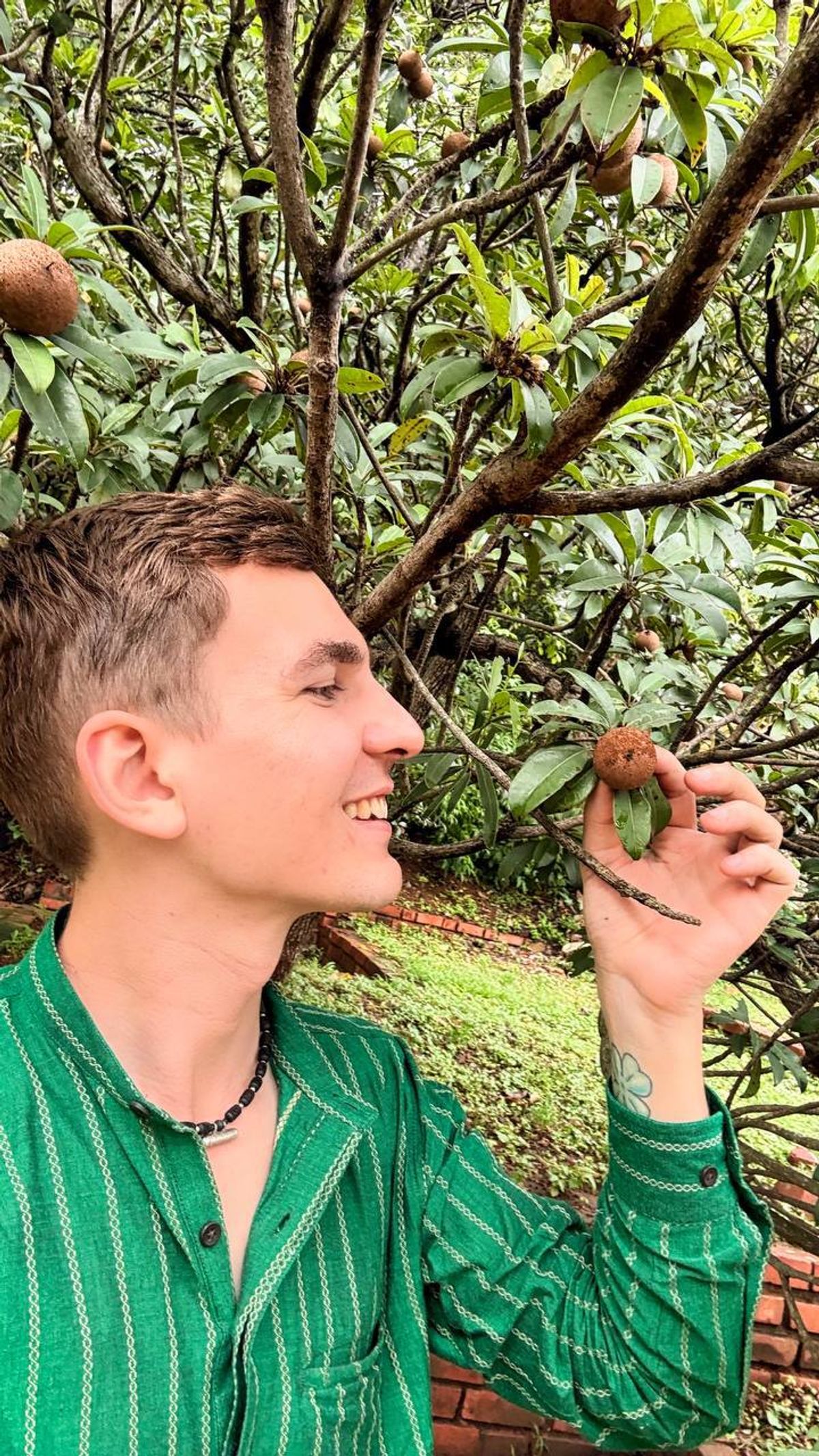
Today Adela lives near the ashram, works remotely, and also teaches at an Indian school. What keeps her, she says, isn't comfort or escapism — it's direction. "What changed most were my values. Before, everything was about achievement. The desires are still there, but the feverishness is gone. Everything happens with less effort now."
She practices breathwork and meditation daily, wherever she is. And from that calm, she says, decisions come more naturally, and her intuition has sharpened to an almost uncanny degree. "I sometimes test it: I'll get into a rickshaw and write down how much I think the driver will charge. For six months straight, I've been exactly right. I don't know how it works, but it works."
When I asked her to describe the ashram in one word, the answer was immediate: "Home."
"Even when I'm living outside the ashram, when I come back to India, I know — I've come home. We call Gurudev 'grandpa' among ourselves. A friend of mine, also a teacher, spent a whole year doing seva at the ashram. When she applies to return, in the form field that says 'destination,' she writes: 'To the village, to grandpa.' And that captures it perfectly. The ashram really is a second family."
There's a quote from Gurudev that she carries with her: "Pain is inevitable. Suffering is optional." "We can't prevent what happens to us," Adela explained. "But whether we suffer through it or move through it with awareness — that's our choice. For me, that's about being the creator of your own life."
When I asked about the difference between practicing at the ashram versus at home, she was candid. "In the ashram, you're constantly in that energy field. It's easier to wake up early, do your practices, meditate. You can always find time to just sit under a tree and be quiet. You're always in the flow of seva — sweeping, translating, accompanying someone. Even if you live outside the ashram campus, you're still in that stream."
"When I leave, I feel the difference immediately. In Russia, it takes much more effort to stay in that state. Very few people around you are practicing, and you're swimming against the current."
Her word for her current state of being: "Calm. I don't try to control everything. I don't fight life. I just live and do what feels right."
Practical Information for Visitors
Location: Art of Living International Center (Ved Vignan Maha Vidya Peeth), 21st KM Kanakapura Road, Panchagiri Hills, south of Bangalore, Karnataka. Approximately 28 km from Bangalore city center and roughly 60 km from Kempegowda International Airport.
Getting there: The ashram runs a shuttle service connecting it to key city points including JP Nagar Metro Station, Banashankari, and the international airport. Sumeru Travel Solutions, based on the ashram campus, can arrange airport pickups, drop-offs, and all travel logistics. Taxis via Uber or Ola are also a straightforward option from anywhere in Bangalore.
Who can visit: The ashram is open to visitors of all nationalities and backgrounds. Foreign visitors need a passport with a valid Indian visa (or PIO/OCI card). You'll fill out a Form-C upon arrival as per Indian government guidelines — bring a photocopy of your passport and visa to speed things up.
Programs: The ashram offers a wide range of residential programs for all levels. The Happiness Program (introductory breathwork and meditation) is the most popular entry point. Beyond that: Sahaj Samadhi Meditation, Silence Retreats, advanced meditation programs, Sri Sri Yoga intensives, wellness programs, corporate retreats, and children's programs. Check the official website for the current schedule and booking.
Accommodation: On-campus residential rooms are available but book up quickly — reserve well in advance, especially around festivals and Gurudev's presence on campus. If the ashram is full, there are hotels and guesthouses in the surrounding area accessible by a short auto-rickshaw or taxi ride.
Food: The Annapoorna dining hall serves three sattvic (pure vegetarian) meals daily. The food is cooked with steam from eco-friendly briquette boilers and is entirely volunteer-prepared. On a normal day, the kitchen cooks for 20,000 people. Expect simple, nourishing South Indian and continental dishes — no charge beyond your program fee.
Currency: Only Indian rupees are accepted on campus. There's a State Bank of India branch and a foreign currency exchange service at Sumeru Travel Solutions on the ashram grounds.
Daily schedule: Group practices (yoga, Sudarshan Kriya, meditation) from 6:00–8:00 AM. Breakfast 8:00–9:00 AM. Seva 9:00–10:00 AM. Programs through the day. Evening satsang. Information Centre hours: 9:00 AM to 9:00 PM daily.
Rules: The campus is entirely substance-free — no alcohol, tobacco, cigarettes, or non-vegetarian food. There's no phone surrender policy, but you'll probably find yourself using it less.
Best time to visit: Bangalore's climate is pleasant year-round compared to much of India. October to February is ideal — cool, clear mornings perfect for outdoor meditation. Avoid peak summer (March–May) if heat bothers you. The monsoon months (June–September) bring green landscapes but occasional heavy rain.
Cost: Program fees vary by course type and duration. The introductory Happiness Program is the most affordable entry point. Accommodation and meals during programs are typically included in the fee. Check the official Art of Living website for current pricing.
How long to stay: A minimum of three to five days is recommended to settle into the rhythm. Many visitors stay for one to three weeks. Some, like Adela, come for two weeks and find their way into a new life entirely.