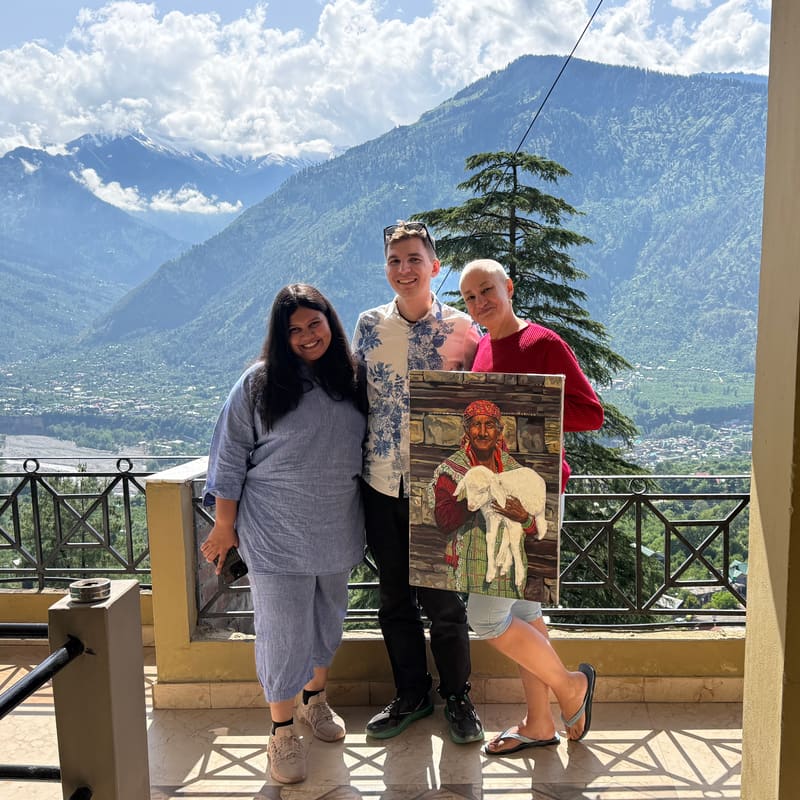
There is a Vedic saying: whoever utters the name of Vrindavan with faith already receives spiritual benefit, and whoever sets foot on its land is never the same again.
I've been to Vrindavan many times. It has become an annual pilgrimage for me — one of those places I keep returning to not because I've run out of destinations, but because the city has a way of showing me something new every time. The same alley, the same temple, the same chai stall on the corner where the old man greets me with "Radhe Radhe" as if I'd never been away.
But this trip was different. It had the feel of something arranged by forces rather larger than a flight booking.
When the Universe Books Your Itinerary
It started, as these things always do, without a plan.
I had a few free days — the kind that appear suddenly in India, when a meeting cancels or a project shifts by a week, and you find yourself staring at an empty calendar. In a country where I've explored more than 40 cities, that kind of gap is dangerous. It means you'll end up somewhere.
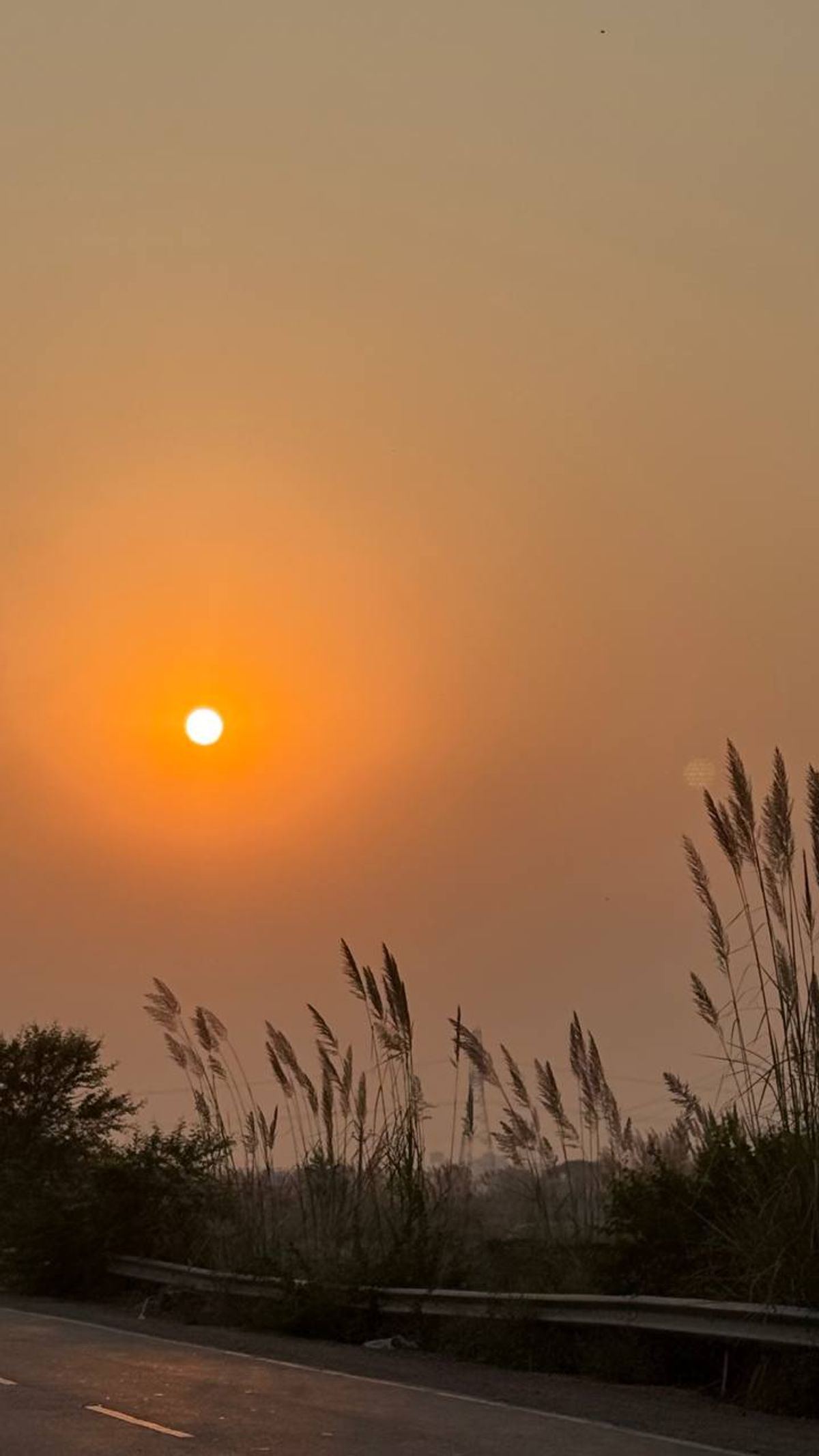
This time, somewhere meant Vrindavan. I checked the Hindu calendar and saw it was Kartik — the eighth lunar month, one of the most sacred periods of the Hindu year. Kartik coincides with Diwali, and during this period Vrindavan moves from its usual state of quiet spiritual focus into something close to ecstatic.
That's when the synchronicities kicked in. The same day I decided to go, I learned that Radhanath Swami Maharaj — the American-born Vaishnava guru whose memoir The Journey Home was one of the books that first drew me to India — was giving a lecture in Govardhan, just 26 kilometers from Vrindavan. That very day.
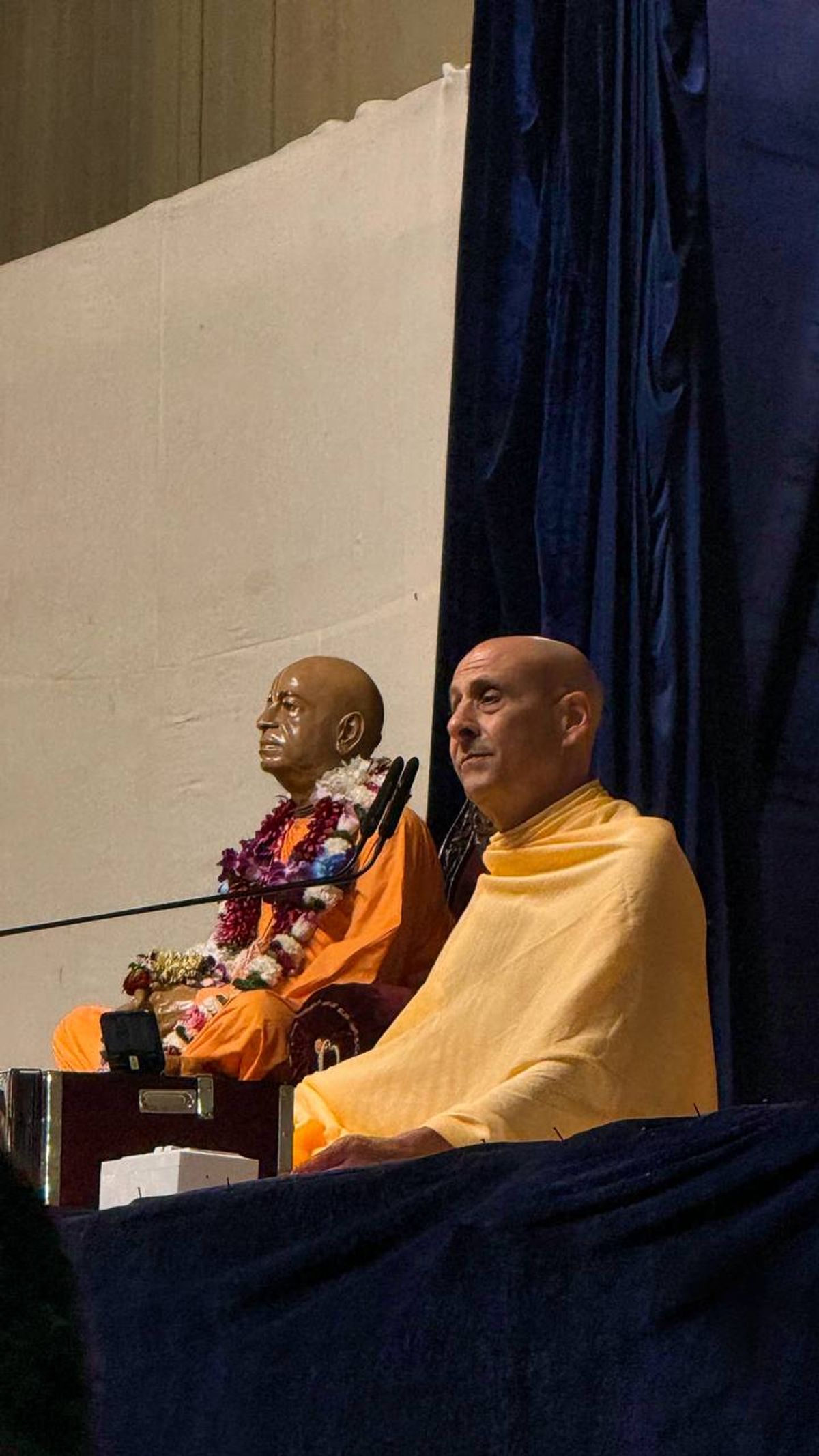
If you've read The Journey Home, you know the story: a young American hitchhikes across Europe in the 1970s, finds his way to India, lives in Himalayan caves with yogis, and eventually becomes one of the most respected spiritual teachers in the world. It's the kind of book that makes you quit your job and buy a one-way ticket.
Finding accommodation during Kartik should have been impossible — every guesthouse, ashram, and homestay in the region fills up weeks in advance. And yet a room appeared. Last minute. In the right place. As if it had been reserved by someone who knew I was coming before I did.
Three Days of Riding, Praying, and Paying Attention
I rented a Royal Enfield Himalayan from a shop on the main road — the same model I'd ridden three years earlier on my first visit to Govardhan. There's something about riding a motorcycle through the Braj countryside that no car, rickshaw, or bus can replicate.

Over three days I covered more ground than I'd planned and far less than I'd expected — because Vrindavan has a way of slowing you down precisely when you think you're in a hurry.
The first day belonged to Govardhan. I rode 26 kilometers through fields and small villages, parked the Enfield near a vast tent, and stepped inside to find thousands of people sitting in hushed attention as Radhanath Swami spoke about Krishna's love and the nature of Vedic truth.
The second day began at 4:30 AM with Mangala Aarti at ISKCON's Krishna-Balarama Mandir — the pre-dawn ceremony that remains one of the most intense spiritual experiences Vrindavan has to offer. At sunrise I took a boat out on the Yamuna and watched the ghats light up in pink and gold. I fed monkeys and cows. I meditated at Seva Kunj — twice, because once didn't feel like enough.
The third day took me back to Govardhan for the parikrama — the 21-kilometer circumambulation of the sacred hill — which I completed on the motorcycle, stopping at Radha Kund and Shyama Kund to meditate.
What Vrindavan Actually Is
Vrindavan is the living heart of the Vaishnava tradition. It is the city in Uttar Pradesh where Lord Krishna is believed to have spent his childhood and youth. Here he herded cows, played his flute, teased the gopi (milkmaids), and performed his first divine deeds.
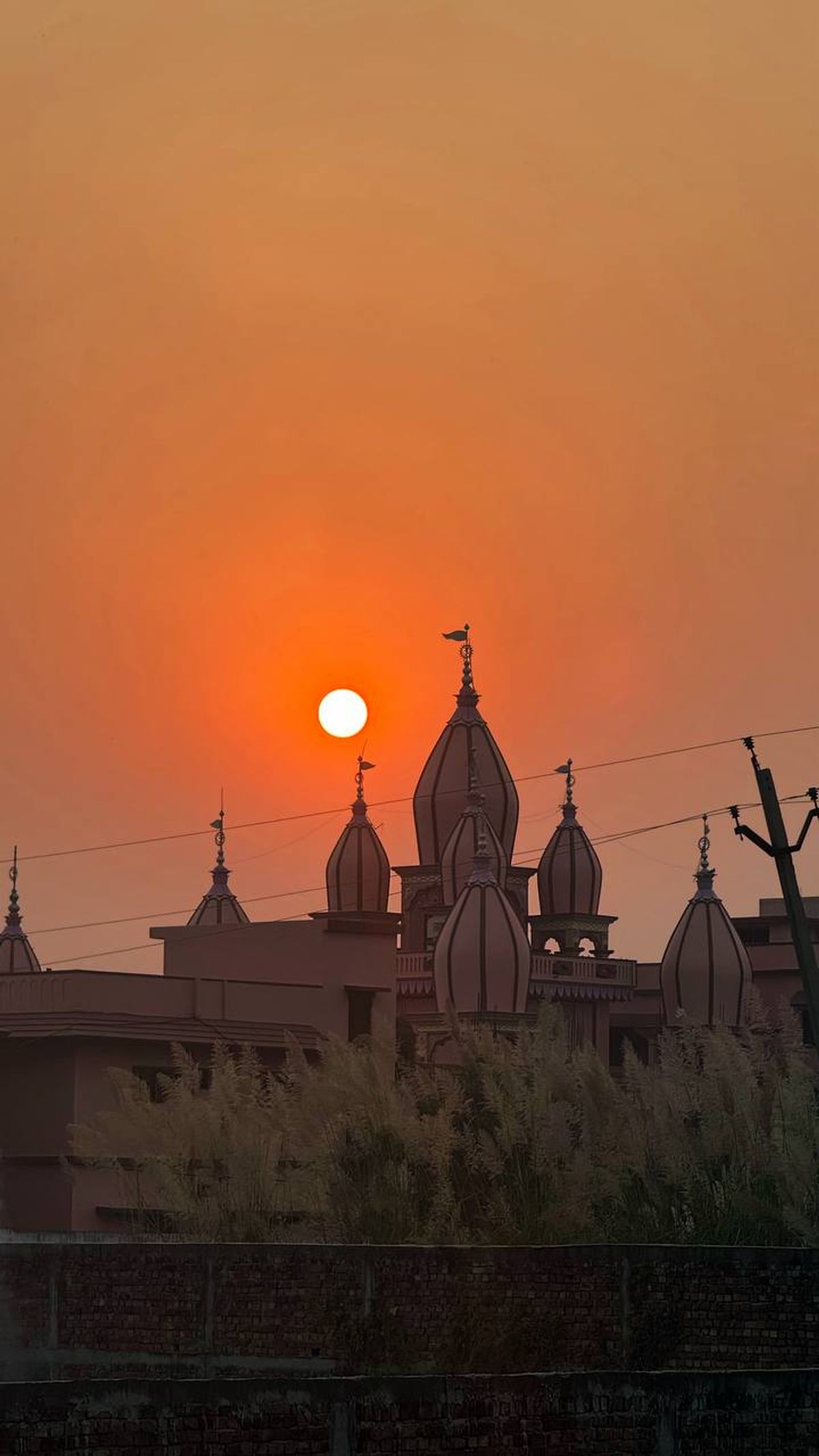
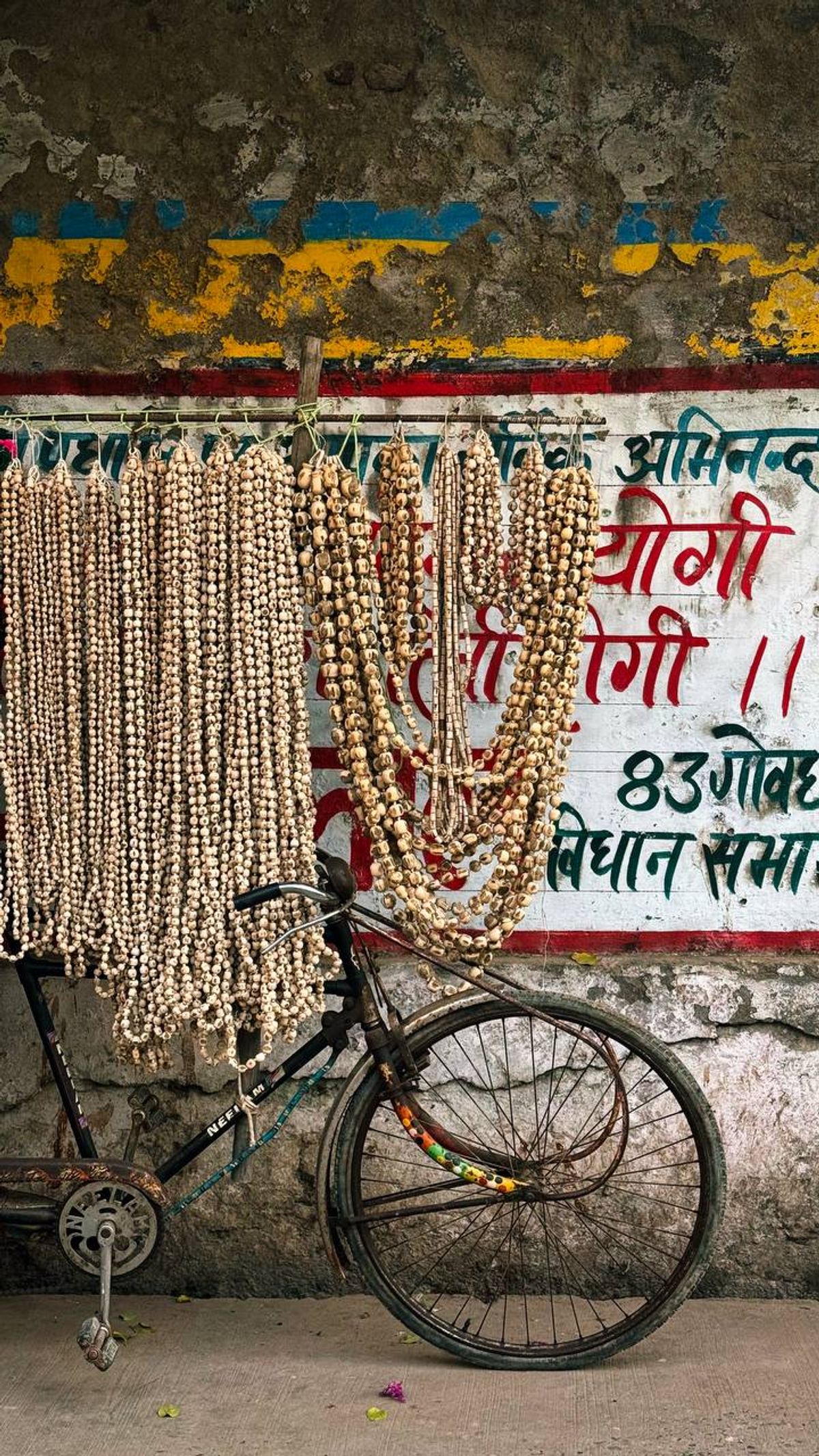
The name itself carries meaning. Vrinda means tulsi (holy basil), and van means forest. Vrindavan was once a dense, aromatic forest filled with sacred tulsi plants where, according to tradition, the invisible and eternal meetings of Krishna and Radha took place.
Today, Vrindavan is a city of approximately 5,500 temples dedicated to Radha and Krishna. The city sits on the west bank of the Yamuna River, about 15 kilometers north of Mathura and 125 kilometers from Delhi. Its population is modest — around 63,000 — but on any given day, the number of pilgrims can double or triple that figure.
Radhe Radhe: The Greeting That Makes You Part of the City
There's something deeply warm about how Vrindavan welcomes you — with the words "Hare Krishna" or "Radhe Radhe."
These greetings sound everywhere: in shops, on streets, in temples, from rickshaw drivers and sweet-sellers and the old woman sitting cross-legged outside Banke Bihari temple who has been there every single time I've visited.
And when you answer with the same — "Hare Krishna" or "Radhe Radhe" — something shifts. You become part of the invisible fabric of Vrindavan, where there are no strangers.
The Temples: Five Centuries of Devotion
ISKCON Vrindavan is, for many Western visitors, the gateway to Vrindavan's spiritual world. Founded in 1975 by Srila A.C. Bhaktivedanta Swami Prabhupada, this is a full spiritual campus with Prabhupada's Samadhi, a museum, prasad hall, and sacred tulsi gardens.
Banke Bihari Mandir is the temple most associated with Vrindavan. Built in 1862, it houses a self-manifested murti of Krishna. What makes it unique is the curtain ritual: the deity is kept behind a curtain that priests open and close throughout the day, never leaving it open for more than a few moments.
Prem Mandir is the visual spectacle — a massive white marble complex, one of the ten largest Hindu temples in the world. In the evenings, it's illuminated with a light show that transforms the white marble into a canvas of color.
Seva Kunj: The Secret Garden
If I could send every visitor to Vrindavan to one place — just one — I'd send them to Seva Kunj.
It's a garden in the very heart of Vrindavan that somehow remains almost unknown to most tourists. The atmosphere is meditative in a way the word "meditative" can't quite capture — the silence of a place inhabited by something other than noise.
A pedestrian path runs around its perimeter, fenced off from the surrounding city, and behind the fence lies an untouched green oasis full of monkeys, peacocks, and birds. The trees here are said to be the very groves where Krishna and the gopis performed the raaslila.
In a city of 5,500 temples and hundreds of thousands of pilgrims, Seva Kunj is the quiet room. Find it. Sit in it. Let it do its work.
Govardhan: The Sacred Hill
No Vrindavan trip is complete without Govardhan — the sacred hill 26 kilometers away that Krishna, according to the Bhagavata Purana, lifted with one finger to protect the villagers from the wrath of Indra.
Devotees come year-round for the parikrama — a 21-kilometer circumambulation that can be done on foot, by car, or on a Royal Enfield. The route passes Radha Kund and Shyama Kund, two sacred ponds with a particularly powerful atmosphere for meditation.
Practical Guide: Getting There and Surviving There
Getting there: By car from Delhi, the drive takes approximately three hours via the Yamuna Expressway. By train, the nearest major station is Mathura Junction, about 17 kilometers from Vrindavan.
Accommodation: During Kartik, Holi, and Janmashtami, book weeks or months ahead. Options range from the ISKCON guesthouse to Airbnb apartments and increasingly upscale hotels.
Food: Entirely vegetarian. ISKCON's Govindas Restaurant serves excellent multi-cuisine vegetarian food. Street food is abundant: lassi, jal jeera, the famous Mathura pedas.
What to know: The local monkeys are fearless and very interested in your belongings. Hide your food and keep a tight grip on glasses and phone. Dress modestly. Photography is restricted or prohibited inside most temples.
Best time: October through February. Kartik (October–November) is the spiritual sweet spot. Summer temperatures regularly exceed 45 °C.
What Vrindavan Teaches You
Every time I leave, I carry the same feeling: that something has opened that had been closed. A door, a window, a valve in the chest I hadn't realized was shut.
I think it's the greetings. "Radhe Radhe." "Hare Krishna." Thousands of times a day, from thousands of people — each one a small reminder that in this corner of the world, the default assumption is that everyone you meet is walking toward something sacred.
Vrindavan did its thing again. It opened the heart as only holy places can. Go. And when the parrot appears at your window, know that you're in the right place.