Some cities are defined by their skylines. Others by their food, festivals, or famous faces. Kolkata is defined by the way it moves.
There are two icons of this city that don't just carry passengers — they carry a century of memory. Two living symbols that turn ordinary streets into something cinematic, something you want to frame and keep forever.
The yellow Ambassador taxi. And the tram.
Both are vanishing. Both are irreplaceable. And both deserve far more than a fleeting Instagram story.
The Yellow Ambassador Taxi: India's King of the Road
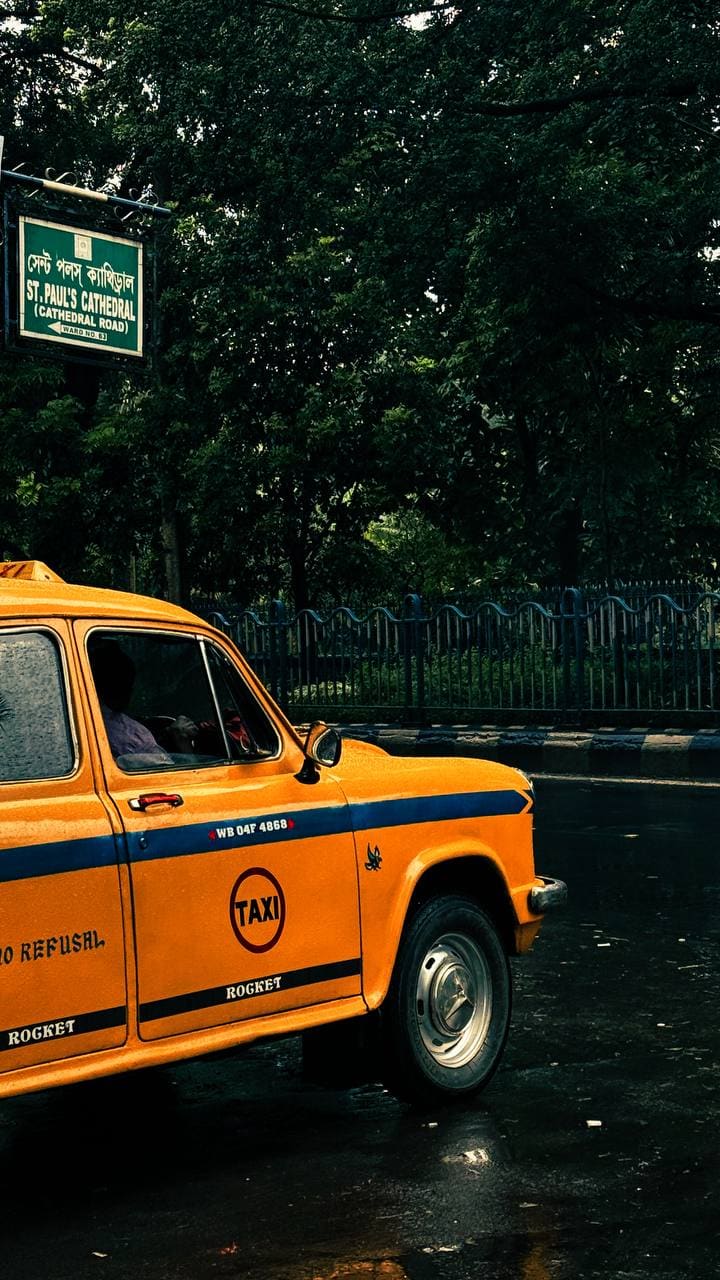
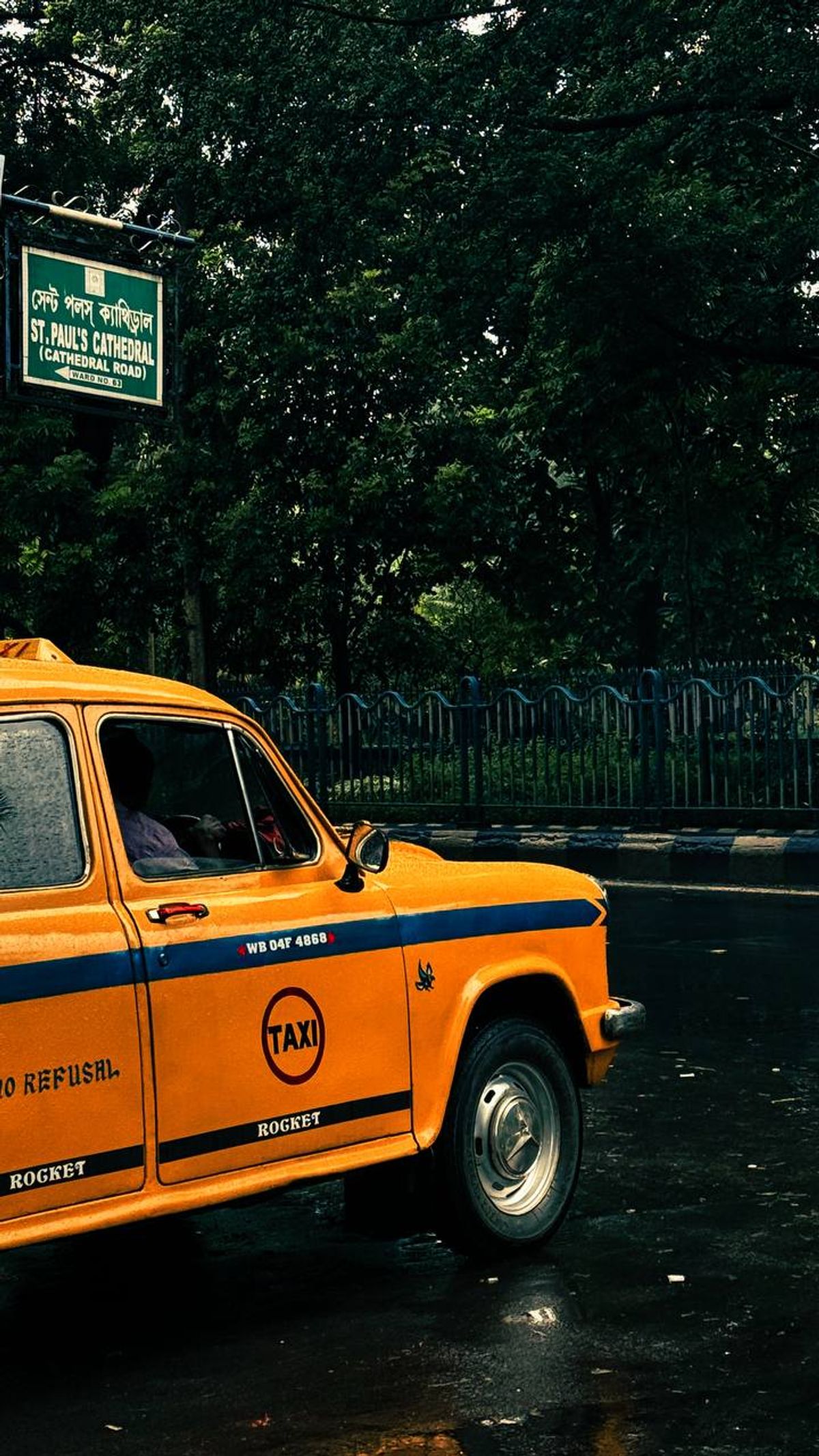
If you've ever seen a photograph of Kolkata — a real one, not a stock image — chances are a yellow Ambassador was somewhere in the frame. Parked at a crumbling intersection. Gleaming under monsoon rain. Waiting outside a colonial-era mansion with the patience of someone who has nowhere else to be.
The Hindustan Ambassador was manufactured from 1958 to 2014, almost entirely unchanged. Its design was based on the British Morris Oxford Series III — a car that Britain itself forgot decades ago, but India turned into a national treasure.
Why the Ambassador Matters
This wasn't just a car. It was a statement.
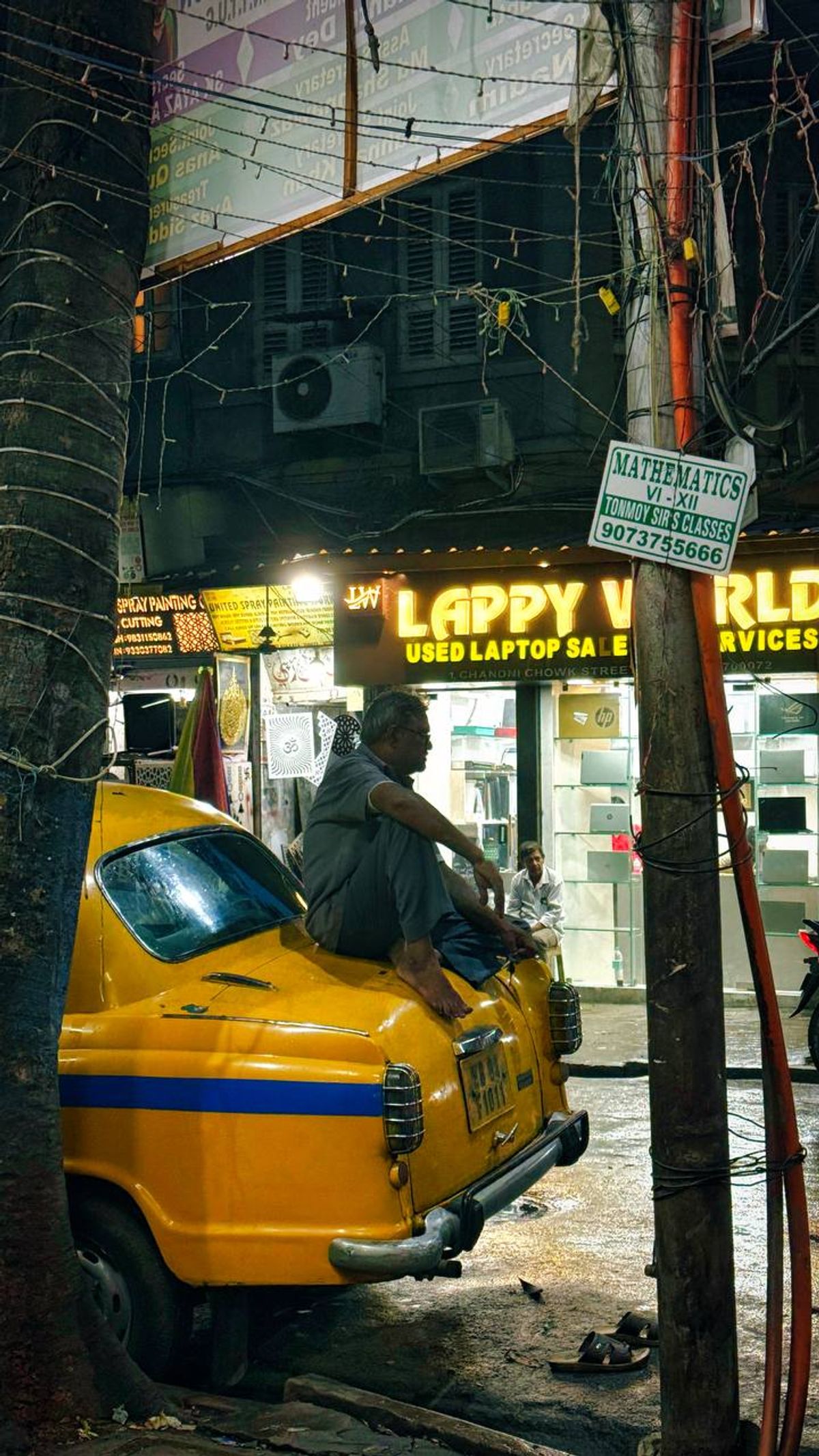
Ministers rode in Ambassadors. So did taxi drivers. It was the vehicle of prime ministers and street vendors alike, earning it the nickname "King of the Road." In a deeply hierarchical society, the Ambassador was an unlikely equalizer — spacious enough for a dignitary's entourage, tough enough for Kolkata's cratered streets.
Everything about it was analog and unapologetic. The steering wheel had that unmistakable play — a gentle looseness that seasoned drivers wore as a badge of honor. The seats were upholstered in fabric that had likely survived multiple generations of passengers. The doors, some claimed, were lined with plywood. And the overall aesthetic? Pure vintage charm that no modern car could replicate.
In Kolkata, while other Indian cities transitioned to Maruti Suzukis and Hyundais, the yellow Ambassador held its ground. It became as synonymous with the city as London's black cabs or New York's yellow taxis. The British automobile show Top Gear declared them the best taxis in the world in 2013 — and anyone who has actually ridden in one would understand why.
A Farewell in Slow Motion
The Ambassador's story is now entering its final chapter. Hindustan Motors ceased production in 2014. The Uttarpara plant near Howrah, where every Ambassador was born, fell silent. And in Kolkata, a 2009 High Court order mandated that commercial vehicles older than 15 years must be retired.
The numbers tell the story: from over 20,000 yellow Ambassador taxis just a few years ago, fewer than 2,000 are expected to remain by the end of 2025. By 2027–2028, all original yellow Ambassador taxis will be permanently phased out.
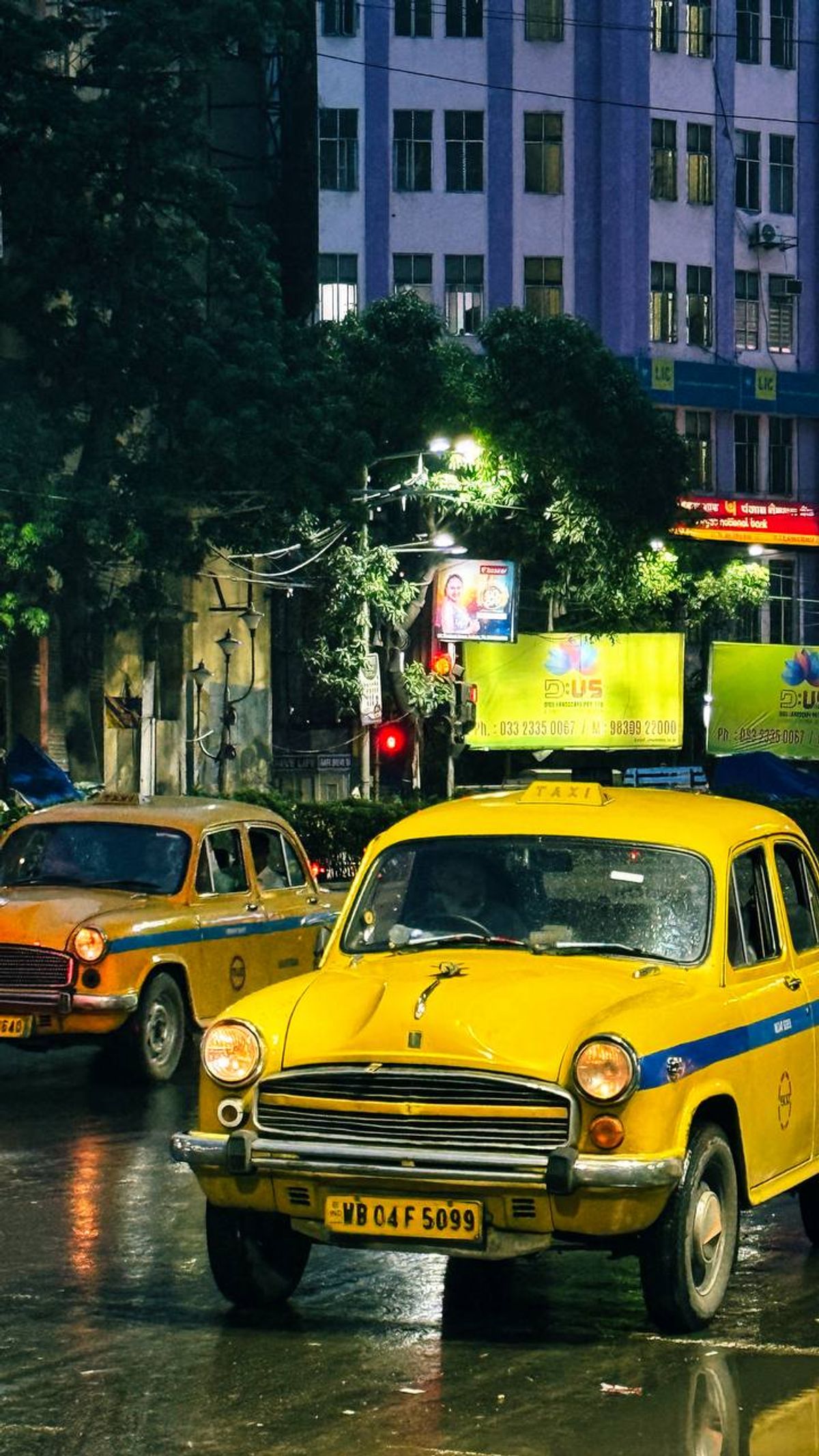
The West Bengal government has introduced "Yellow Heritage Cabs" — Maruti Suzuki Wagon Rs painted in the same iconic yellow, adorned with images of Victoria Memorial and Howrah Bridge. They can be booked through the government's Yatri Sathi app. It's a respectful attempt at preservation.
But locals know the truth. A yellow Wagon R is not an Ambassador. The color is there, but the soul is missing.
Photographing an Icon
If you're a photographer, a traveler, or simply someone who appreciates objects that carry time within them, the remaining Ambassador taxis of Kolkata are a gift.
Find them at intersections, under monsoon skies, against the backdrop of crumbling colonial mansions. At dawn, when the city is still waking up and the light catches their rounded hoods. During Durga Puja, when they become festival taxis, ferrying families from pandal to pandal.
They are endlessly photogenic. Not because they're beautiful in the conventional sense — but because they're real. Every dent, every patch of worn paint, every rusted chrome detail is a chapter of the city's autobiography.
Shoot them while you can. This is a visual code that won't exist for much longer.
The Kolkata Tram: Asia's Oldest Electric Tramway
Now let's talk about the other icon — one that moves even slower, carries even more history, and somehow feels even more fragile.
Kolkata's tram is India's only surviving tram system. It is also the oldest operating electric tramway in Asia. Let that sink in. In a country of 1.4 billion people, with cities racing to build bullet trains and metro networks, one city still runs trams.
A Timeline That Spans Three Centuries
The first tram line in Kolkata opened on February 24, 1873. It was horse-drawn — a modest 3.9-kilometer route from Sealdah to Armenian Ghat. The horses, imported from Kabul, struggled in Kolkata's tropical heat. The service was short-lived.
But the idea survived. In 1880, the Calcutta Tramway Company was established. Steam engines were briefly experimented with in 1882. And then, in 1902, came the revolution: Kolkata became the first city in Asia to operate an electric tram.
At its peak in the 1960s, the system had 37 routes and over 400 trams in daily service, connecting Kolkata and Howrah across the Hooghly River. Trams even crossed the Howrah Bridge — a detail that's almost impossible to imagine today.
Then the decline began. Kanpur shut down its trams in 1933. Chennai followed in 1953. Delhi in 1962. Mumbai in 1964. One by one, Indian cities turned their backs on trams.
Kolkata refused.
What Riding a Kolkata Tram Feels Like
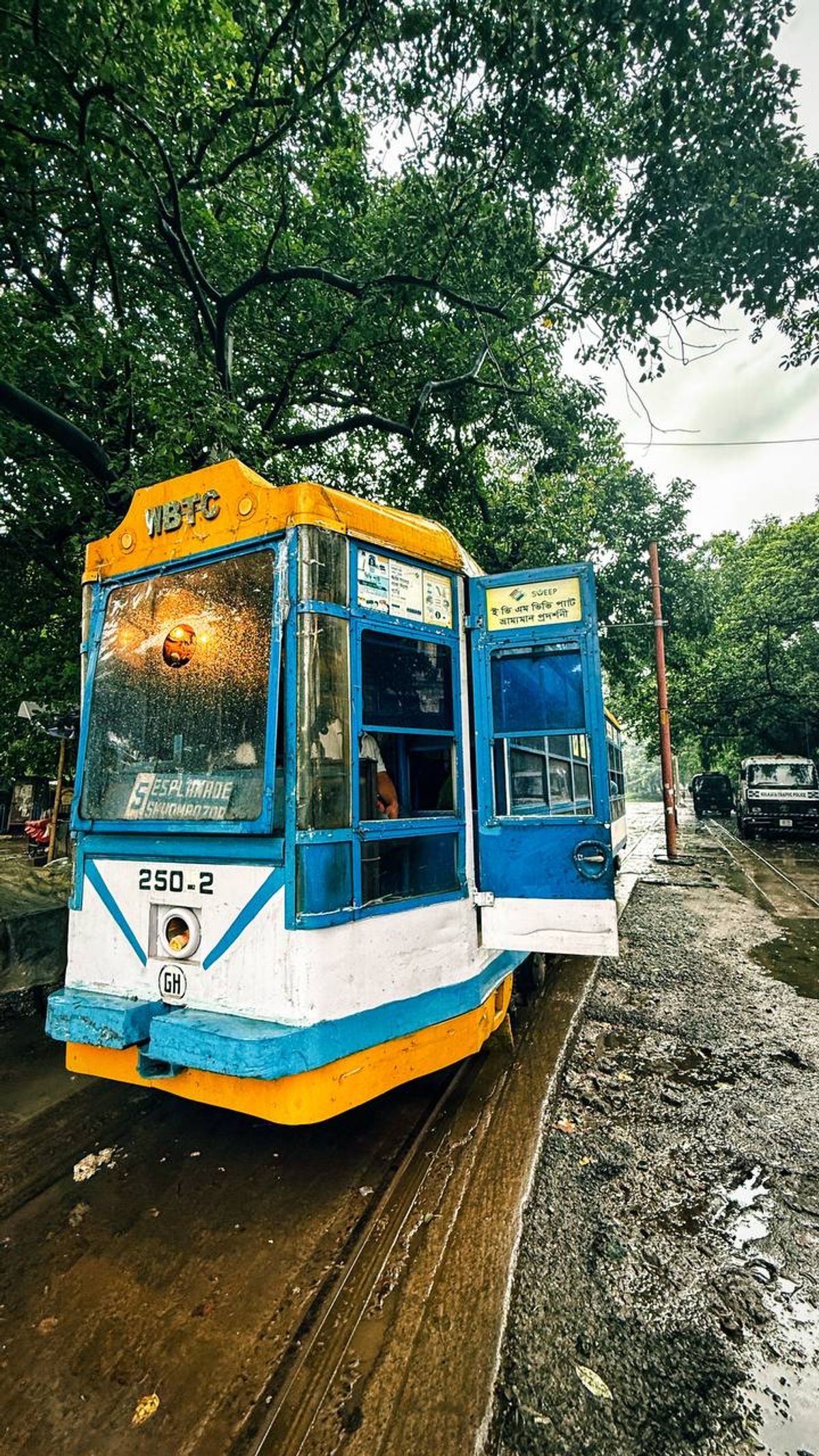
Today, only two routes remain operational, with roughly 30 trams in service. They move slowly — not because they're broken, but because they were never designed to compete with the speed of modern life.
Step inside a Kolkata tram and you enter a different temporal zone. Wooden benches worn smooth by decades of passengers. Wide windows with thin painted bars. Fans that whir lazily overhead. A ticket conductor who approaches with a practiced flick of his paper ticket stack, asks your destination, tears off a small strip, and hands it over like a receipt from another era.
The tram doesn't roar. It hums. It glides. Through congested streets and past open lanes, past book stalls and university gates, past vendors selling chai in clay cups. The signature sound — the conductor's bell, a clear ding-ding to stop, another to go — is Kolkata's most distinctive soundtrack.
The Route You Must Take
If you only have time for one tram ride, take the route from Esplanade toward College Street.
This is not just a tram ride — it's a curated journey through Kolkata's intellectual and cultural DNA. You'll pass through areas dense with bookshops (College Street is home to the largest second-hand book market in the world), universities, and tea stalls where conversations about philosophy, politics, and poetry still happen naturally.
The tram drifts through all of this like a time capsule on rails. The city rushes around it, but inside, the pace is different. Contemplative. Almost meditative.
It's the kind of experience that makes you put your phone down and just look.
Fighting for Survival
The Kolkata tram is not just fading — it's being actively dismantled. In December 2023, Kolkata's mayor announced plans to close all tram routes except a single heritage line from Esplanade to Maidan. Track removal began in September 2024, only to be halted by a High Court intervention in January 2025.
Transport Minister Snehasis Chakraborty's argument is straightforward: trams are slow and cause traffic congestion. Citizens counter that trams cannot be blamed for gridlock in a city where roads haven't expanded while vehicles have multiplied.
Heritage activists and the Calcutta Tram Users Association (CTUA), formed in 2016, continue to fight. Their argument goes beyond nostalgia: trams are electric, eco-friendly, and represent a sustainable urban transport model that the rest of the world is actually bringing back.
Melbourne, Zurich, Prague, Lisbon — these cities invested in modernizing their tram networks. Kolkata is choosing to dismantle one of Asia's oldest.
Why Visual Identity Matters for a City
Here's the thing about Kolkata's yellow taxis and trams that goes beyond transportation or heritage preservation.
They are visual codes.
Every great city has them. London has its red double-decker buses and black cabs. San Francisco has its cable cars. Lisbon has its yellow trams. Istanbul has its ferries crossing the Bosphorus. These aren't just vehicles — they're identity markers that make a city instantly recognizable anywhere in the world.
Kolkata's yellow Ambassador and its tram serve exactly the same function. They are the elements that turn a city into a postcard — one that came to life.
When you see a yellow Ambassador taxi parked beneath a banyan tree outside a decaying Raj-era building, you know instantly: this is Kolkata. When you see a white-and-blue tram gliding through a street lined with book vendors and chai stalls, you know: this could only be Kolkata.
Remove these icons, and the city becomes visually generic. Another Indian metropolis with the same cars, the same ride-hailing apps, the same glass-and-steel aesthetic that could be anywhere.
This isn't sentimentality. It's urban branding. The kind that no marketing campaign can manufacture — because it took over a century to build.
Practical Tips for Travelers
If you're planning to visit Kolkata and want to experience these living icons, here's what you need to know:
Yellow Ambassador Taxis: They still operate, but their numbers are shrinking rapidly. Your best chance of finding one is in central and south Kolkata — near Park Street, Esplanade, New Market, and along the Maidan. Fares are metered and very affordable. Don't bargain — enjoy the ride, and photograph the interior. It's museum-grade material.
Trams: Check current route availability before planning your ride, as routes have been reduced significantly. The Esplanade tram depot is your best starting point. Tickets cost as little as ₹7–10. Try to ride during off-peak hours (late morning or early afternoon) for a more relaxed experience. The Esplanade Tram Museum, housed inside a 1938 tram car, is worth a visit — admission is just ₹5.
Best Time: The golden hour before sunset makes both taxis and trams look extraordinary. During Durga Puja (usually in October), the entire city transforms, and both icons become even more photogenic.
Photography: Wide-angle shots of trams on busy streets, close-ups of Ambassador dashboards, and environmental portraits of drivers are all excellent subjects. The interplay of vintage transport and modern Kolkata creates striking visual contrasts.
Before They're Gone
Every city has a choice: preserve the things that make it unique, or standardize in the name of progress.
Kolkata's yellow taxis and trams are not obstacles to modernization. They are proof that a city can hold multiple timelines simultaneously — that the past and the present can share the same road, the same intersection, the same story.
One hundred points to recognizability. One hundred photos to your gallery. One hundred additions to your memory bank.
But only if you go now.
Because some postcards don't wait forever to come alive — and these two are slowly folding themselves shut.
Kolkata's yellow Ambassador taxis have served the city since the 1960s; fewer than 2,000 remain operational. The Kolkata tram system, Asia's oldest electric tramway (1902), now operates only two routes with approximately 30 trams. Both are endangered heritage transport icons.