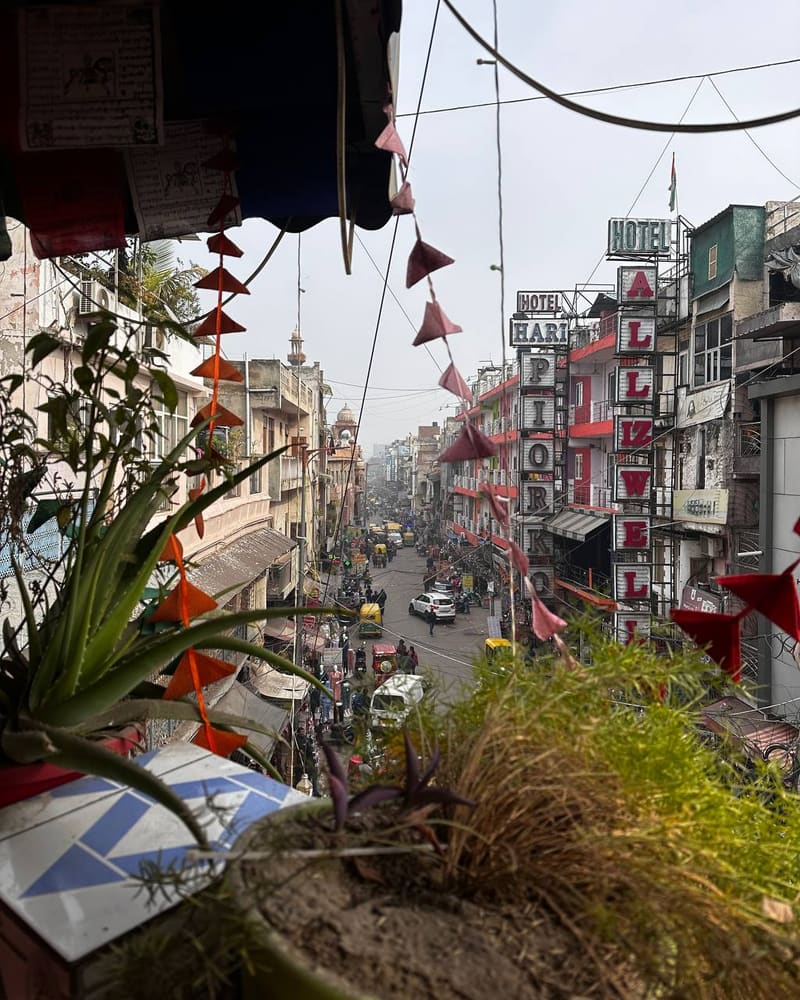
A dense, century-old neighborhood next to New Delhi's central railway station, Paharganj has been one of the city's most active commercial and residential districts since Partition — and the main landing spot for international backpackers since the 1960s.
This is Paharganj — and its main artery, Main Bazar — a place that hasn't changed its essential character in half a century, even as the rest of India has transformed around it.
I came here today to buy some colorful fabrics. But let me tell you what you're actually getting into.
The Historical Accident That Created a Backpacker Mecca
Paharganj's story as a traveler hub is pure geographical coincidence combined with perfect historical timing.
The neighborhood's name literally means "hilly neighborhood" — a reference to nearby Raisina Hill where the Rashtrapati Bhavan (Presidential Palace) now stands. During the Mughal Empire, this was Shahganj ("King's Market"), one of only five major markets in Delhi and the only one outside the walled city. It served as the principal grain market and housed the imperial customs division for tax collection.
Everything changed in 1947. During Partition, the area absorbed waves of refugees from Pakistan, transforming from a market district into a densely packed residential and commercial zone filled with cheap hotels and small businesses.
Then came the 1970s and the Hippie Trail.
When Western counterculture discovered India as a destination for spiritual seeking (and cheap drugs), Paharganj became a natural landing spot. It was walking distance from New Delhi Railway Station, offered rock-bottom prices, and nobody asked questions. The hotels didn't care if you had dreadlocks, smelled of patchouli, or stayed for months on end.
That legacy persists today. The Bob Marley posters still hang in the cafes. The restaurants still serve falafel and banana pancakes alongside dal. And the backpackers — now arriving on budget airlines rather than overland through Afghanistan — still fill the narrow lanes.
What to Expect Before You Go
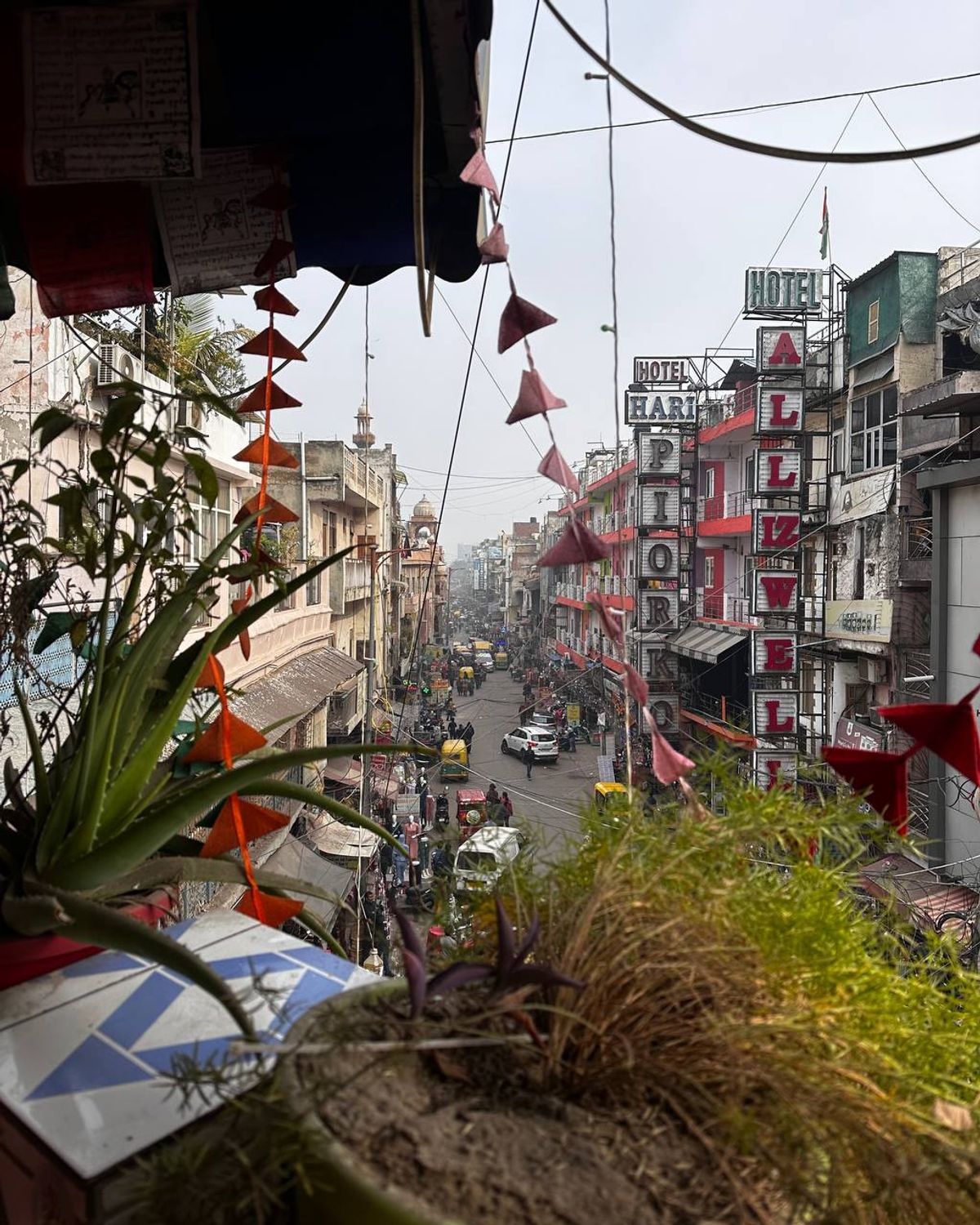
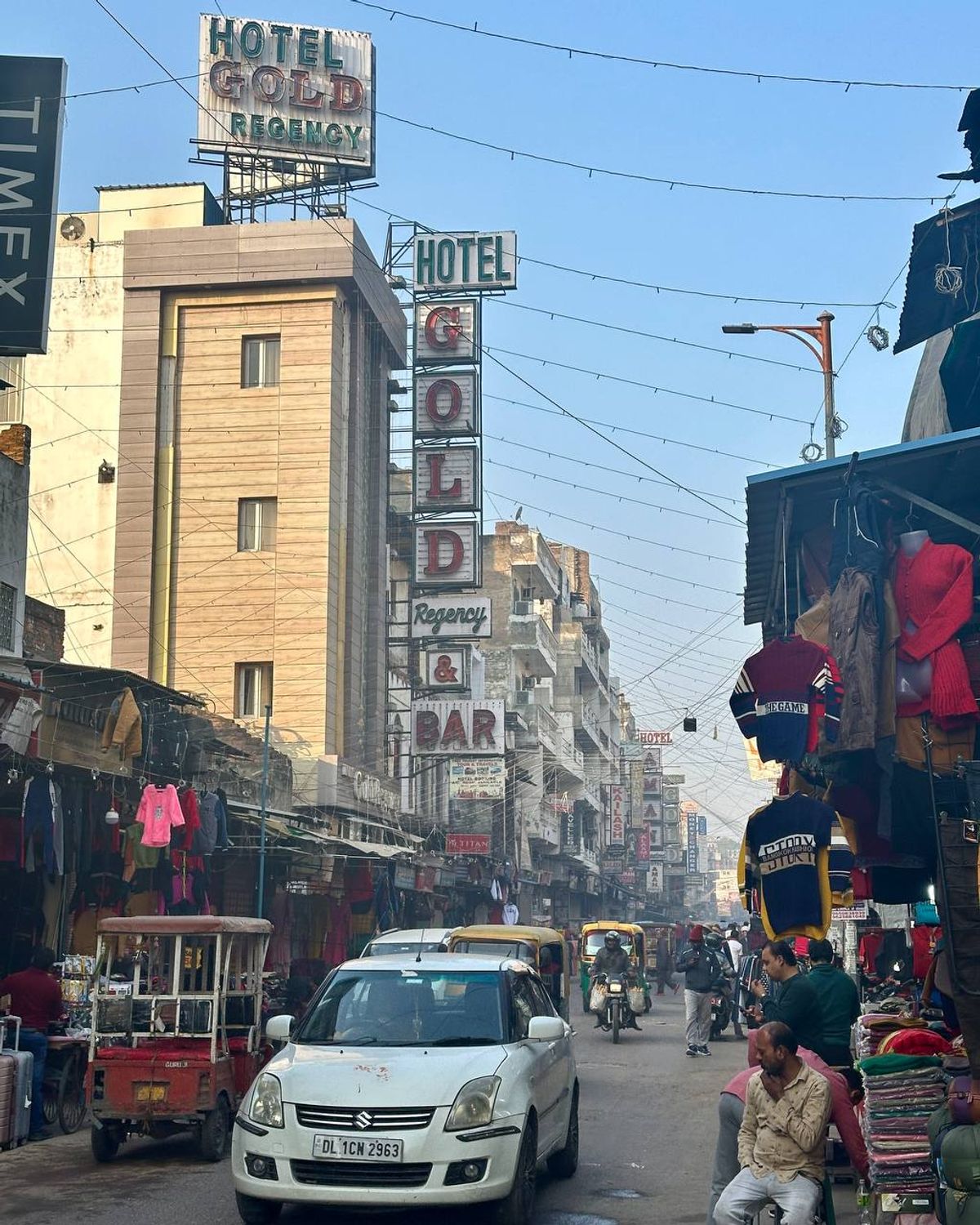
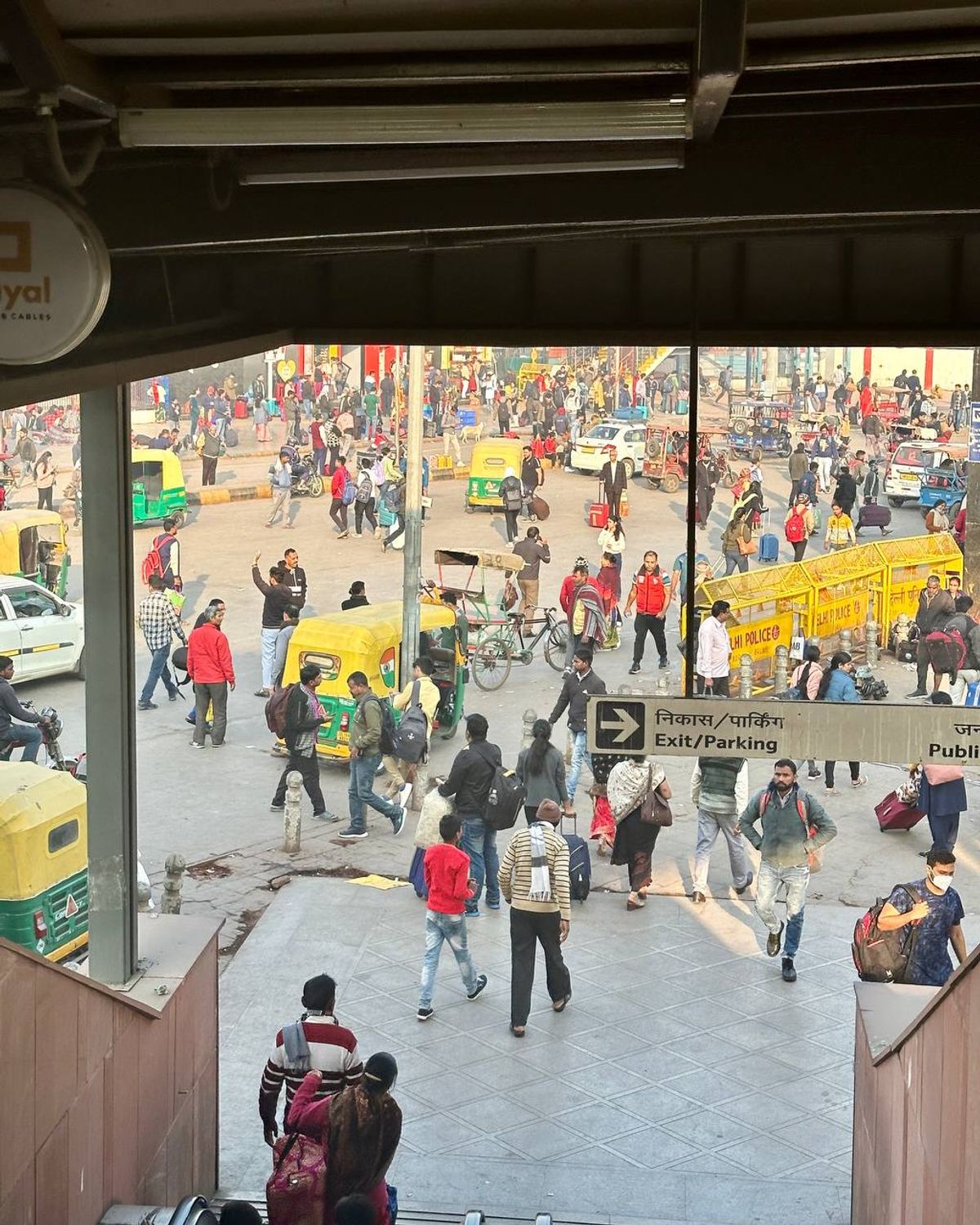
Paharganj is dense. The streets are narrow and shared by pedestrians, vendors, scooters, auto-rickshaws and the occasional cow, all moving through the same few feet of space. The air carries incense, diesel, cooking spices and dust. Buildings are tightly packed, wiring is often exposed, and many facades show their age — this is one of the oldest continuously occupied commercial districts in Delhi.
Like many busy transit-adjacent neighborhoods anywhere in the world, Paharganj has well-documented concerns around late-night safety and tourist-targeted scams, particularly around touts at the railway station and unsolicited "help" with hotel bookings. The Delhi Police and the U.S. State Department both publish standard advisories worth reading. Women travelers in particular are advised to take the usual precautions — daylight movement, prepaid taxis or app-booked rides, vetted accommodation.
It's also genuinely useful as a base. The central location means you're 15 minutes from most major sights, budget accommodation starts around ₹400–500 per night, and currency exchange rates are among the best in the city. Once you've spent a day learning the rhythm of the lanes, the density becomes navigable rather than overwhelming.
What You Can Actually Do Here
Walk the lanes, look up
Main Bazar is one of the most filmed neighborhoods in Delhi for a reason — the layered shop signs, the laundry strung between balconies, the lattice of power lines overhead, the texture of trade happening on every doorstep. Kate Winslet's "Holy Smoke!" (1999) and Anurag Kashyap's "Dev.D" (2009) both shot here precisely for this density, and the lanes still look much the same on film today.
Buy souvenirs (with caveats)
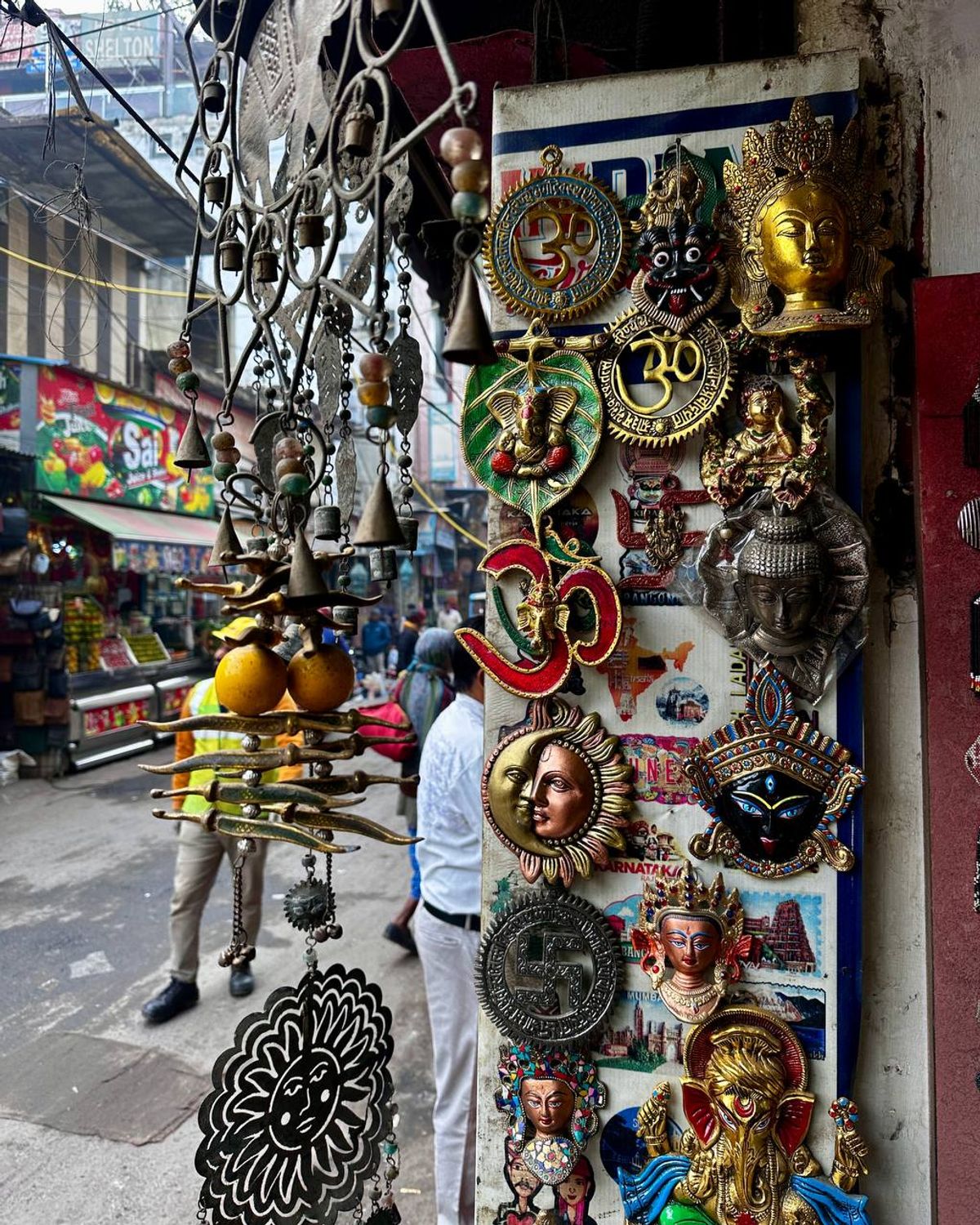
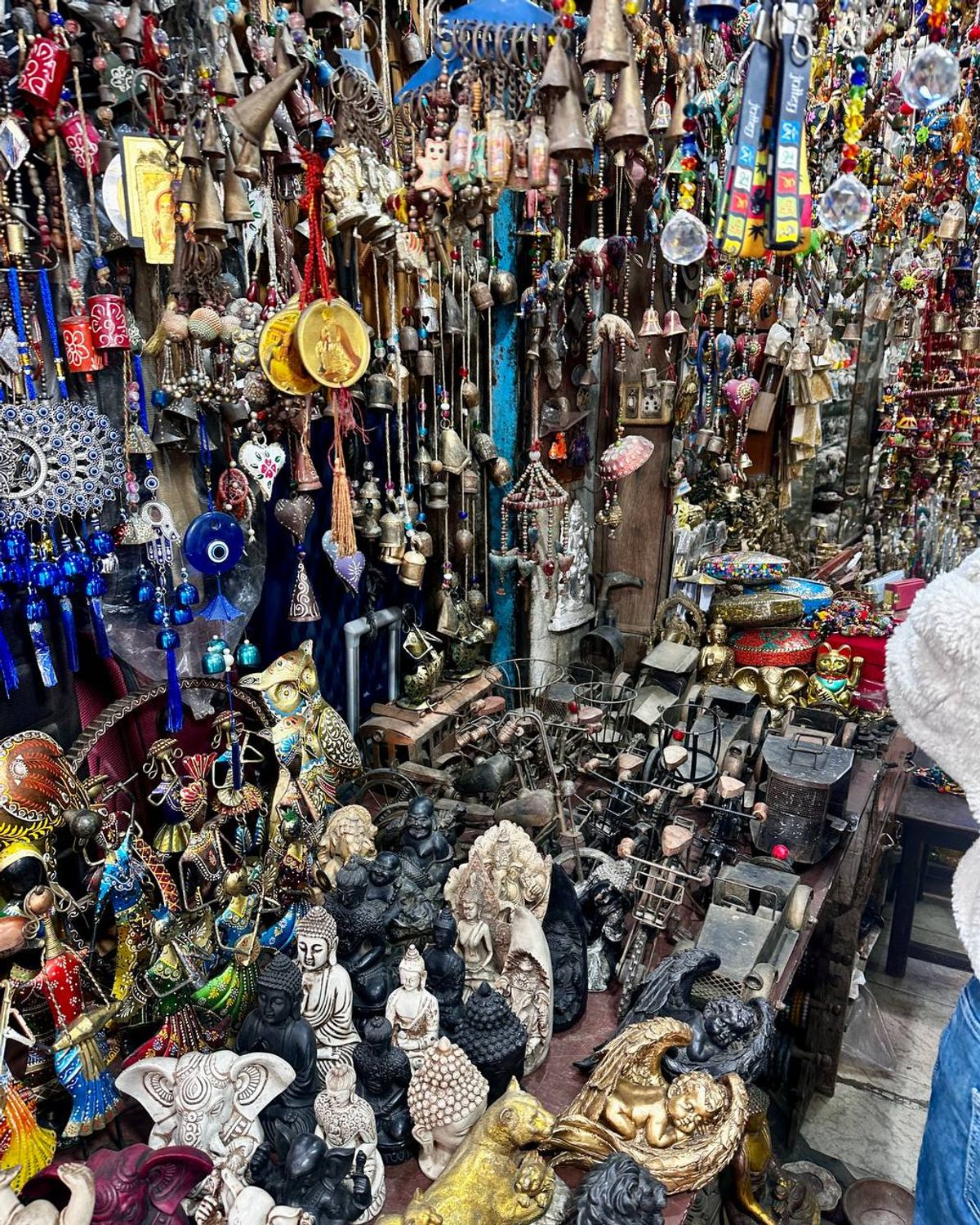
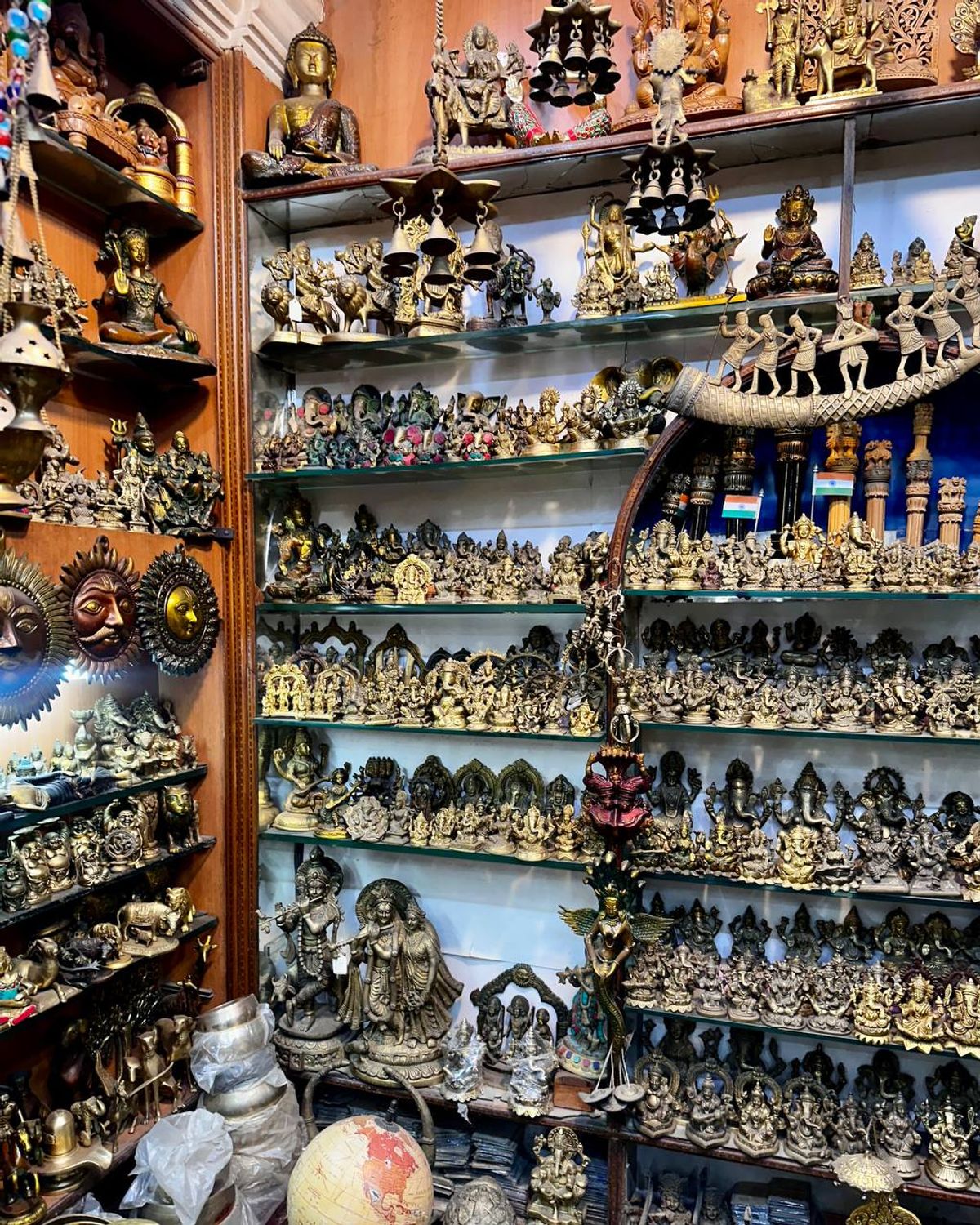
Main Bazar is lined with shops selling almost everything tourists come looking for: harem pants, jewelry, incense, Ganesh statues, pashminas, leather goods and endless variations of Indian-cut clothing. The quality varies widely, and so do the opening prices — bargaining is part of the transaction, and how comfortable you look will shape the first number you hear.
Start at 30% of the quoted price and work up from there. If the seller lets you walk away, you haven't reached the real price yet.
Exchange currency at decent rates
Ironically, this tourist trap offers some of the best currency exchange rates in Delhi. Money changers here compete aggressively, and the rates are often better than banks or airports. Just count your money carefully before leaving the counter.
Eat on rooftops
One of Paharganj's best assets is its rooftop restaurant scene. Cafes like Sam's Cafe, Kathmandu Cafe and the Kitchen Cafe Roof Top serve genuinely good food — both Indian and international — with long views over the lanes. There's a particular pleasure in watching the street move from a few floors up, hummus and cold beer in hand.
My Bar, notoriously, is open 24/7 and offers what might be the cheapest alcohol in Delhi. It's not glamorous, but at these prices, all hours are happy hours.
Experience Delhi's legendary street food
Sitaram Diwanchand, tucked into a Paharganj lane, has served what many consider Delhi's best chole bhature for over 50 years. Two bhaturas with generous chola and mint chutney will cost you ₹60. The famous jalebi stand at Chhe Tuti Chowk (Six Tuti Crossing) is another institution.
The Scams You Will Encounter
I'm not going to pretend you can visit Paharganj without dealing with scammers. The neighborhood's proximity to the railway station makes it ground zero for Delhi's tourism scam industry.
The "hotel is closed" scam
Taxi or rickshaw drivers will tell you your pre-booked hotel has burned down, is full, closed due to COVID, or some other disaster. They'll offer to take you somewhere "better." This somewhere is a hotel paying them commission, where you'll be massively overcharged.
The "road is blocked" scam
You'll be stopped — sometimes by people in official-looking uniforms — and told that Paharganj is closed due to riots, disease outbreak, or requires a special tourist certificate. This is 100% fiction. Paharganj is never closed. There is no gate. There is no certificate.
Fake tourist offices
Scammers will direct you to "official" tourist agencies that look legitimate but exist solely to sell overpriced tours and non-existent train tickets. The real tourist office is inside New Delhi Railway Station, upstairs at the main entrance. Anywhere else is a trap.
The friendly local
Anyone approaching you unsolicited with "Where are you from? First time in India?" is almost certainly working an angle. This doesn't mean all Indians are scammers — far from it — but in Paharganj specifically, unsolicited friendliness usually has a commercial motive.
Survival tactics:
- Book accommodation through trusted platforms before arrival
- Download offline maps (Maps.me works well)
- Use Ola or Uber instead of negotiating with rickshaws
- Never believe anyone who says your destination is closed
- Walk away from anyone trying to redirect you
Should You Actually Stay Here?
Arguments for:
- Unbeatable prices (₹400–600 for basic rooms)
- Walking distance from New Delhi Railway Station
- Central location for sightseeing
- A dense, photogenic neighborhood you won't forget
- Rooftop cafe culture
Arguments against:
- Safety concerns, especially at night and for solo women
- Constant scam attempts
- Noise, pollution and general griminess
- Better hostels now exist in South Delhi at similar prices
- Your first impression of India will be rough
My honest recommendation: Visit Paharganj during the day to shop and eat, but stay elsewhere. Modern hostel chains like Zostel and Smyle Inn have properties near Main Bazar that offer the location benefits with better security and cleanliness. If you're an India veteran who speaks basic Hindi and knows the tricks, staying in the heart of it can be an experience. If this is your first time, you're setting yourself up for a difficult introduction.
The Charm Beneath the Chaos
I've been harsh about Paharganj because honesty serves you better than romanticization. But there's a reason this neighborhood has attracted travelers for over 50 years, and it's not just cheap rooms.
Paharganj is one of the last places in central Delhi that hasn't been sanitized for global tourism. The Mughal-era havelis with their crumbling balconies are still there. The grain market origins echo in the wholesale shops along the side lanes. The partition refugees' descendants still run family businesses in the same buildings their grandparents fled to in 1947.
It's a living archive of Delhi's layered history — from imperial customs house to refugee settlement to hippie haven to contemporary backpacker institution. Read the standard travel advisories, keep your wits about you in the late hours, and the lanes will reward an unhurried visit with real discoveries.
Just don't say I didn't warn you.

As for me? I came looking for fabrics, found them tucked away in a shop down a side lane, bargained for twenty minutes, and walked out with textiles I couldn't find anywhere else in Delhi. The lanes deliver if you know how to look.
Getting There
- Metro: New Delhi Station, Gate 1 (Yellow Line)
- Walking: From New Delhi Railway Station Paharganj exit
Nearby Landmarks:
- New Delhi Railway Station (0 km)
- Connaught Place (1.5 km)
- Ramakrishna Ashram Marg Metro (0.8 km)
- Jama Masjid (3 km)
- Red Fort (4 km)